Skip to content



Furnace heat exchanger problems pose serious safety risks because a cracked or damaged exchanger can leak carbon monoxide into your home. Warning signs include yellow burner flames, soot buildup, chemical odors, and carbon monoxide detector alerts. Heat exchanger replacement typically costs $1,000 to $3,000, though full furnace replacement often makes more sense for systems over 15 years old.
Understanding how to spot heat exchanger failure signs early protects your family and helps you make informed decisions about furnace repair services or replacement. This guide covers everything Idaho Falls homeowners need to know about this critical furnace component.
Key Takeaways
- A cracked heat exchanger can leak carbon monoxide into your home, making early detection essential for family safety
- Warning signs include yellow burner flames, soot buildup, unusual chemical odors, and carbon monoxide detector alerts
- Heat exchanger replacement costs $1,000 to $3,000, but full furnace replacement is often more practical if your system exceeds 15 years old
- Annual furnace maintenance is the most effective way to prevent heat exchanger failure and extend your system’s lifespan
What Does a Furnace Heat Exchanger Do?
The heat exchanger is the most critical safety component in your gas furnace. It consists of metal coils or chambers that absorb heat from the combustion process and transfer that warmth to the air circulating through your home. To learn more about this process, read our guide on heat exchangers and how they work.
How Your Heat Exchanger Keeps You Safe
When your furnace burns natural gas, it produces combustion byproducts including carbon monoxide, nitrogen dioxide, and water vapor. The heat exchanger creates an airtight barrier that separates these toxic gases from the breathable air in your home. Heated air passes over the outside of the exchanger, absorbs the warmth, and circulates through your ductwork. Meanwhile, dangerous combustion gases safely vent outside through the flue.
When this barrier fails due to a furnace heat exchanger crack, those same gases can mix with your indoor air supply. This is why heat exchanger problems require immediate professional attention.
Need this handled in Idaho Falls? See our furnace repair page or call (208) 521-2041.
What Causes Furnace Heat Exchanger Problems?
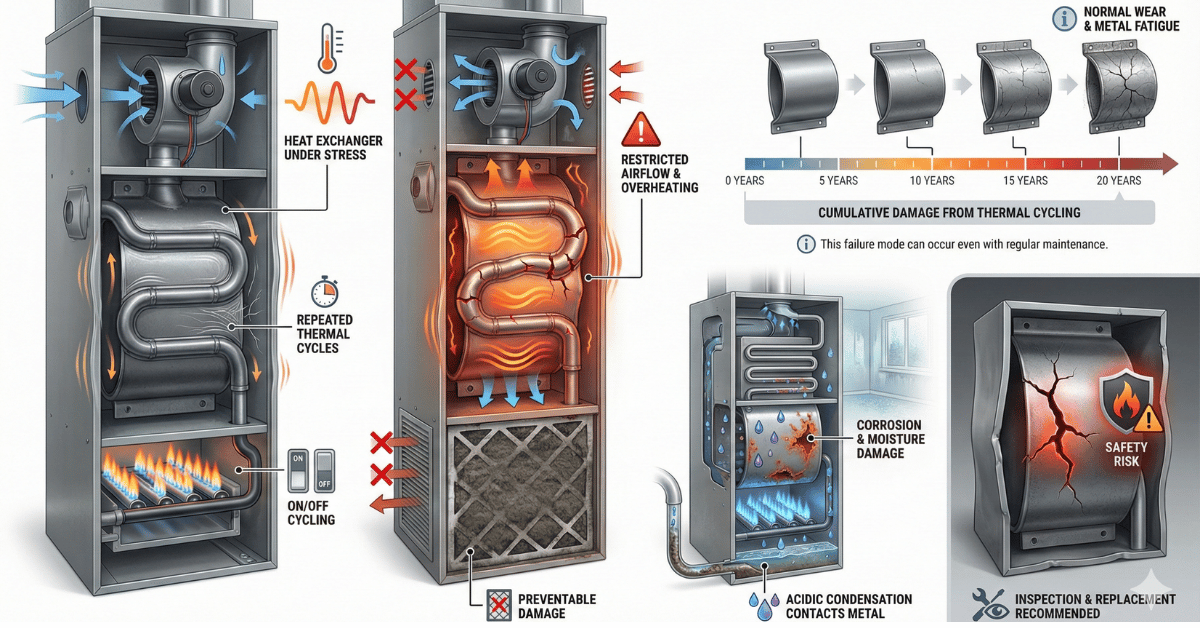
Heat exchangers endure extreme temperature swings every time your furnace cycles on and off. This constant expansion and contraction gradually weakens the metal over time. However, several factors can accelerate this wear and lead to premature failure.
Restricted Airflow and Overheating
Clogged air filters and blocked vents are the leading preventable causes of heat exchanger damage. When airflow becomes restricted, your furnace cannot dissipate heat properly. The heat exchanger overheats, causing the metal to expand beyond normal limits. Over time, this repeated stress creates cracks near welds and bends where the metal is weakest.
Normal Wear and Metal Fatigue
Even with perfect maintenance, heat exchangers eventually wear out. The constant heating and cooling cycles cause metal fatigue that leads to cracks after years of operation. Most manufacturers design heat exchangers to last 15 to 20 years under normal conditions. Gas furnaces typically last 15 to 20 years with proper care, according to Lennox, and the heat exchanger often determines when replacement becomes necessary.
Corrosion and Moisture Damage
High-efficiency condensing furnaces produce acidic condensation as a byproduct of extracting additional heat from exhaust gases. If drainage systems become clogged or damaged, this moisture can corrode the heat exchanger from the inside out. Homes with high humidity levels may also experience accelerated corrosion on standard furnaces.
What Are the Warning Signs of Heat Exchanger Failure?
Recognizing heat exchanger failure signs early can protect your family from carbon monoxide exposure and help you avoid emergency breakdowns during Idaho Falls winters. Watch for these indicators that your heat exchanger may be compromised.
Yellow or Flickering Burner Flames
A healthy furnace produces a steady blue flame. If you notice yellow, orange, or flickering flames in the burner compartment, it often indicates incomplete combustion. This can occur when cracks in the heat exchanger allow excess air to enter the combustion chamber, disrupting the fuel-to-air ratio. Yellow flames are a serious warning sign that requires immediate professional inspection.
Soot Buildup Around Your Furnace
Black, powdery residue around burners, inside the furnace cabinet, or near the flue pipe signals incomplete combustion. When fuel does not burn completely, it produces excess carbon that deposits as soot. This buildup indicates your furnace may be producing elevated levels of carbon monoxide, making prompt inspection essential.
Unusual Chemical Odors
A cracked heat exchanger can allow combustion byproducts to leak into your home’s air supply. While carbon monoxide itself is odorless, other combustion gases produce a sharp, chemical smell often described as similar to formaldehyde. If you notice unusual odors when your furnace runs, treat it as an emergency and call for professional help immediately.
Carbon Monoxide Detector Alerts
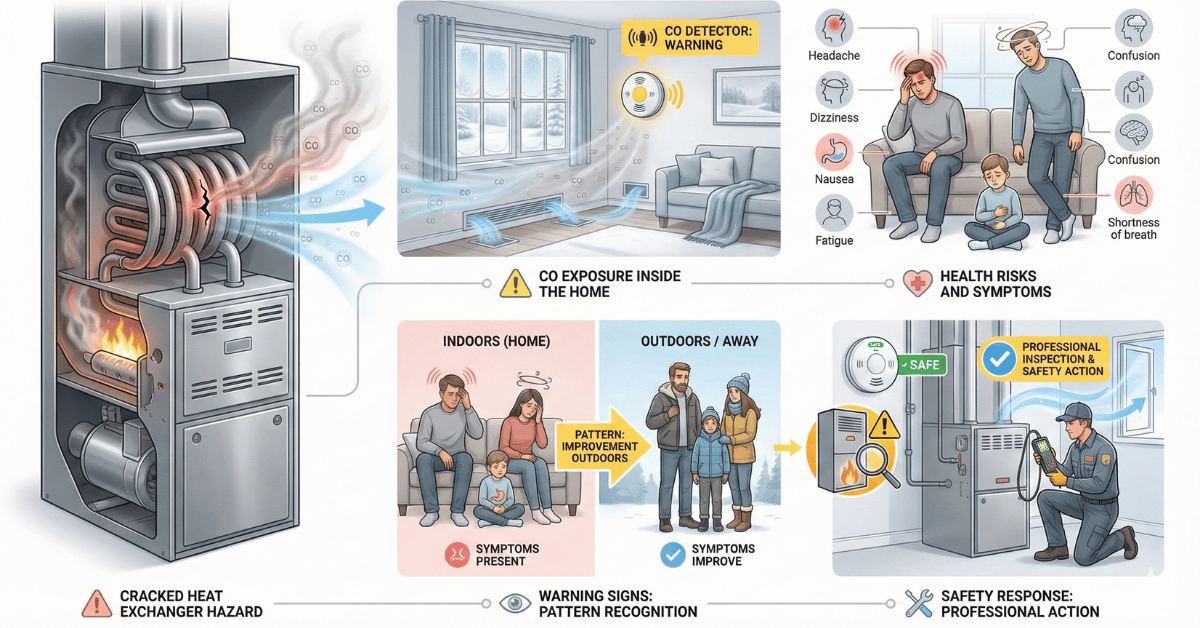
If your carbon monoxide detector sounds an alarm, evacuate your home immediately and call 911. A cracked heat exchanger is one of the most common causes of residential carbon monoxide leaks during heating season. Never ignore a CO alarm or assume it is malfunctioning.
Physical Cracks or Visible Corrosion
Rust, corrosion, or visible cracks on furnace components often indicate internal damage. While the heat exchanger itself is difficult to inspect without professional tools, visible deterioration on external parts like the inducer motor or draft diverter suggests the heat exchanger may also be compromised.
How Dangerous Is a Cracked Heat Exchanger?
A cracked heat exchanger represents one of the most serious safety hazards in home heating. The primary danger is carbon monoxide exposure, which can cause illness, long-term health problems, and death.
Carbon Monoxide Risks and Symptoms to Watch For
According to the CDC, more than 400 Americans die from unintentional carbon monoxide poisoning each year, with over 100,000 emergency department visits annually. Furnaces are among the most common household sources of CO exposure, and poisonings occur most frequently during winter months when heating systems run continuously and windows remain closed.
Carbon monoxide poisoning symptoms include persistent headaches, dizziness, nausea, fatigue, confusion, and shortness of breath. These symptoms often mimic the flu, which can delay proper diagnosis. If multiple family members experience similar symptoms that improve when away from home, suspect carbon monoxide exposure and have your furnace inspected immediately.
How Much Does Furnace Heat Exchanger Repair vs. Replacement Cost?
Understanding the costs involved helps you make informed decisions about furnace heat exchanger repair vs replacement. For a comprehensive comparison, see our guide on when to repair vs. replace your furnace.
Heat Exchanger Replacement Costs
Heat exchanger replacement typically costs between $1,000 and $3,000 for most residential furnaces, according to HomeGuide. The heat exchanger part alone costs $350 to $850, with labor adding $650 to $2,150 depending on your furnace model and accessibility. High-efficiency furnaces with secondary heat exchangers cost more to repair due to their complex design.
Many manufacturers offer heat exchanger warranties lasting 10 to 20 years. If your furnace is still under warranty, the part may be covered, leaving you responsible only for labor costs. Check your warranty documentation or contact the manufacturer to verify coverage before authorizing repairs.
When Is Full Furnace Replacement the Better Choice?
Because heat exchanger replacement is so labor-intensive and expensive, it often makes more sense to replace the entire furnace under certain circumstances. Consider full replacement if your furnace is more than 15 years old, if the warranty has expired, if the repair cost exceeds 50% of a new furnace price, or if other components show significant wear.
A new high-efficiency furnace can reduce energy consumption by 15% or more compared to older models. Combined with potential rebates and improved reliability, replacement often provides better long-term value than repairing an aging system.
How Can You Prevent Heat Exchanger Problems?
While heat exchangers eventually wear out due to age, proper maintenance can significantly extend their lifespan and catch problems before they become dangerous.
Schedule Annual Furnace Maintenance
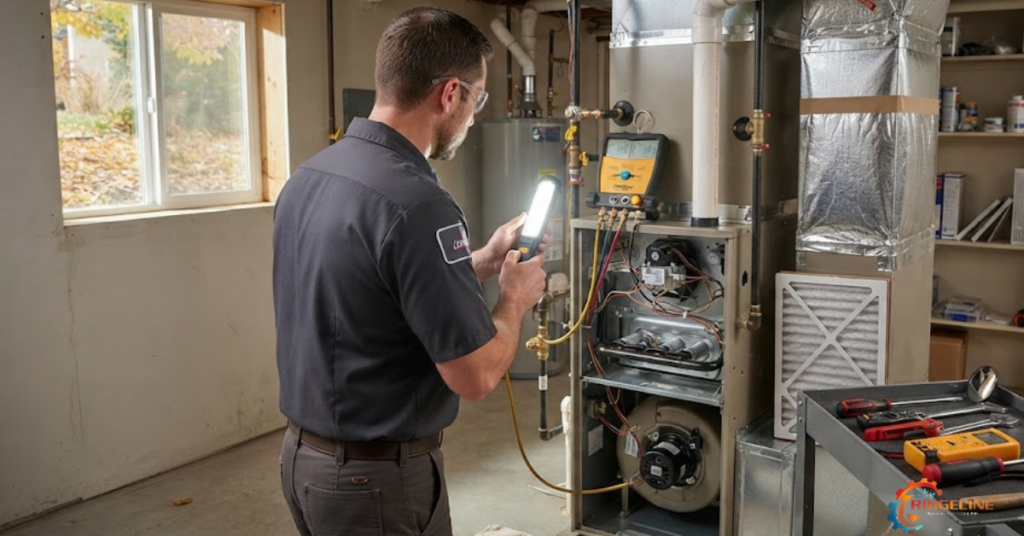
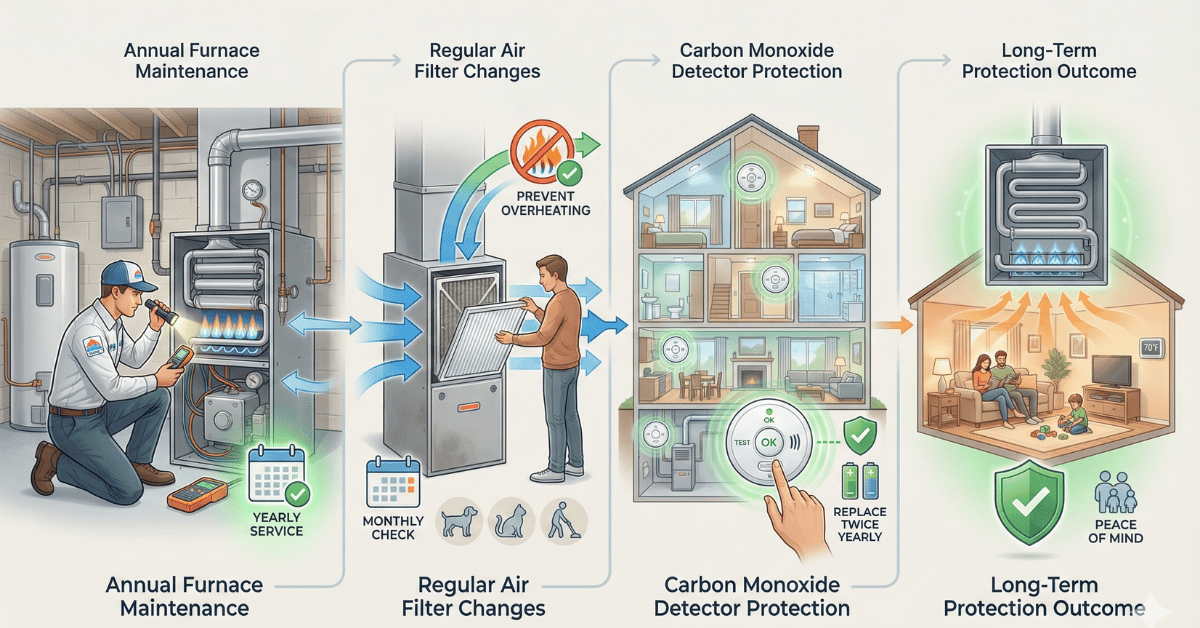
Annual professional inspections are your best defense against heat exchanger failure. During a maintenance visit, technicians clean burners, check combustion efficiency, and inspect the heat exchanger for signs of damage. Learn more about the benefits of regular HVAC maintenance for Idaho Falls homes.
Change Your Air Filters Regularly
Dirty filters restrict airflow and cause overheating, which is the leading preventable cause of heat exchanger damage. Check your filter monthly during heating season and replace it when dirty. Most homes need filter changes every one to three months depending on filter type, household size, and whether you have pets.
Install Carbon Monoxide Detectors
The EPA recommends installing CO detectors on every floor of your home, including near sleeping areas. Replace detectors every five to seven years according to manufacturer guidelines. Test them monthly and replace batteries at least twice per year. Functional CO detectors provide critical early warning if your heat exchanger develops a leak.
Protect Your Home with Professional Furnace Inspections
Furnace heat exchanger problems demand immediate attention because of the serious safety risks involved. Whether you have noticed warning signs like yellow flames, unusual odors, or soot buildup, or simply want peace of mind heading into winter, professional inspection is the safest path forward.
Schedule a professional furnace inspection with Ridgeline Heating and Cooling to protect your Idaho Falls home and family. Our certified technicians use advanced diagnostic tools to accurately assess heat exchanger condition and provide honest recommendations. Contact us today to book a heat exchanger safety check or discuss your furnace repair and replacement options.
Suspect a cracked heat exchanger?
This is a carbon monoxide risk. Shut the furnace off and call for furnace repair. We test heat exchangers with a combustion analyzer, not a flashlight.
Call (208) 521-2041 or request service online. Ridgeline Heating and Cooling, 370 College St, Idaho Falls, ID 83401.