Skip to content



Keeping your furnace properly maintained before and during an Idaho Falls winter is the single most effective way to avoid a breakdown when temperatures are at their worst. Replace your air filter every 1-3 months, schedule a professional tune-up each fall, clear all vents and registers, and test your thermostat before the cold sets in. These steps protect your system, your safety, and your heating bill.
Key Takeaways
- Idaho Falls January lows regularly drop to 12°F furnaces here run harder and longer than in most U.S. cities
- A dirty air filter is the #1 cause of preventable winter furnace failures
- According to the U.S. Department of Energy, proper maintenance and insulation can cut your heating bill by up to 30%
- A cracked heat exchanger can silently leak carbon monoxid only a licensed technician can safely inspect it
- Scheduling your tune-up in early fall ensures you’re not calling for emergency service in January
- Ridgeline Heating and Cooling serves Idaho Falls homeowners with professional furnace maintenance and repair
Why Furnace Maintenance Matters More in Idaho Falls
Furnace maintenance is important everywhere, but Idaho Falls places specific demands on heating systems that most other climates simply do not. Understanding those demands helps you make smarter decisions about how and when to take care of your equipment.
How Cold Does Idaho Falls Actually Get?
Idaho Falls winters are no joke. January averages a high of just 29°F and a low of 12°F, and single-digit cold snaps are a regular occurrence during December through February. The city also averages 39 inches of snow per year well above the U.S. average of 28 inches with cloud cover peaking at 90% humidity in January.
That sustained freeze means your furnace is not running occasionally. It is running nearly around the clock for weeks at a time. Systems that receive no pre-season attention are the ones that fail, and they tend to fail during the coldest stretches.
Industry Insight: “Space heating accounts for approximately 25% of total residential energy consumption in the U.S.,” according to the Appliance Standards Awareness Project (ASAP). In a climate like Idaho Falls, that share is considerably higher.
What Happens When a Furnace Is Pushed Too Hard Without Maintenance
When your furnace has a clogged filter, worn components, or an undetected issue, it works against itself. The blower motor strains to pull air through a blocked filter. The heat exchanger cycles through repeated thermal stress. Ignition components that have never been cleaned take longer to fire or fail to fire at all.
The result is a system that either breaks down entirely or runs inefficiently, costing you significantly more in energy costs every month. The benefits of regular HVAC maintenance for Idaho Falls homes extend well beyond comfort they directly protect your investment.
Need this handled in Idaho Falls? See our furnace tune-up page or call (208) 521-2041.
What Does a Professional Furnace Tune-Up Actually Include?
A professional furnace tune-up is not simply a filter swap. It is a comprehensive inspection and cleaning process that addresses the safety, efficiency, and reliability of your entire heating system. Every Idaho Falls homeowner should understand what they are paying for and why it matters.
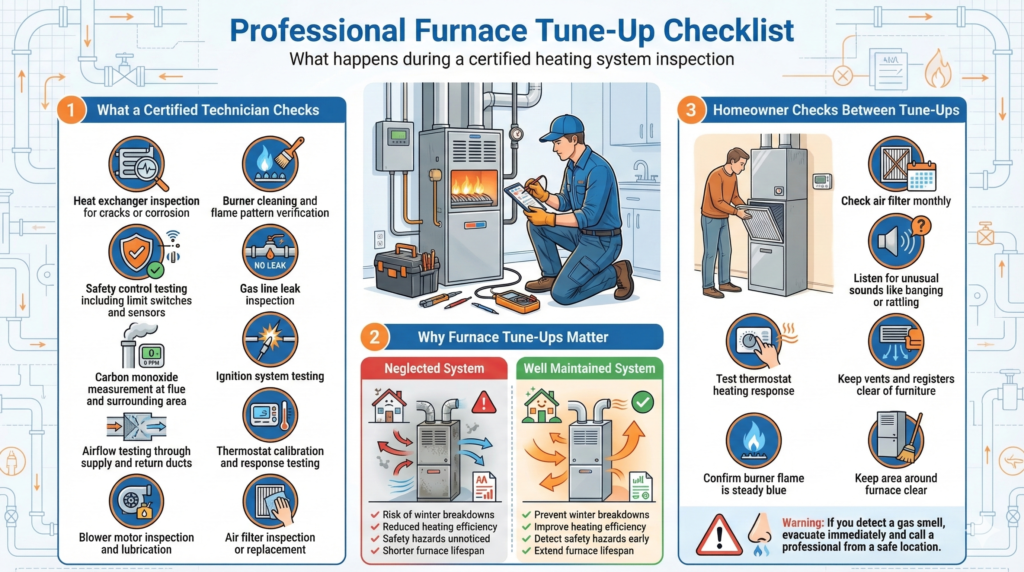
What a Certified Technician Checks
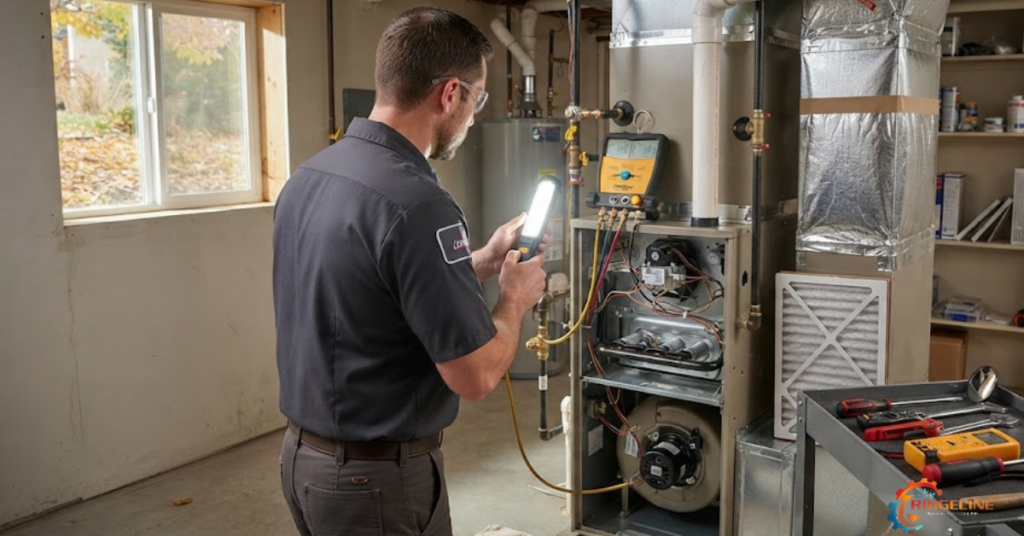
During a standard tune-up, a licensed HVAC technician will:
- Inspect the heat exchanger for cracks or corrosion that could allow carbon monoxide to enter your living space
- Clean the burners and verify the flame pattern is correct
- Test all safety controls including the limit switch, pressure switches, and rollout sensors
- Check gas line connections for leaks
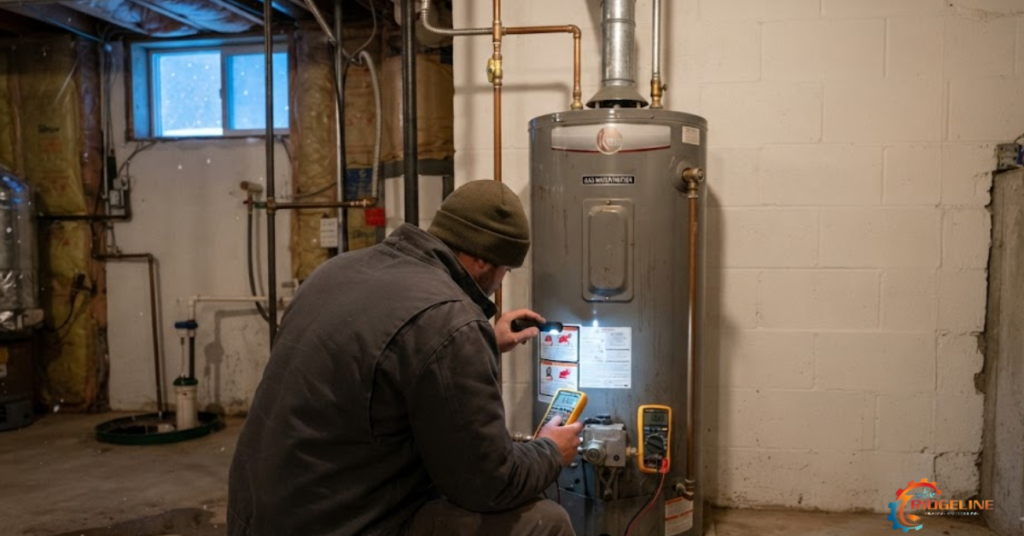
- Measure carbon monoxide levels at the flue and in the surrounding area
- Test the ignition system including the hot surface igniter or electronic ignition
- Verify airflow through supply and return ducts
- Inspect and test the thermostat for accurate temperature response
- Lubricate moving parts in the blower assembly where applicable
- Replace or inspect the air filter
Expert Note: The Air Conditioning Contractors of America (ACCA) recommends annual furnace inspection as a baseline standard of care, stating that preventive maintenance is the most reliable way to identify component wear before it leads to a system failure during peak demand.
What You Can Check Yourself Between Professional Visits
Between annual tune-ups, there are several safe, simple steps you can take as a homeowner:
- Check your air filter monthly and replace it when it looks gray or clogged
- Listen for unusual noises banging, rattling, or squealing are worth noting
- Test your thermostat by setting it 5°F above room temperature and confirming the furnace fires
- Check all floor and wall registers to make sure furniture or rugs are not blocking airflow
- Look at the pilot light or burner flame it should be a steady blue flame, not orange or yellow
- Clear 2 feet of space around your furnace unit at all times
If you ever smell gas near your furnace, leave the home immediately and call your gas utility provider before re-entering.
How Often Should You Change Your Furnace Filter in Idaho Falls?
Every Idaho Falls homeowner should understand furnace filter replacement it is the single most impactful maintenance task you can perform without any tools or training. Knowing how often to change your air filter is the foundation of keeping your furnace running properly all winter.
Why Filter Changes Matter More in Winter
In Idaho Falls, your furnace runs for extended periods from roughly November through March. That continuous operation means your filter fills up much faster than it would in a milder climate. A clogged filter restricts airflow, which forces the blower motor to work harder and causes the heat exchanger to overheat repeatedly.
The general rule:
| Filter Type | Change Frequency |
| 1-inch fiberglass (basic) | Every 30 days |
| 1-inch pleated filter | Every 60-90 days |
| 4-inch media filter | Every 6-12 months |
| HEPA or high-MERV filter | Every 6 months |
During Idaho Falls’ peak winter months, err toward the shorter end of each range.
Choosing the Right Filter for Your System
Higher MERV ratings (11-13) capture more particles but also restrict airflow more than lower-rated filters. Most residential furnaces are designed for filters in the MERV 7-10 range. If you are unsure, ask your Ridgeline technician which MERV rating is appropriate for your specific system using a filter that is too restrictive can do more harm than a dirty one.
According to the U.S. Department of Energy, heating your home uses more energy than any other household system accounting for up to 29% of your utility bill. A clean filter is one of the simplest ways to keep that number in check.
Is Your Furnace Making Strange Noises? Here’s What They Mean
Unusual furnace sounds are your system’s way of communicating that something needs attention. Idaho Falls homeowners should be familiar with the most common warning sounds so they can act before a small problem grows into a costly repair.
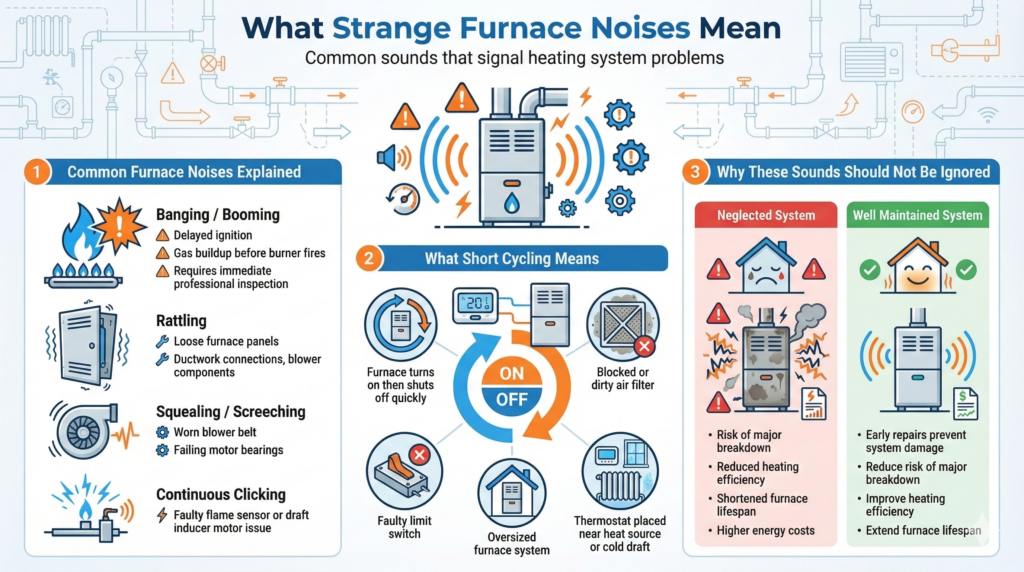
Banging, Rattling, and Squealing Explained
- Banging or booming on startup often indicates delayed ignition gas accumulates in the burner chamber before firing, causing a small explosion. This requires immediate professional attention.
- Rattling typically points to loose panels, ductwork connections, or a loose blower wheel. It is often inexpensive to fix but should not be ignored.
- Squealing or screeching usually means a worn blower motor belt or a failing blower wheel bearing. Left unaddressed, this can lead to full motor failure.
- Clicking that does not stop after startup may indicate a faulty flame sensor or a failing draft inducer motor.
Short Cycling and What It Signals
Short cycling is when your furnace turns on, runs for a very brief period, then shuts off before reaching your thermostat set point. This cycle repeats continuously. Common causes include:
- Overheating due to a blocked air filter
- A faulty limit switch
- An oversized furnace that heats too quickly
- Thermostat placement issues (near a heat source or cold draft)
Short cycling wastes energy and puts excessive wear on system components. If your furnace is behaving this way, scheduling a furnace repair appointment in Idaho Falls right away is the right move not a repair to postpone.
How to Prepare Your Home for Idaho Falls Cold Snaps
Idaho Falls is known for sudden, significant temperature drops days where temperatures fall 20°F or more within hours. Your furnace cannot compensate for a leaky, uninsulated home, no matter how well maintained it is. Reducing the load on your system protects both your comfort and your equipment.
Sealing Drafts and Improving Insulation
Before winter arrives, walk through your home and check these areas:
- Window and door frames for air infiltration use weatherstripping or caulk to seal gaps
- Attic hatch or door this is often the most overlooked air leak in Idaho Falls homes
- Electrical outlets and switch plates on exterior walls inexpensive foam gaskets block surprising amounts of cold air
- Basement rim joists insulating these is one of the highest-value improvements for older homes
The U.S. Department of Energy states that combining proper HVAC maintenance with home insulation and air sealing can reduce your total heating energy costs by up to 30%. In a climate like Idaho Falls, that translates to meaningful dollar savings every month from November through March.
Thermostat Settings That Protect Your System
Avoid dramatic temperature setbacks during an Idaho Falls cold snap. Dropping your thermostat to 55°F overnight when it is 5°F outside forces your furnace to do an enormous amount of work to recover which increases wear and the risk of malfunction. A modest setback of 7-8°F is more practical and still saves energy without overworking your system.
A programmable or smart thermostat helps you manage this automatically. If you are not sure how to reset your Honeywell thermostat or configure a heating schedule, Ridgeline technicians can walk you through it during any service visit.
When Is It Time to Repair vs. Replace Your Furnace?
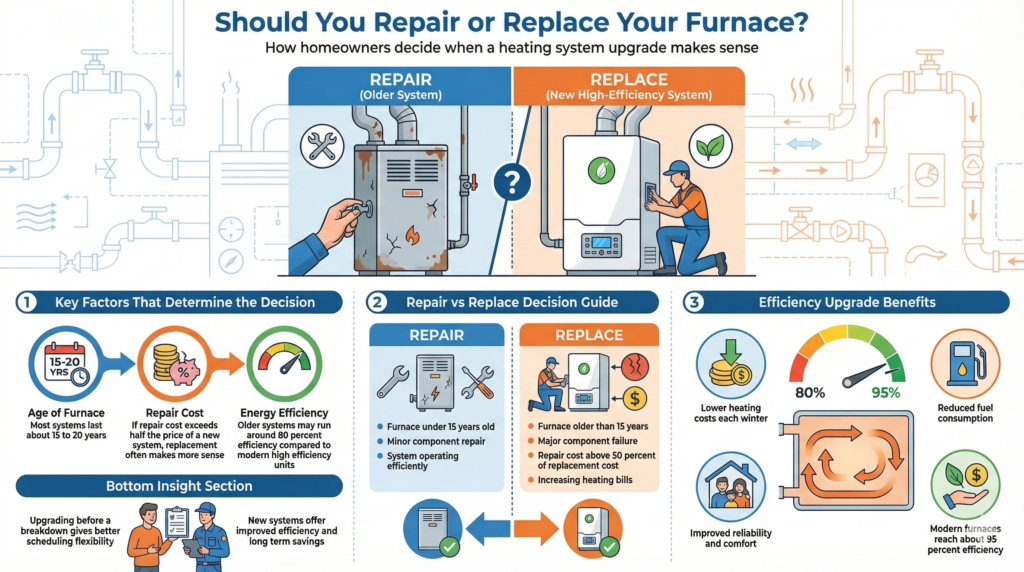
Knowing when to repair vs. replace your furnace in Idaho Falls is one of the most financially important decisions a homeowner can make. The answer depends on three factors: the age of your system, the cost of the repair, and how efficiently your furnace currently operates.
Most furnaces last 15-20 years with proper maintenance. If your system is older than 15 years and facing a repair bill exceeding 50% of the cost of a new unit, replacement is usually the smarter long-term investment.
Efficiency is also becoming increasingly important. As of December 2028, new federal standards will require all new non-weatherized gas furnaces to achieve a minimum 95% AFUE (Annual Fuel Utilization Efficiency) rating. According to the U.S. Department of Energy, homeowners who upgrade to a qualifying high-efficiency system can save an average of $50 per year on heating bills and as much as $350 over the life of the equipment.
If your current furnace is running at 80% AFUE or lower, upgrading now rather than waiting for a breakdown gives you control over timing, financing options, and installation scheduling.
Industry perspective from ACHR News: New efficiency standards are expected to deliver cumulative consumer savings of nearly $25 billion over 30 years, with the greatest benefit going to homeowners in cold-climate regions like eastern Idaho who rely on gas heat for the majority of the year.
Schedule Your Furnace Tune-Up with Ridgeline Heating and Cooling
Ridgeline Heating and Cooling serves Idaho Falls and the surrounding communities with professional, reliable HVAC maintenance and repair. Our licensed technicians inspect every critical component of your furnace from the heat exchanger and burners to the ignition system and carbon monoxide controls so you know exactly where your system stands before winter demands the most from it.
The best time to schedule is early fall, before the first cold snap. But if your furnace has not been serviced in over 12 months, there is no bad time to call. A tune-up today prevents an emergency service call in January.
Contact Ridgeline Heating and Cooling to book your furnace tune-up or request a heating system evaluation. We serve Idaho Falls, Ammon, Rexburg, Rigby, Blackfoot, and communities throughout eastern Idaho.
Schedule your furnace tune-up before the first hard freeze
Idaho Falls winters regularly hit minus 10. A furnace tune-up in fall catches cracked heat exchangers, weak igniters and dirty burners before they leave you cold.
Call (208) 521-2041 or request service online. Ridgeline Heating and Cooling, 370 College St, Idaho Falls, ID 83401.