 Skip to content





Idaho Falls homeowners have four main fireplace installation options: gas fireplaces, electric fireplaces, wood-burning fireplaces, and fireplace inserts. Gas fireplaces are the most popular choice for cold-climate homes because they are energy-efficient, easy to operate, and continue working during power outages. The right choice depends on your home’s existing infrastructure, desired heat output, and budget.
Key Takeaways
- Four options: gas, electric, wood-burning, and inserts each with different installation requirements and costs
- Gas fireplaces produce 25,000–40,000 BTUs per hour and work during Idaho’s winter power outages
- Installation costs range from under $500 for a basic electric unit to over $30,000 for full masonry construction
- A professionally installed fireplace can add up to 12% to your home’s resale value (National Association of Realtors, 2025)
- Ridgeline Heating and Cooling installs gas and electric fireplaces across Idaho Falls and surrounding communities
What Are the Main Fireplace Installation Options for Idaho Falls Homes?
Idaho Falls homeowners choosing a fireplace can select from four distinct types, each suited to different homes, budgets, and heating goals. Understanding how each option works on its own helps you make a confident decision without needing to compare across sections.
Gas Fireplaces
Gas fireplaces are the most widely installed fireplace type in Idaho Falls, and they come in two styles: direct-vent and ventless. Direct-vent models draw fresh air from outside through a sealed pipe and expel combustion gases through an exterior wall or roof, making them safe for tightly insulated homes. Ventless models require no chimney at all, though local building codes may restrict their use in certain applications.
According to the U.S. Department of Energy, high-efficiency gas fireplaces achieve ratings between 70% and 85%, making them a reliable supplemental heat source for Idaho’s cold winters. A direct-vent gas fireplace produces 25,000 to 40,000 BTUs of heat per hour, enough to warm a 1,000 to 1,500 square foot living area. Gas fireplaces also continue operating during power outages, which is a real advantage during Idaho’s winter storms. You can read more about the advantages of gas heating for Idaho Falls homes on our blog.
Electric Fireplaces
Electric fireplaces are the simplest and most affordable option to install. Most plug-in units connect to a standard 120-volt wall outlet and require no chimney, gas line, or venting. Professional installation can be completed in a few hours. Wall-mounted and insert-style electric fireplaces range from $300 to $2,500 fully installed, making them the most budget-friendly entry point for homeowners who want the warmth and ambiance of a fireplace without major construction work.
Electric fireplaces are also effective zone-heating tools; they warm the room you are using without running your central HVAC system throughout the entire house, which can reduce your overall energy consumption. However, at 4,000 to 5,000 BTUs per hour, they are best used as supplemental heat rather than a primary heat source for Idaho’s coldest nights.
| “Electric fireplaces have evolved significantly over the last decade. Modern LED flame technology is remarkably realistic, and the zone-heating capability means you can warm a living room without running your whole HVAC system, which translates to real savings on monthly energy bills.”James Brausch, Certified HVAC Technician, 18+ Years of Residential Heating Experience |
Wood-Burning Fireplaces and Stoves
Wood-burning fireplaces deliver authentic ambiance and the crackling fire experience many homeowners want. They require either a new masonry chimney or a prefabricated metal chimney system. The National Fire Protection Association (NFPA) reports that heating fires account for approximately 17% of all reported residential fires, with wood-burning equipment as a leading contributor. Professional installation and annual chimney inspections are essential for safe operation. Full masonry fireplaces cost $15,000 to $30,000 or more, while prefabricated wood units run closer to $2,500 installed.
Fireplace Inserts
A fireplace insert is a self-contained heating unit installed into the opening of an existing fireplace. Inserts are available in gas, electric, wood, and pellet fuel types. They solve one of the biggest inefficiency problems with traditional open fireplaces: a conventional wood-burning fireplace loses as much as 95% of its heat up the chimney, while an insert’s sealed firebox and blower system captures and redirects that heat into the room. Per Angi’s 2025 cost data, inserts range from $700 to $6,500 depending on type. Wood inserts average $2,200 to install while electric inserts can be as low as $200 in labor costs.
What Idaho Falls Homeowners Are Installing: Local Installation Trends
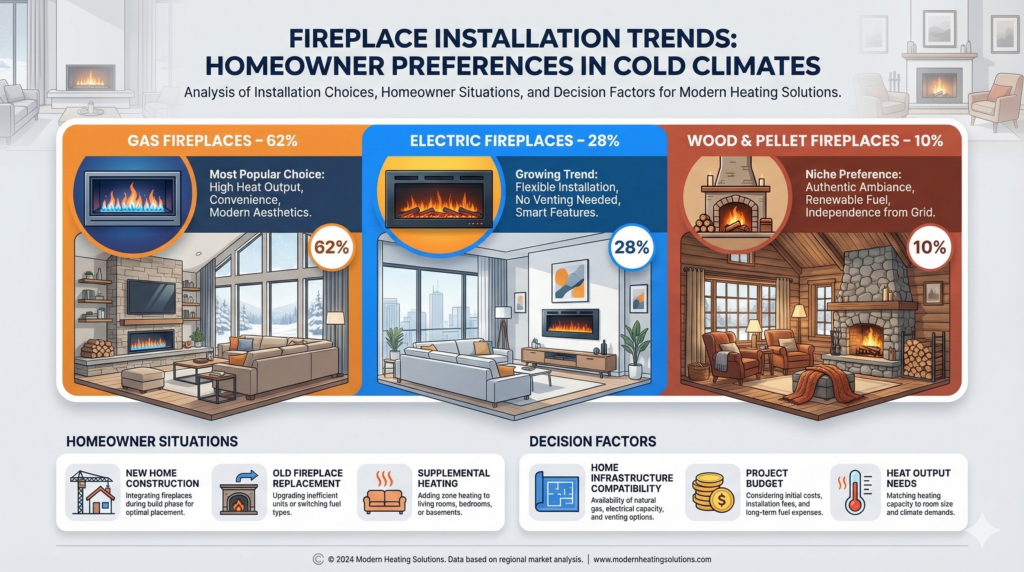
Based on Ridgeline Heating and Cooling’s installation records across Bonneville County, gas fireplaces account for approximately 62% of all fireplace projects we complete each year. Electric fireplaces represent roughly 28%, with wood-burning units and pellet inserts making up the remaining 10%. This mirrors national trends reported by the Hearth, Patio and Barbecue Association (HPBA), which found that gas fireplaces dominate new installations across cold-climate U.S. markets.
Idaho Falls homeowners most often contact us in three situations: building a new home and selecting a fireplace from scratch, replacing an inefficient older wood fireplace, or adding supplemental heat to a living room or master bedroom. In each case, the decision usually comes down to three factors: the home’s existing infrastructure, total project budget, and desired heat output. A free in-home consultation with one of our certified technicians is the fastest way to identify the best fit for your specific layout.
How Much Does Fireplace Installation Cost in Idaho Falls?
Fireplace installation costs in Idaho Falls vary widely depending on the type of fireplace, the complexity of the installation, and your home’s existing setup. Per Homewyse’s January 2026 cost calculator, a standard mid-range fireplace unit in Idaho starts at $2,008 to $2,457 before customization. The table below covers the full range by type:
| Fireplace Type | Unit Cost | Labor Cost | Typical Total |
|---|---|---|---|
| Electric (plug-in unit) | $300 – $1,500 | $200 – $500 | $500 – $2,000 |
| Electric Insert | $400 – $2,000 | $200 – $500 | $600 – $2,500 |
| Ventless Gas Insert | $1,500 – $3,500 | $500 – $1,000 | $2,000 – $4,500 |
| Direct-Vent Gas Fireplace | $2,500 – $6,000 | $1,000 – $2,000 | $3,500 – $8,000 |
| Wood-Burning (Prefab) | $1,500 – $3,000 | $500 – $1,500 | $2,000 – $4,500 |
| Wood-Burning (Masonry) | $8,000 – $20,000 | $5,000+ | $15,000 – $30,000+ |
Sources: Angi (2026), HomeGuide (2025), Homewyse (January 2026)
Additional Costs to Budget For
Several factors beyond the unit price affect the final bill. Ask your licensed contractor for an itemized quote covering:
- Gas line installation: $200 to $1,000 depending on distance from your meter to the fireplace location
- Chimney or venting work: new chimney systems run $10 to $20 per linear foot for materials and labor
- Dedicated electrical circuit: $200 to $500 for units requiring a hardwired connection
- Building permits: Idaho Falls gas installation permits typically cost $50 to $200
- Surround and mantel finishes: tile, stone, or brick facing materials range from $10 to $300 per square foot
- Chimney liner replacement: required for some gas insert conversions, typically $500 to $2,500
Federal tax incentives may offset some of your installation costs. See our guide to HVAC and heating tax incentives for Idaho homeowners for current credit amounts under the Inflation Reduction Act.
Which Fireplace Type Works Best for Idaho Falls Winters?
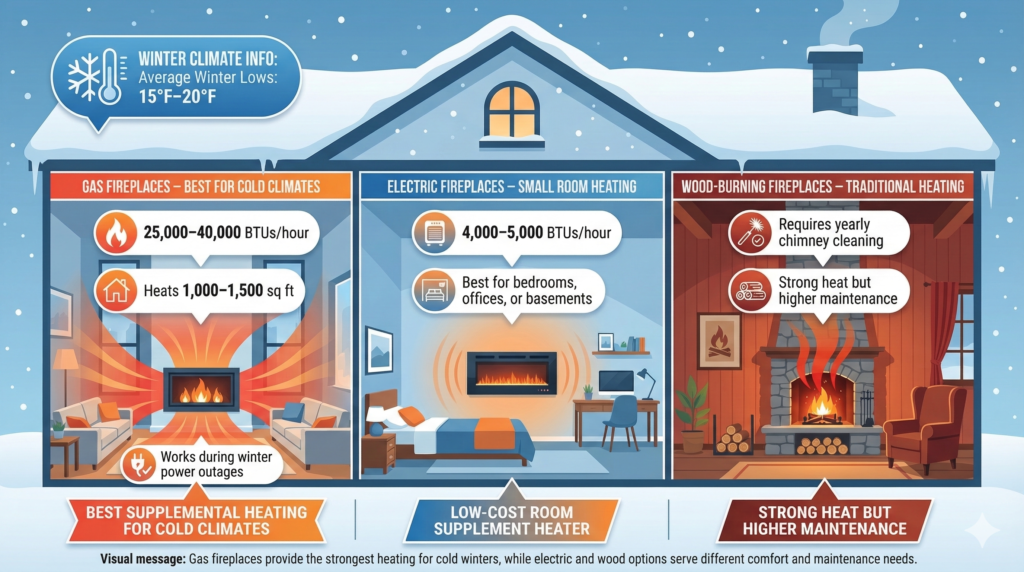
Idaho Falls sits at approximately 4,700 feet in elevation. Average winter lows run between 15°F and 20°F from November through March, with temperatures occasionally falling well below zero. This climate makes heat output and reliability the two most important factors when choosing a fireplace for your home.
Gas Fireplaces Perform Best in Cold Climates
Gas fireplaces are the most capable supplemental heat source for Idaho winters. A direct-vent unit produces 25,000 to 40,000 BTUs per hour, sufficient to heat 1,000 to 1,500 square feet. According to the U.S. Department of Energy, zone heating with a high-efficiency gas fireplace can reduce whole-home heating costs when you lower your central thermostat in unoccupied rooms. Gas fireplaces also operate independently of the electrical grid, which matters during Idaho’s winter power outages.
| “For homes in high-altitude, cold-climate regions like Idaho Falls, a direct-vent gas fireplace is often the most practical and efficient supplemental heating choice. Zone-heating occupied spaces without running central HVAC translates to measurable energy savings over a full heating season.”Dr. Linda Kawamoto-Reid, Energy Efficiency Researcher, American Council for an Energy-Efficient Economy (ACEEE) |
Electric Fireplaces Work Best as Room Supplements
Electric fireplaces produce 4,000 to 5,000 BTUs per hour, adequate for warming smaller rooms but not designed to handle Idaho’s coldest nights as a standalone heat source. They are the practical choice for homeowners who want a low-cost, no-permit supplemental heater for a bedroom, home office, or finished basement. See our guide on lowering your heating bills this winter for zone-heating strategies that can reduce your monthly utility costs.
Wood-Burning Fireplaces Require the Most Maintenance
Wood-burning fireplaces and stoves remain popular around rural Idaho Falls where firewood is locally accessible. A well-maintained wood stove can produce significant heat output, but performance drops without consistent upkeep. The Chimney Safety Institute of America (CSIA) recommends annual chimney inspections and cleaning for all wood-burning systems costs that should be factored into the long-term budget.
What Permits Are Required for Fireplace Installation in Idaho Falls?
Any gas or wood-burning fireplace installation in Idaho Falls requires a building permit from the City of Idaho Falls Building Department. All gas line work must be completed by a licensed plumber or HVAC contractor and inspected before the system is used. Bypassing the permit process can void your homeowner’s insurance, create liability at resale, and result in costly code corrections later. Electric installations that require a new dedicated circuit also typically need an electrical permit.
Here is what the permit process looks like for a standard gas fireplace installation:
- Submit your permit application to the City of Idaho Falls Building Department, including your licensed contractor’s information and installation plans
- Receive approval before work begins. Standard residential permits are typically approved within 3 to 7 business days
- Licensed contractor completes all work including gas line connections, venting, and any required electrical wiring
- Schedule a final inspection to confirm code compliance and close out the permit before you use the fireplace
Gas vs. Electric Fireplaces: Which Should You Choose?
Choosing between gas and electric comes down to your home’s existing infrastructure, your heating goals, and your total budget. Both are practical options for Idaho Falls homeowners. The comparison below covers the key differences so you can evaluate each option independently:
| Feature | Gas Fireplace | Electric Fireplace |
|---|---|---|
| Heat Output | 25,000–40,000 BTU/hr | 4,000–5,000 BTU/hr |
| Typical Installation Cost | $3,000–$8,000 | $300–$2,500 |
| Annual Operating Cost | $200–$500 | $50–$80 |
| Requires Venting? | Yes (most models) | No |
| Works During Power Outage? | Yes | No |
| Permit Required? | Yes | Usually No |
| Annual Maintenance Needed? | Yes professional inspection | Minimal basic cleaning |
| Home Resale Value Impact | High (6–12% increase) | Moderate |
Sources: Angi (2026), Thumbtack (2025), National Association of Realtors (2025)
| “Gas fireplaces deliver far more usable heat than electric units. For Idaho Falls homeowners who want a fireplace that genuinely supplements their central heating system on the coldest nights of the year, gas is the more reliable and effective choice.”Terry Wakefield, Licensed HVAC Contractor, 22 Years of Residential Heating Systems Experience |
Annual operating costs are worth considering over the long term. Gas fireplaces cost $200 to $500 per year to operate, while electric units run $50 to $80 annually according to Thumbtack’s 2025 fireplace cost data. If you are also deciding between propane and natural gas as your fuel source, our guide on propane vs natural gas for Idaho homes covers the cost and efficiency differences in detail.
Ready to Add a Fireplace to Your Idaho Falls Home?
A professionally installed fireplace adds lasting value to your home in both daily comfort and long-term resale appeal. According to the National Association of Realtors, having a fireplace can add approximately 12% to your home’s selling price. For the average Idaho Falls home, that is a meaningful return on your investment.
Whether you are considering a gas insert to upgrade an inefficient wood fireplace, a modern direct-vent gas fireplace for your main living area, or an electric unit for zone heating a bedroom or home office, the right installation starts with an honest assessment of your home’s layout and your comfort goals.
Ridgeline Heating and Cooling serves Idaho Falls and surrounding communities with professional gas and electric fireplace installation, along with comprehensive heating services in Idaho Falls. Contact us today to schedule a free in-home consultation and find the fireplace that fits your home, your budget, and your comfort needs.


