Skip to content



An AC tune-up before summer gives your system a full inspection, cleaning, and performance check so it runs reliably when Idaho Falls temperatures climb. A properly maintained air conditioner uses 5–15% less energy, lasts significantly longer, and is far less likely to break down during a heatwave. Schedule your tune-up in early spring for the best availability and results.
Key Takeaways
- Pre-summer AC maintenance reduces cooling costs by 5–15% according to U.S. Department of Energy estimates
- Dirty condenser coils alone can raise energy consumption by up to 30%, forcing your system to work much harder
- AC units lose roughly 5% efficiency per year without regular service after five years, that’s 25% more energy for the same cooling
- Spring is the best window to schedule a tune-up before HVAC demand peaks and technician availability tightens
- Most manufacturers require annual maintenance to keep your equipment warranty valid
What Does an AC Tune-Up Actually Include?
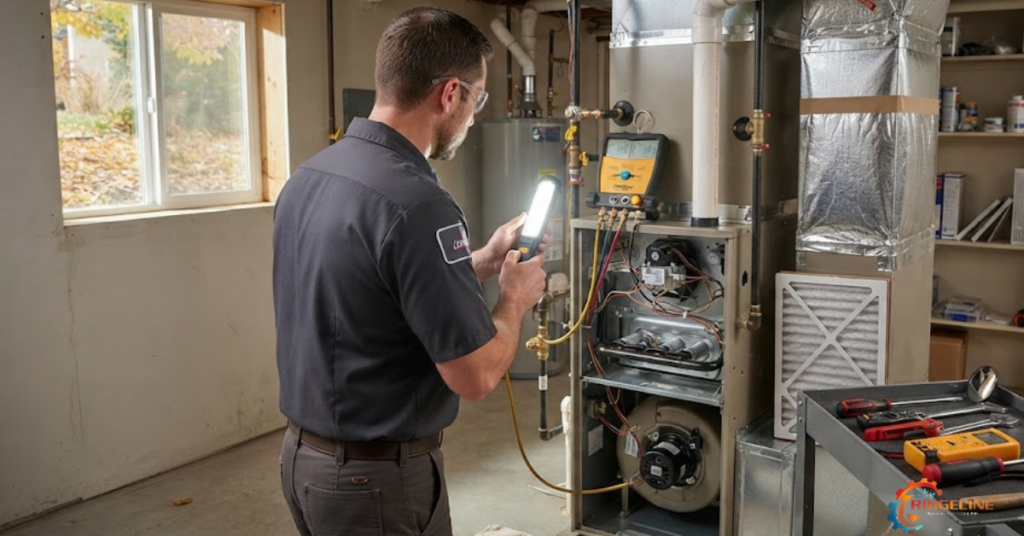
An AC tune-up is a comprehensive inspection and service visit performed by a certified HVAC technician. It goes well beyond a basic filter swap your technician evaluates the mechanical, electrical, and refrigerant health of your entire cooling system.
Understanding what’s included helps you see why this single visit can prevent months of problems.
What a Technician Checks During a Spring Service Visit
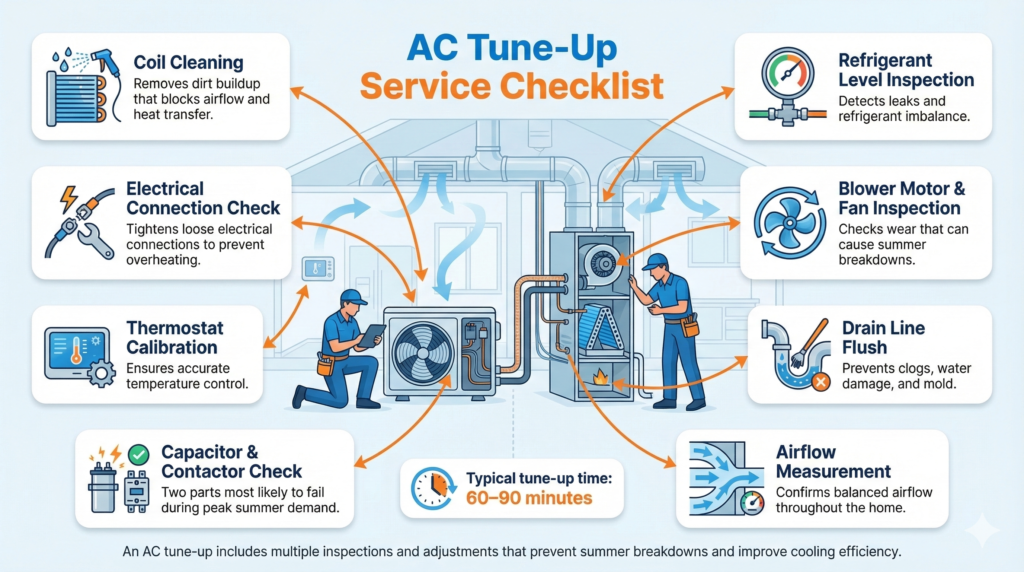
A professional tune-up from Ridgeline Heating and Cooling typically covers all of the following:
- Condenser and evaporator coil cleaning removes buildup that chokes airflow and heat transfer
- Refrigerant level inspection identifies leaks or imbalances before they damage the compressor
- Electrical connection tightening loose connections draw extra amperage and create fire risk
- Blower motor and fan inspection worn components under summer heat are a common breakdown trigger
- Thermostat calibration ensures accurate temperature readings and proper system cycling
- Drain line flush clears clogs that cause water damage or mold growth
- Capacitor and contactor check two of the most common parts to fail during peak summer demand
- Airflow measurement confirms balanced distribution through your home’s ductwork
“A spring tune-up isn’t just maintenance it’s an investment in reliability. Most of the breakdowns we see in July and August trace back to small issues that could have been caught in April,” says Mark Jensen, Senior HVAC Service Manager at the Air Conditioning Contractors of America (ACCA).
How Long Does a Tune-Up Take?
For most Idaho Falls homes, a professional AC tune-up takes approximately 60 to 90 minutes. If the technician discovers additional issues such as a refrigerant leak or damaged capacitor, that appointment may run longer or require a follow-up visit.
Need this handled in Idaho Falls? See our AC tune-up page or call (208) 521-2041.
How Does a Tune-Up Lower Your Energy Bills?
One of the most immediate benefits of pre-summer AC maintenance is the direct impact on your monthly electricity costs. A neglected system works harder than it needs to, and that extra effort shows up clearly on your utility statement.
The Hidden Cost of Dirty Coils
Your AC has two sets of coils that handle heat exchange: the evaporator coil inside your air handler and the condenser coil in your outdoor unit. Over the fall and winter months, both coils accumulate dust, pollen, and debris that restrict their ability to transfer heat efficiently.
According to the U.S. Department of Energy, dirty condenser coils can increase your system’s energy consumption by up to 30%. Even a thin layer of grime just a few millimeters thick can meaningfully reduce cooling capacity and force the compressor to run longer cycles to maintain your set temperature.
“Coil contamination is one of the most underestimated efficiency killers in residential HVAC. Homeowners often accept higher bills as normal aging, when a simple cleaning could restore near-original performance,” explains Dr. Sarah Colton, Director of Building Energy Research at the Lawrence Berkeley National Laboratory.
Why Refrigerant Levels Matter for Efficiency
Low refrigerant is another quiet drain on your energy budget. When refrigerant levels drop typically due to a slow leak your system cannot absorb and release heat properly. The result is longer run times, reduced cooling output, and added stress on the compressor.
Replacing an air filter alone can improve HVAC energy efficiency by 5–15%, according to the U.S. Department of Energy. Combine that with clean coils and proper refrigerant levels, and the cumulative savings are significant for an Idaho Falls household running AC for three to four months each summer.
The U.S. Department of Energy estimates that proper annual maintenance can reduce cooling costs by 5–15% overall, which translates to real dollars saved every month your AC runs.
Can an AC Tune-Up Prevent Summer Breakdowns?
Few things are more stressful than an AC failure during a heat wave especially when every HVAC company in Idaho Falls is slammed with emergency calls. Pre-season maintenance is the most reliable way to avoid that situation.
The Parts Most Likely to Fail Under Summer Heat
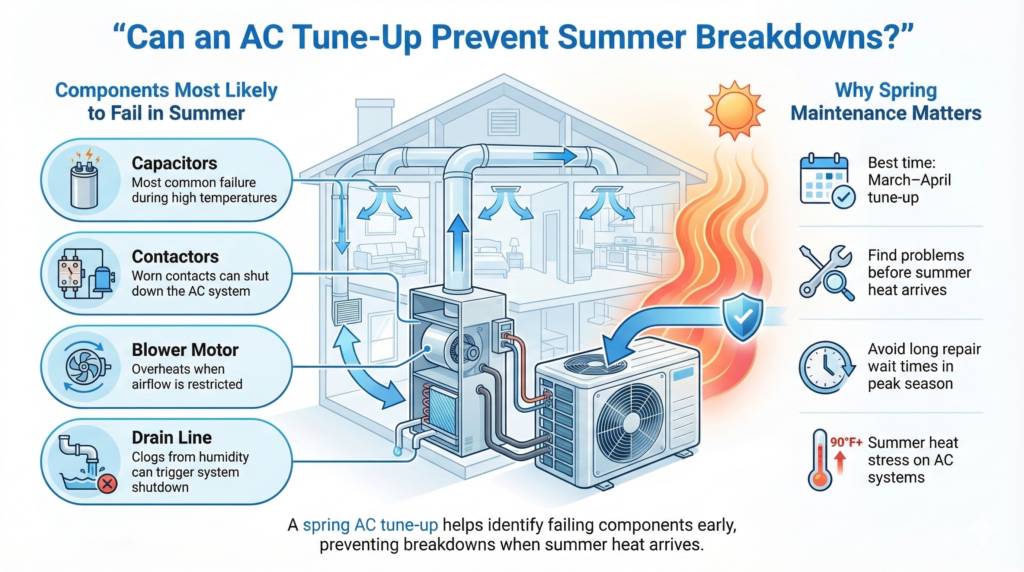
Summer places peak electrical and mechanical demand on your air conditioner. Certain components are much more prone to failure once temperatures spike and the system runs continuously:
- Capacitors start and run capacitors fail most often during high-heat periods; a spring tune-up includes testing these inexpensive but critical parts
- Contactors worn contactors interrupt power to the compressor and are a leading cause of sudden shutdowns
- Blower motors restricted airflow from dirty filters causes motors to overheat and fail prematurely
- Drain lines summer humidity accelerates algae growth in clogged drain pans, causing water backups that trigger safety shutoffs
“The pattern we see every summer is predictable: the first stretch of 90-degree weather produces a wave of calls from homeowners whose systems were already on the edge. Pre-season service catches those systems before they fail at the worst possible time,” notes Tom Reardon, Certified HVAC Technician and member of the Refrigeration Service Engineers Society (RSES).
Why Timing Your Tune-Up in Spring Makes a Difference
HVAC.com’s 2025 maintenance guide notes that if you wait until summer to discover your compressor is broken, you may spend weeks waiting for replacement parts while dealing with uncomfortable indoor heat. A March or April appointment leaves enough time to order components, schedule any necessary repairs, and still be fully ready before summer arrives.
Spring scheduling also means shorter wait times, more flexible appointment windows, and sometimes promotional pricing from HVAC companies that are less busy before peak season.
How Does Regular Maintenance Extend the Life of Your AC?
An air conditioner is one of the most significant appliances in your home. Protecting that investment through annual service is one of the most cost-effective decisions you can make as an Idaho Falls homeowner.
What Happens to an AC That Skips Annual Service
Without routine maintenance, your air conditioner loses roughly 5% of its operational efficiency each year, according to Team Dave Logan HVAC research. After five years of skipped tune-ups, the system may be consuming 25% more electricity to deliver the same cooling it provided when new.
That ongoing inefficiency puts extra stress on components like the compressor the most expensive single part in your system. A compressor replacement can cost $1,500 or more, while a compressor failure often signals it is time to replace the entire unit.
Angi’s home services data confirms that a well-maintained AC unit lasts approximately 15 years, while neglected systems may fail in 10 years or fewer. The cost of a single tune-up ($75–$150) compared to the cost of early replacement ($4,000–$7,000) makes the math straightforward.
“Routine maintenance doesn’t just extend equipment life it preserves the full return on your original investment. An AC that lasts 15 well-maintained years versus 10 neglected ones represents thousands of dollars in delayed replacement costs,” says Lisa Park, Energy Efficiency Consultant and ENERGY STAR Certified HVAC Specialist.
How Maintenance Protects Your Warranty Coverage
Most homeowners overlook a critical detail in their AC manufacturer’s warranty: annual professional maintenance is typically required to keep coverage active. If your system fails and you cannot provide documentation of regular service, the manufacturer may deny your claim.
That means skipping your tune-up doesn’t just cost you in energy bills it could cost you the full price of repairs or replacement if something goes wrong. Keep records of every service visit and ask your Ridgeline technician for written documentation.
Does an AC Tune-Up Improve Indoor Air Quality?
Your air conditioner does more than cool your home it filters and circulates the air your family breathes every day. A neglected system can silently degrade your indoor air quality throughout the summer months.
What Builds Up Inside Your System Over Winter
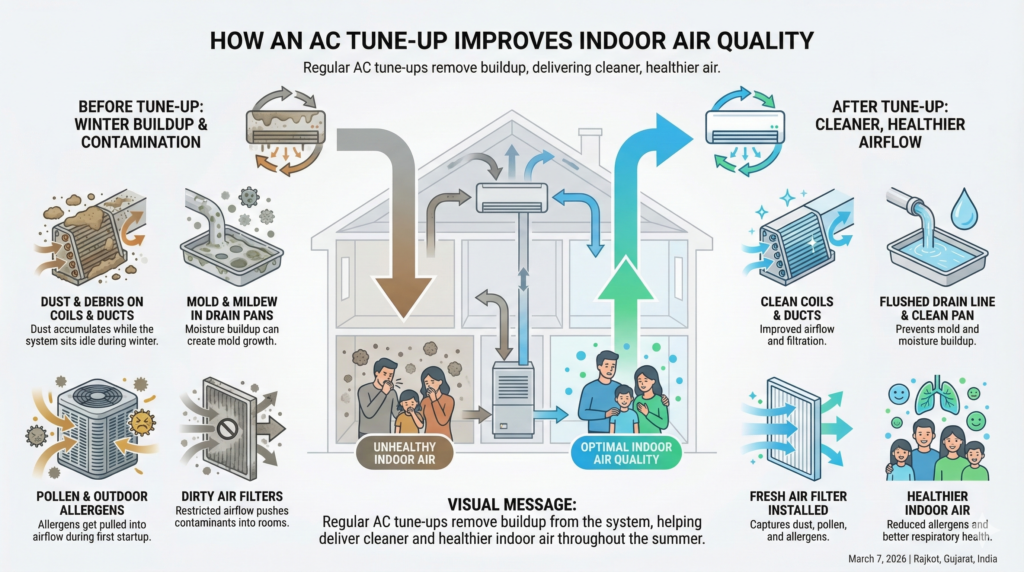
Idaho Falls winters mean your AC sits idle for several months. During that time:
- Dust and debris accumulate on coils, in ductwork, and inside the air handler
- Mold and mildew can develop in drain pans where moisture lingers
- Pollen and outdoor allergens settle into the outdoor unit and get pulled into circulation at first startup
- Dirty filters left over from last season restrict airflow and push contaminants back into your living spaces
A tune-up addresses each of these issues before your system runs continuously all summer. The result is cleaner, healthier air something that matters especially for households with allergy sufferers, asthma, or young children.
For additional strategies on keeping indoor air clean year-round, see our guide on regular HVAC maintenance for Idaho Falls homes.
When Is the Best Time to Schedule an AC Tune-Up in Idaho Falls?
Early spring March through early May is the ideal window for an AC tune-up in Idaho Falls. At this point, outdoor temperatures are still comfortable, your AC is not yet in daily use, and HVAC technicians have more scheduling availability before the summer rush begins.
Here is a quick comparison to help you decide:
| Timing | Pros | Cons |
| March – April | Best availability, possible promotional pricing, time for any repairs | Weather still cool, easy to forget |
| May | Good balance of preparation and urgency | Booking fills faster |
| June – August | System in active use, problems noticed quickly | Long wait times, peak pricing, no buffer for repairs |
| Fall | Good for post-season check | Does not address cooling-season issues |
“We tell homeowners to think of spring as their AC’s annual physical. You wouldn’t wait until you felt terrible to see a doctor. Don’t wait until your air conditioner is struggling in July to find out it needed attention in April,” advises James Fowler, HVAC Systems Engineer and member of the American Society of Heating, Refrigerating and Air-Conditioning Engineers (ASHRAE).
If you’re not sure whether your system shows any red flags before your scheduled tune-up, check our guide on13 AC problems to be aware of and our tips on how often to change your air filter for simple steps you can take right now.
After your tune-up, pairing your service with the best thermostat setting for summer will help you maximize energy savings all season long.
Keep Your Home Cool All Summer Long with Ridgeline Heating and Cooling
A pre-summer AC tune-up is one of the most reliable ways to protect your comfort, lower your energy bills, and avoid costly emergency repairs during the hottest months of the year. For Idaho Falls homeowners, scheduling that service in early spring makes all the difference.
At Ridgeline Heating and Cooling, our certified technicians provide thorough, honest AC maintenance with no surprise fees and no rushed service. We serve Idaho Falls and surrounding communities, and we are ready to make sure your system is fully prepared before summer arrives.
Schedule your AC tune-up today, contact Ridgeline Heating and Cooling at and get peace of mind before the heat hits.
Book your Idaho Falls AC tune-up
Our AC tune-up includes refrigerant check, coil cleaning, capacitor test and condensate line flush so the system is ready for July.
Call (208) 521-2041 or request service online. Ridgeline Heating and Cooling, 370 College St, Idaho Falls, ID 83401.