 Skip to content




A furnace tune-up is a yearly maintenance service where a licensed HVAC technician inspects, cleans, tests, and adjusts your furnace to keep it running safely and efficiently. Most visits take 1 to 2 hours and cost between $70 and $200, covering a 20-plus point checklist that includes safety controls, combustion testing, electrical connections, airflow, and filter replacement. For Idaho Falls homeowners, booking a tune-up in early fall is the smartest way to head into winter without surprise breakdowns or sky-high heating bills.
If your furnace has been running for years without service, this guide walks you through exactly what happens during a professional visit, what it costs, and why skipping it can quietly drain your wallet.
Key Takeaways
- A standard furnace tune-up costs $70 to $200 and takes 1 to 2 hours
- Technicians run a multi-point checklist covering safety, combustion, airflow, and electrical components
- Annual maintenance can save up to $120 per year on heating bills with ENERGY STAR certified gas furnaces in northern climates like Idaho
- Tune-ups protect your warranty, catch carbon monoxide risks, and extend equipment life
- Best time to schedule in Idaho Falls is September through early October, before winter demand spikes
What Is a Furnace Tune-Up?
A furnace tune-up is preventive maintenance performed by a certified HVAC technician. It is more thorough than a quick inspection. The tech disassembles key parts, cleans buildup, tests safety controls, measures combustion efficiency, and replaces wear items like air filters.
Think of it like a yearly checkup at the doctor. Your furnace might seem fine, but small issues like a dirty flame sensor, a slipping blower belt, or a clogged burner build up quietly until they cause a breakdown on the coldest night of the year.
Tune-Up vs Basic Inspection
A basic inspection is a visual check and diagnostic report. A full tune-up includes cleaning, lubrication, calibration, and minor adjustments. Inspections typically cost $70 to $130. A complete tune-up runs $100 to $200 and delivers far more value because the technician actually services the system, not just looks at it.
How Long Does It Take?
Most furnace tune-ups take between 1 and 2 hours for a standard residential gas furnace. Older systems, units that have been neglected for several years, or furnaces needing minor repairs may push the visit to 3 hours. Electric furnaces are usually quicker since they have fewer moving parts.
What Does a Furnace Tune-Up Service Include?
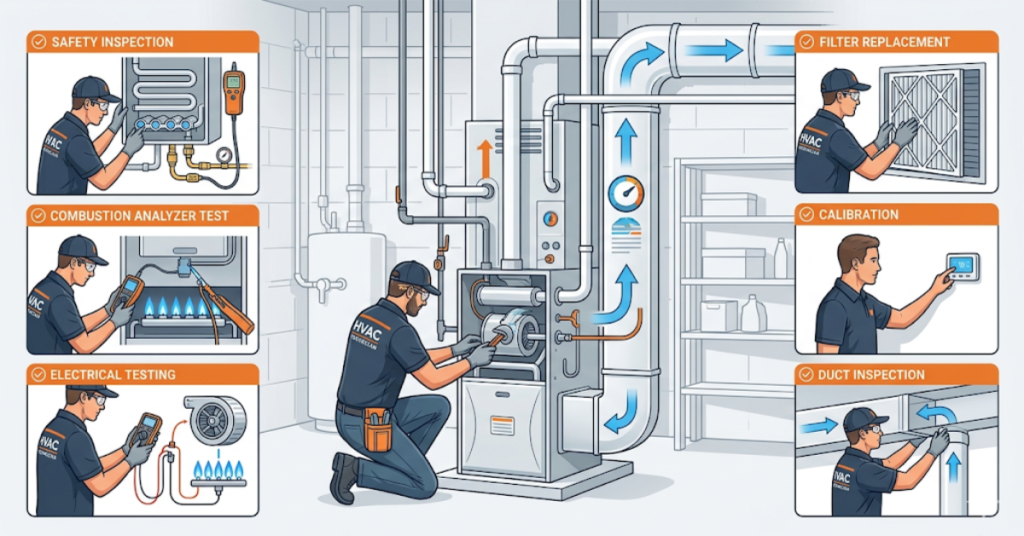
A proper tune-up follows a structured checklist covering safety, performance, and cleanliness. Here is what a Ridgeline technician works through on every visit.
Safety and Combustion Checks
Safety comes first. The technician shuts off power and gas, then inspects:
- Heat exchanger for cracks or rust that could leak carbon monoxide into your home
- Gas lines, valves, and connections for leaks
- Flue and vent pipes for blockages or soot buildup
- Carbon monoxide levels using a combustion analyzer
- Combustion efficiency by measuring the air-to-fuel ratio
- Burner flame color and pattern (a healthy flame is steady and blue, not yellow)
A cracked heat exchanger or blocked flue is a serious safety hazard. If you ever notice a strange smell, here is how to tell if a gas smell near a furnace is normal or an emergency.
Cleaning Key Components
Dust and debris are the silent killers of furnace efficiency. The tech cleans:
- Burners and flame sensor to ensure proper ignition
- Blower assembly and blower wheel to restore airflow
- Pilot or igniter to prevent startup failures
- Furnace cabinet interior to remove dust and reduce fire risk
- Drainage system and condensate trap on high-efficiency furnaces
A dirty blower wheel alone can reduce efficiency by 10 to 15 percent and force the furnace to work harder for the same heat output.
Electrical and Thermostat Testing
Loose wires and miscalibrated thermostats waste energy and create fire risk. The technician:
- Tightens all electrical connections
- Tests amp draw to prevent breaker trips
- Inspects the control board and safety switches
- Calibrates the thermostat and replaces batteries if needed
- Lubricates motor bearings and moving parts
If your thermostat is acting up between visits, this guide on how to reset a Honeywell thermostat in four steps can help.
Airflow and Filter Service
Airflow is half the battle in heating performance. The technician:
- Replaces or cleans the air filter
- Runs a static pressure test on the duct system
- Checks the temperature split between return and supply air (must match manufacturer specs)
- Inspects ductwork for visible leaks or damage
According to the U.S. Department of Energy, leaky ducts can lose up to 35 percent of heated air before it reaches your rooms, which means your furnace is running longer for less comfort.
How Much Does a Furnace Tune-Up Cost in 2026?
Tune-up pricing depends on your furnace type, age, condition, and location. Here is what Idaho Falls homeowners can expect to pay.
One-Time Tune-Up Pricing
A single tune-up visit typically falls in these ranges, per HomeGuide 2026 cost data:
| Service Type | Cost Range |
| Basic inspection and diagnostic | $70 to $130 |
| Standard tune-up (gas furnace) | $80 to $170 |
| Comprehensive tune-up | $150 to $300 |
| Electric furnace tune-up | $70 to $130 |
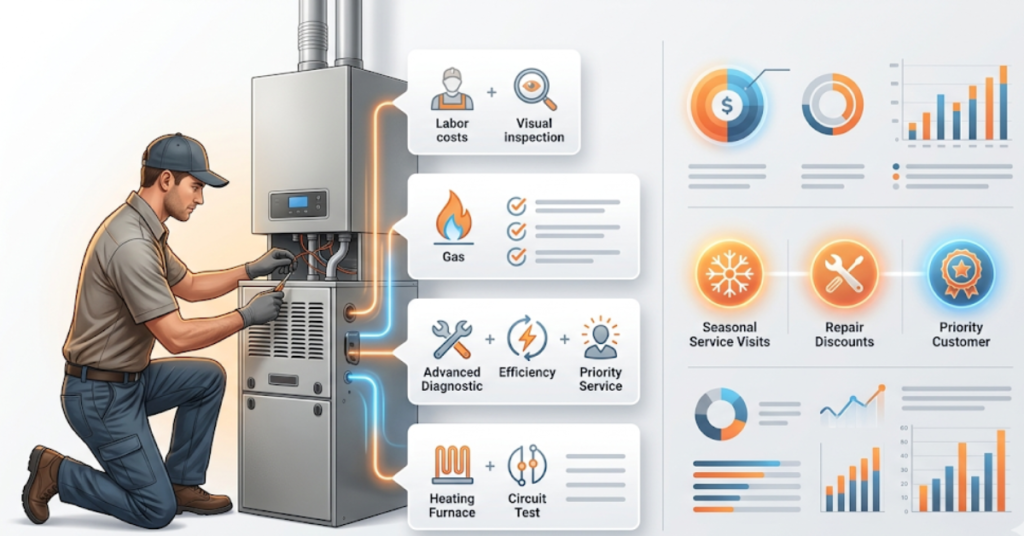
Labor makes up most of the bill, usually $75 to $125 per hour for a licensed HVAC contractor.
Annual Maintenance Plans
Many Idaho Falls homeowners choose a maintenance plan instead of one-off visits. These plans cost $150 to $500 per year and typically include two tune-ups (one for the furnace in fall, one for the AC in spring), priority service, and discounts on repairs. If you need even one repair in a year, the plan often pays for itself.
Why Annual Furnace Tune-Ups Matter for Idaho Falls Homes
Idaho Falls winters are not gentle. Your furnace runs hard for five to six months straight. Skipping maintenance means you are betting on a stressed-out system to hold up through subzero nights. Here is what you gain from yearly service.
Energy Savings and Efficiency
A tuned-up furnace burns fuel cleanly and moves heat efficiently. The ENERGY STAR program notes that certified gas furnaces in northern states can save up to $120 per year compared to baseline models, and a well-maintained system holds onto those savings instead of losing them to dust and wear. Want more ways to cut your winter bill? See our guide on how to lower your heating bill this winter.
Safety and Carbon Monoxide Protection
Gas furnaces produce carbon monoxide as a byproduct of combustion. A healthy furnace vents it safely outside. A neglected one can leak it into your home. CO is colorless, odorless, and deadly. The combustion analysis and heat exchanger inspection during a tune-up are the only reliable way to catch this risk before it becomes an emergency.
Extending Furnace Lifespan
A well-maintained gas furnace can last 15 to 20 years. A neglected one often fails in 10 to 12. Annual tune-ups catch worn parts, lubricate motors, and reduce stress on every component. Most manufacturer warranties actually require documented annual maintenance to stay valid, so skipping it could void your coverage.
If your unit is already pushing 15 years and breaking down often, it may be time to weigh whether to repair or replace your furnace instead of pouring money into tune-ups.
When Should You Schedule a Furnace Tune-Up?
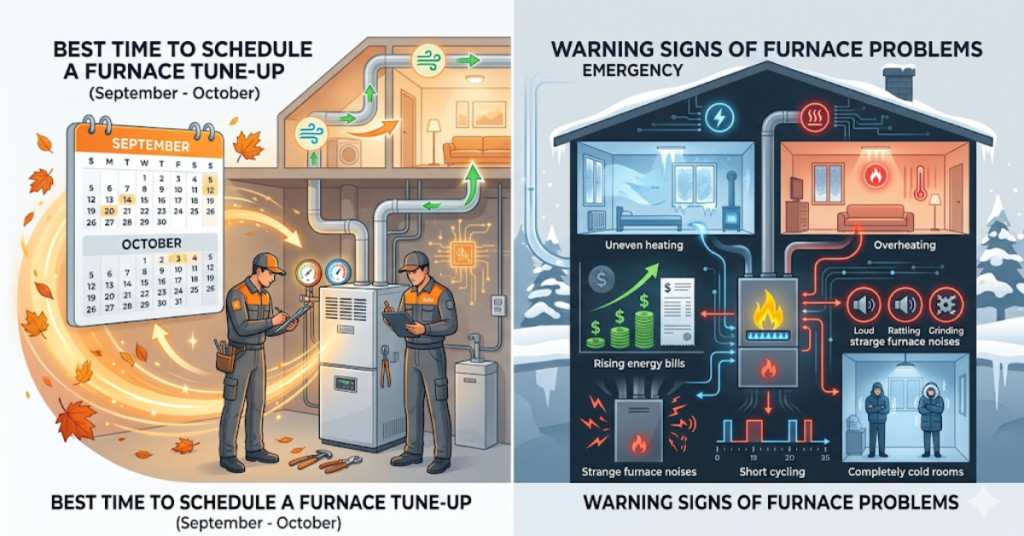
The ideal window is early fall, between mid-September and mid-October. Booking early means:
- You catch problems before heating season
- You avoid emergency call rates during winter
- You get flexible scheduling instead of waiting weeks for an appointment
- Off-season pricing is usually 10 to 20 percent cheaper
If you missed fall, do not wait until spring. Any time is better than never.
Warning Signs Your Furnace Needs Service Now
Skip the calendar and book immediately if you notice:
- Heating bills climbing without colder weather
- Uneven heating or cold rooms
- Banging, rattling, or squealing noises
- Short cycling (furnace turns on and off repeatedly)
- Yellow flame instead of blue
- Burning or musty smell when heat kicks on
- Furnace running constantly without reaching set temperature
These signs mean something is off. A tune-up may fix it, or it may flag the need for professional furnace repair before things get worse.
How to Prepare for Your Tune-Up Appointment
A little prep makes the visit faster and smoother:
- Clear the area around the furnace so the tech has 3 feet of working space
- Replace or have a new air filter ready if you want a specific brand or size
- Note any issues you have noticed (noises, smells, cold rooms, high bills)
- Locate your thermostat and main shutoffs so you can point them out
- Keep pets in a separate room for safety and to avoid distractions
The technician will give you a written report after the visit summarizing what was checked, what was cleaned, and any recommended repairs. Keep these reports — they are proof of maintenance for warranty claims and helpful when selling your home. For a deeper look at long-term value, here are the benefits of regular HVAC maintenance for Idaho Falls homes.
Book Your Idaho Falls Furnace Tune-Up With Ridgeline
A furnace tune-up is one of the cheapest, smartest investments you can make in your home before winter hits. For $100 to $200, you get a safer system, lower bills, fewer breakdowns, and a furnace that lasts years longer. The math works in your favor every time.
Ridgeline Heating and Cooling has been keeping Idaho Falls homes warm for years with licensed, certified technicians who treat your home like their own. Whether you need a one-time tune-up or want to join our annual maintenance plan, we are ready to help. Call us today to schedule your furnace tune-up and head into winter with peace of mind.


