Skip to content



A tankless water heater heats water only when you turn on the faucet, eliminating the energy waste that comes with keeping a full tank hot around the clock. According to the U.S. Department of Energy, homes that use 41 gallons or less of hot water daily can see 24% to 34% energy savings by switching from a conventional tank to a tankless system. For Idaho Falls homeowners tired of running out of hot water or watching energy bills climb, a tankless upgrade is worth serious consideration.
Key Takeaways
- Tankless water heaters are 24-34% more energy efficient than standard tank models for average households
- These systems last 20 or more years compared to 10-15 years for traditional tank heaters
- On-demand heating means unlimited hot water without waiting for a tank to refill
- Wall-mounted units free up valuable floor space in your utility closet or basement
- Annual flushing is essential in Idaho Falls to prevent mineral buildup from hard water
How Does a Tankless Water Heater Work?
On-Demand Heating vs. Standby Storage
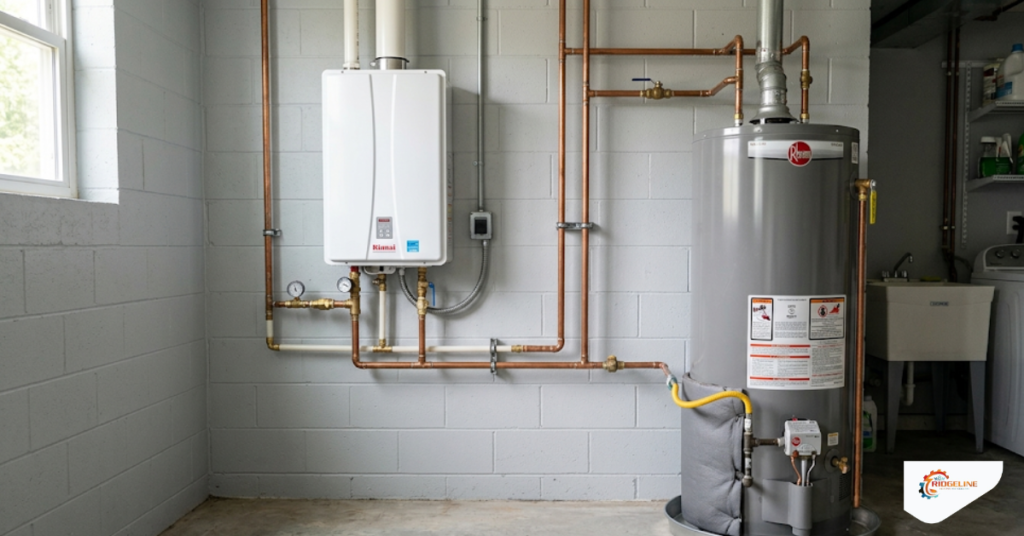
A traditional tank water heater stores 40 to 50 gallons of water and keeps it heated 24 hours a day, whether you need it or not. A tankless unit takes a completely different approach. When you open a hot water faucet, cold water flows through a heat exchanger inside the unit, and either a gas burner or electric element heats it instantly. Hot water keeps flowing as long as the tap is open. Once you turn it off, the system stops using energy.
This on-demand approach eliminates what the industry calls “standby heat loss.” The DOE estimates that standby loss can account for up to 18% of a home’s water heating energy bill, meaning a significant portion of what you pay goes toward reheating water that no one is using.
Gas-Fired vs. Electric Models
Gas-fired tankless units deliver higher flow rates, typically 2 to 5 gallons per minute, making them a better fit for larger households running multiple fixtures at once. Electric models are more compact and less expensive to install, but they produce lower flow rates and may need an electrical panel upgrade. Your home’s existing infrastructure and hot water demand will determine which type makes the most sense.
Why Are Tankless Water Heaters More Energy Efficient?
Eliminating Standby Heat Loss
The biggest efficiency gain comes from removing the storage tank entirely. A conventional tank heater is like leaving your car idling in the driveway all day. It burns energy constantly to maintain water temperature, even when you are at work or asleep. Tankless systems only consume energy during actual use, which is why their efficiency ratings range from 80% to 98% compared to 60% to 80% for standard tanks.
What the Numbers Say
The U.S. Department of Energy reports that tankless units are 24% to 34% more efficient for homes using 41 gallons or less per day. Even homes with heavy hot water usage see 8% to 14% improvement. ENERGY STAR data shows that a certified gas tankless unit saves a family of four roughly $95 per year, or about $1,800 over the system’s lifetime, compared to a standard gas tank model. Those savings add up fast, especially when paired with other steps like lowering your heating bill this winter.
How Long Does a Tankless Water Heater Last?
One of the strongest arguments for upgrading is longevity. Traditional tank water heaters typically last 10 to 15 years before corrosion, sediment, and component wear force a replacement. Tankless systems commonly operate for 20 to 30 years with proper maintenance, and many have easily replaceable parts that extend their service life even further.
That longer lifespan means fewer replacements over the life of your home, which offsets the higher upfront cost. If your current tank heater is showing signs it is time to replace your water heater, such as rusty water, popping noises, or visible leaks, a tankless unit may be the smarter long-term investment.
Can a Tankless System Keep Up With Your Household Demand?
Flow Rate and Sizing
Tankless water heaters are sized by flow rate (gallons per minute) rather than tank capacity. A gas-fired unit typically delivers 2 to 5 gallons per minute, which is enough for most Idaho Falls households to run a shower and a dishwasher at the same time without a drop in temperature. Proper sizing is critical. An undersized unit will struggle during peak demand, while an oversized unit wastes money on equipment you do not need.
When You Might Need Multiple Units
Larger families or homes with high simultaneous hot water demand may benefit from installing two smaller units rather than one large one. This setup handles back-to-back showers, laundry, and kitchen use without flow rate limitations. A licensed HVAC contractor can calculate your home’s peak demand based on the number of fixtures, their flow rates, and your household’s usage patterns.
What Financial Incentives Are Available in 2026?
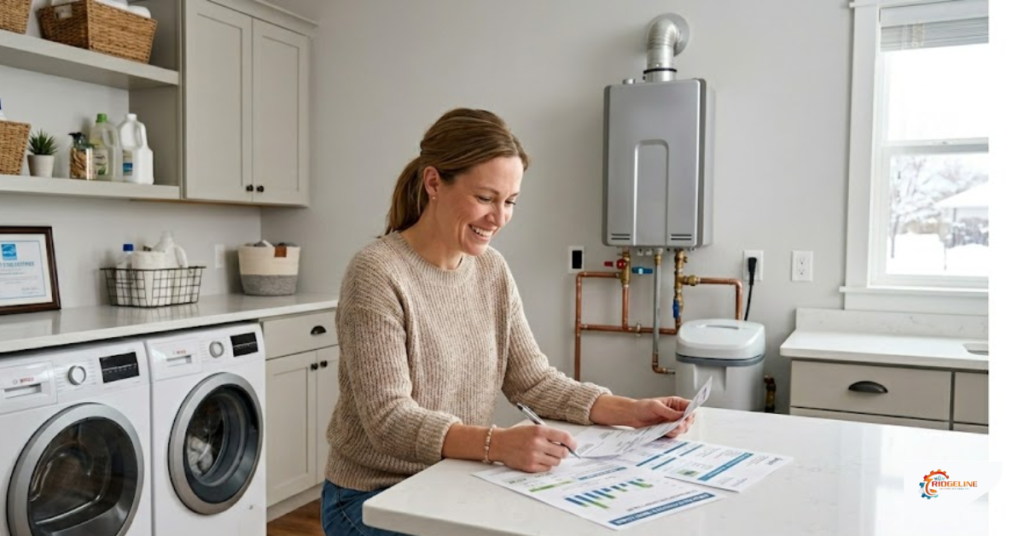
The federal Section 25C tax credit for air-source heat pumps expired at the end of 2025, but some financial programs still apply to water heater upgrades. Gas tankless units that meet DOE efficiency thresholds may qualify for up to $300 in federal tax credits in 2026, though homeowners should verify current eligibility with the IRS before purchasing.
Locally, Idaho Falls Power offers rebates and zero-interest loans for qualifying energy-efficient equipment installations. Customers with 12 months of payment history and no late payments may access loans up to $10,000 for eligible upgrades. Check with your utility provider before scheduling installation to confirm what programs are currently active.
What Maintenance Does a Tankless Water Heater Need in Idaho Falls?
Idaho Falls has moderately hard water, which means mineral deposits like calcium and magnesium build up inside your tankless unit’s heat exchanger over time. Without regular maintenance, that scale reduces heating efficiency and can shorten the system’s lifespan.
Annual flushing is the most important maintenance task for tankless owners in our area. A professional descaling service circulates a cleaning solution through the heat exchanger to remove mineral buildup. Homes with especially hard water may need flushing every six to nine months. Beyond descaling, routine maintenance includes cleaning the inlet filter, checking the venting system, and inspecting electrical connections. Understanding the importance of routine water heater flushing helps you protect your investment and avoid costly repairs down the road.
Is a Tankless Upgrade Right for Your Home?
A tankless water heater makes the most sense for Idaho Falls homeowners who want lower monthly energy costs, unlimited hot water, and a system that lasts two to three times longer than a traditional tank. The upfront cost is higher, typically $3,500 to $6,500 installed compared to $1,200 to $2,500 for a standard tank, but the energy savings and extended lifespan close that gap over time.
If your current water heater is nearing the end of its life or you are frustrated with running out of hot water, the team at Ridgeline Heating and Cooling can help you choose the right tankless system for your home. Call us at (208) 521-2041 or visit our water heater repair services page to schedule a consultation.