Skip to content



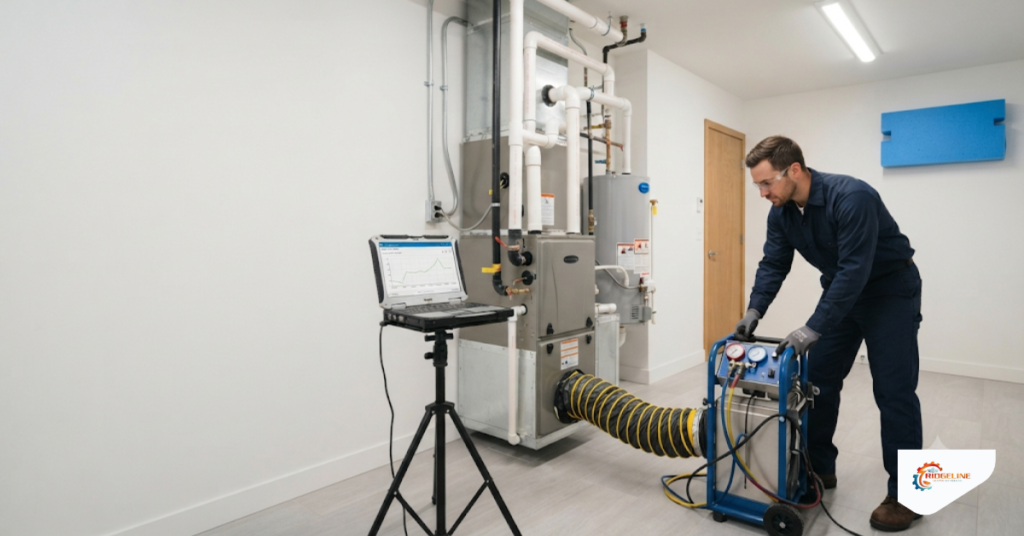
The best AC repair tips for keeping your home cool include replacing air filters every 1-3 months, clearing debris from your outdoor unit, flushing the condensate drain line, and scheduling professional maintenance each spring. These simple steps help your air conditioner run efficiently, lower your energy bills, and prevent breakdowns during the hottest weeks of an Idaho Falls summer.
AC Repair Tips For Idaho Falls Home
Heating and cooling account for roughly 43% of an average home’s utility bill, and air conditioning alone makes up about 12% of total residential electricity use in the United States. That means even small improvements in how your AC runs can save you real money each month. Below, you will find practical AC repair tips you can handle yourself, plus guidance on when it is time to call a licensed HVAC technician.
Key Takeaways
- Replace or clean your AC filter every 1-3 months to maintain proper airflow and reduce strain on your system
- Keep 2 feet of clearance around your outdoor condenser unit so heat can escape efficiently
- Flush your condensate drain line at least once a year to prevent water damage and mold growth
- Schedule professional AC maintenance before summer to catch worn parts before they fail
- Know the difference between safe DIY fixes and problems that require a certified technician
Why Does Your AC Stop Cooling Properly?
When your air conditioner runs but your home still feels warm, the problem usually traces back to one of a few common issues. Understanding the root cause helps you decide whether you can fix it yourself or need professional help.

Dirty Filters and Restricted Airflow
A clogged air filter is the single most common reason an AC system underperforms. When the filter is packed with dust, pet hair, and debris, it blocks airflow and forces the blower motor to work harder. According to the U.S. Department of Energy, dirty filters reduce airflow so much that dirt can bypass the filter entirely and build up on the evaporator coil, cutting its ability to absorb heat.
If you have not checked your filter in a while, that is a good starting point. For a detailed walkthrough, see our guide on how to clean your AC filter for step-by-step instructions.
Low Refrigerant and Coil Problems
Refrigerant is the substance that absorbs heat from indoor air and carries it outside. If your system is low on refrigerant, it cannot cool effectively no matter how long it runs. Low refrigerant usually means there is a leak somewhere in the line, and that is not a DIY repair. A licensed technician needs to locate the leak, repair it, and recharge the system.
Dirty evaporator and condenser coils also reduce cooling performance. When coils are coated in grime, they cannot transfer heat efficiently. Annual professional cleaning keeps coils in good shape and helps your system maintain its rated cooling capacity.
What AC Repairs Can You Safely Do Yourself?
Not every AC issue requires a service call. Several maintenance tasks are safe for homeowners and can make a noticeable difference in cooling performance and energy savings.
Replacing or Cleaning Air Filters
This is the easiest and most impactful maintenance task you can do. Most HVAC professionals recommend checking your filter monthly and replacing it every 1-3 months depending on usage, pets, and indoor air quality. Homes with pets or allergy concerns may need monthly changes.
According to the Department of Energy, replacing a dirty filter with a clean one helps your air conditioner run efficiently, removes particulates from the air, and protects your system from premature failure.
Clearing the Condensate Drain Line
Your AC produces condensation as it pulls moisture from indoor air. That water drains through a small line, and over time, algae, mold, and debris can clog it. A blocked drain line can cause water to back up and leak inside your home.
To prevent this, flush the line with a mixture of warm water and white vinegar once or twice per year. If you notice water pooling around your indoor unit, check out our post on what to do if your air conditioning is leaking water for more detailed steps.
Cleaning the Outdoor Condenser Unit
Your outdoor unit releases heat from your home. When it gets buried under leaves, grass clippings, or dust, it cannot do its job properly. Keep at least 2 feet of clearance around the unit and gently rinse the fins with a garden hose a couple of times each summer. Avoid using a pressure washer, which can bend the delicate fins and cause more harm than good.
How Can You Lower AC Energy Bills Without Sacrificing Comfort?
The average American household spends around $875 per year on cooling costs. In Idaho Falls, where summer temperatures regularly climb into the 90s, that number can go even higher. The good news is that a few simple adjustments can cut those costs without making your home uncomfortable.
Thermostat Settings That Save Money
The Department of Energy recommends setting your thermostat to 78 degrees Fahrenheit when you are home and raising it a few degrees when you leave. Every degree you raise the thermostat can reduce cooling costs by about 1%. A programmable or smart thermostat makes this automatic.
For a deeper look at finding the sweet spot between comfort and savings, read our guide on the best thermostat setting for summer.
Using Ceiling Fans Alongside Your AC
Ceiling fans do not lower the air temperature, but they create a wind-chill effect that makes a room feel 3-4 degrees cooler. Running a fan costs a fraction of what your AC uses, so pairing the two lets you raise the thermostat setting by a few degrees while staying just as comfortable. Just remember to turn fans off when you leave the room since they cool people, not spaces.
When Should You Call a Licensed HVAC Technician?
Some AC problems are beyond safe DIY territory. Knowing when to call a professional can save you from making a small issue worse and protect you from safety risks.

Refrigerant Leaks and Electrical Issues
If your system is blowing warm air, making hissing or bubbling sounds, or you see ice forming on the refrigerant line, you likely have a refrigerant leak. Handling refrigerant requires EPA certification and specialized equipment. Similarly, any electrical problems like tripped breakers, burning smells, or buzzing sounds from the unit call for a certified technician right away.
For a full list of warning signs, our post on 13 common AC problems covers what to watch for and when each issue needs professional attention.
The Repair vs. Replace Decision
If your AC is over 10-12 years old and repair costs are approaching 50% of the price of a new unit, replacement often makes more financial sense. Modern systems with variable speed compressors can reduce energy consumption by 30-50% compared to older single-speed units. Factor in the 2025 SEER2 efficiency standards, potential federal tax credits for qualifying equipment, and lower monthly bills, and a new system can pay for itself over time.
How Does Annual AC Maintenance Prevent Costly Breakdowns?
According to the U.S. Department of Energy, regular HVAC maintenance can reduce energy consumption by 5-15%. Beyond energy savings, a professional tune-up catches worn capacitors, low refrigerant, dirty coils, and loose electrical connections before they cause a mid-summer failure.
A typical maintenance visit includes cleaning the condenser and evaporator coils, checking refrigerant charge, testing electrical components, clearing the condensate drain, and verifying airflow through the system. Scheduling this in early spring means your system is ready before Idaho Falls temperatures start climbing.
For more on why annual service matters, check out our article on the benefits of regular HVAC maintenance for Idaho Falls homes.
Stay Ahead of the Heat in Idaho Falls
Taking care of your air conditioner does not require HVAC expertise. Simple habits like changing filters, keeping your outdoor unit clean, and scheduling one professional tune-up each year can keep your system running strong for over a decade.
If your AC is struggling to keep up, making unusual noises, or driving up your energy bills, the Ridgeline Heating and Cooling team is here to help. We serve Idaho Falls and surrounding communities with honest diagnostics, upfront pricing, and same-day service when you need it most. Contact Ridgeline Heating and Cooling to schedule your AC repair or maintenance visit today.