 Skip to content




Your home needs air duct repair or replacement if you notice uneven room temperatures, rising energy bills, weak airflow from vents, excess dust, musty smells, or strange rattling and whistling noises when the HVAC runs. According to ENERGY STAR, about 20 to 30 percent of the air moving through a typical duct system is lost to leaks, holes, and bad connections. That waste shows up as higher bills, hot and cold rooms, and a heating or cooling system that runs constantly. Catching the signs early lets you fix small problems before they turn into a full replacement.
Key Takeaways
- Failing ducts can lose 20 to 30 percent of conditioned air, driving up your monthly energy bills.
- The most common signs include uneven room temperatures, weak airflow, excess dust, strange noises, and musty odors.
- Most home ductwork lasts 10 to 15 years before leaks, corrosion, or insulation failure starts showing up.
- Small leaks and loose joints can be repaired, but old, moldy, pest-infested, or heavily damaged ducts need full replacement.
- A professional inspection is the only reliable way to confirm whether you need a repair or a new duct system.
How Do You Know If Your Air Ducts Need Repair or Replacement?
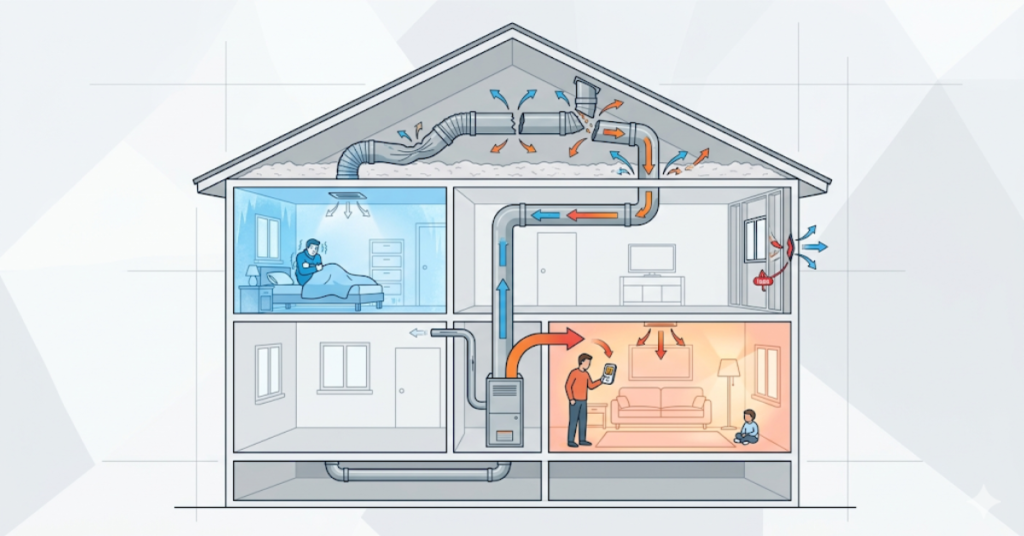
You know your air ducts need attention when your HVAC system stops keeping your home evenly comfortable for no obvious reason. The clearest warning signs are uneven temperatures between rooms, weak airflow at the vents, rising energy bills, visible dust around registers, and unusual noises during operation. Any one of these can point to a leak, a blockage, or worn-out ductwork. When two or more show up together, your duct system is almost certainly the cause.
Most homes in Idaho Falls run on forced-air systems, so your ducts carry every bit of warm or cool air your furnace or air conditioner produces. When those ducts fail, the rest of the system has to work harder, age faster, and cost you more to run.
1. Uneven Temperatures From Room to Room
If one bedroom feels freezing while the living room feels warm, your ducts are likely leaking, blocked, or poorly connected. Healthy ductwork delivers balanced airflow to every room your HVAC system serves. When that balance breaks, the rooms farthest from the unit suffer first.
Why This Happens
Holes, loose joints, or crushed flex ducts let conditioned air escape into your attic, crawl space, or wall cavities before it reaches the room it was meant for. Poor insulation on long duct runs can also cool warm air down (or warm cool air up) before delivery. The result is hot and cold spots that no thermostat setting can fix.
When to Call a Pro
Use a simple indoor thermometer to check several rooms at the same setting. If you see swings of more than 3 to 5 degrees between rooms, your ductwork needs an inspection. Sealing leaks and adding insulation often solves the problem without a full replacement.
2. Rising Energy Bills With No Clear Reason
A sudden or steady climb in your power bill, with no change in weather or usage, often points back to your ducts. The U.S. Department of Energy reports that you can lose up to 60 percent of heated air before it reaches the register when ducts travel through unheated spaces like attics or crawlspaces without proper insulation.
How Much Air Leaks Cost You
Even small gaps add up. Sealing and insulating ducts in unconditioned spaces can save homeowners hundreds of dollars a year, according to Energy.gov guidance on duct energy loss. If your bill has jumped 15 to 30 percent over last year for no obvious reason, leaky ducts are one of the first places a licensed HVAC contractor will look. Sealing leaks and tuning up your system are also part of how you lower your heating bill over the long term.
3. Weak Airflow From Vents
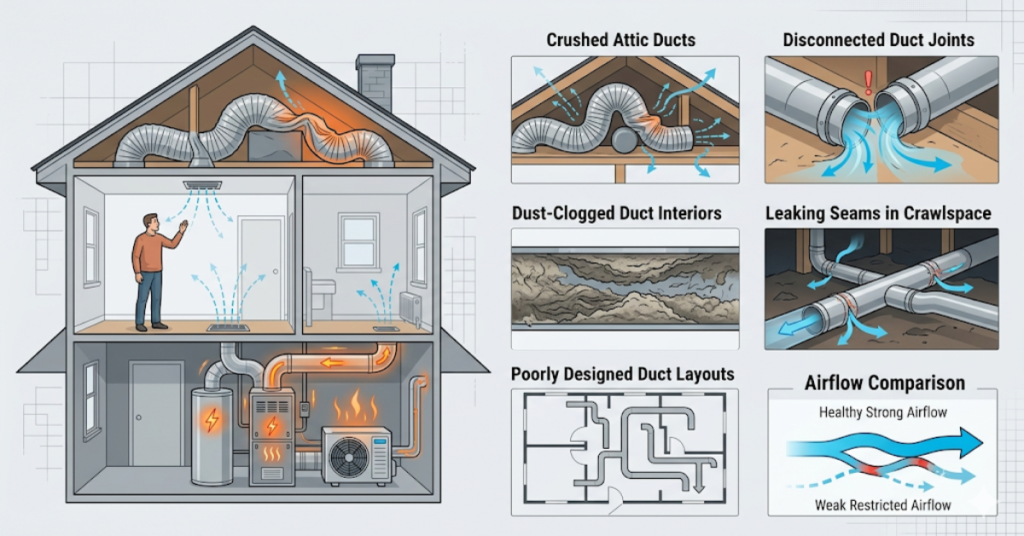
Hold your hand near a supply vent while the system is running. If the air feels barely moving, your duct system is restricted, leaking, or disconnected somewhere upstream. According to the University of Florida IFAS Extension, ducts leaking just 20 percent of their conditioned air force your HVAC system to work 50 percent harder to deliver the same comfort.
Common Causes
Weak airflow usually comes from one of these problems:
- Disconnected or crushed duct sections in the attic or crawl space
- Heavy dust and debris buildup blocking the inside of the ducts
- Holes or seam failures on the supply side
- An undersized or poorly designed duct layout
A pressure test and visual inspection will tell you which one is the culprit.
4. Excess Dust Around Vents and Surfaces
If you dust the house on Saturday and surfaces are coated again by Tuesday, your ducts are likely pulling debris in from outside the conditioned space. Return-side leaks suck dust, insulation fibers, and outdoor particles into the system, then push them through every vent in the home.
Look closely at your supply vents and registers. Dark streaks or visible grime around the edges almost always mean dirty, leaking, or damaged ductwork. Sealing the leaks and pairing it with proper duct cleaning benefits can sharply reduce the dust load on your home.
5. Strange Noises Like Rattling, Whistling, or Banging
Your HVAC system should hum quietly when it runs. Rattling, whistling, banging, or popping sounds from the ducts point to loose connections, broken seals, or sections that are flexing under pressure. Whistling usually means air is escaping through a small hole or crack. Banging often signals a duct that is expanding and contracting because it was never properly secured.
Don’t ignore these sounds. They get louder as the damage spreads, and they almost always lead to bigger leaks if left alone.
6. Musty Odors or Mold Smell When the System Runs
A musty smell that hits you every time the HVAC kicks on means moisture has found its way into your ductwork. Poorly insulated ducts cause condensation when warm and cool air mix at the duct walls. That condensation feeds mold and mildew growth inside the duct system.
You may also notice the smell getting worse in summer or after long runs. This is a serious indoor air quality issue and often connects to broader high indoor humidity problems in the home. Mold inside ducts almost always requires replacement of the affected sections rather than a simple cleaning.
7. Visible Damage, Rust, or Disconnected Sections
If you can access part of your ductwork in the attic, basement, or crawl space, take a look. Visible signs that point to repair or replacement include:
- Rust spots or corrosion on metal ducts
- Crushed, kinked, or sagging flexible duct sections
- Disconnected joints where two duct pieces have pulled apart
- Torn or peeling insulation wrapping
- Holes, dents, or punctures in the duct walls
Minor dents and small holes can usually be sealed with mastic or metal-backed tape. Widespread rust, multiple disconnected sections, or torn insulation typically means a full replacement makes more sense than patching.
8. Allergy and Respiratory Symptoms Getting Worse Indoors
If everyone in your house is sneezing, coughing, or struggling with allergies more than usual, your ducts may be the source. Leaky return ducts pull in dust, pollen, pet dander, and insulation fibers, then circulate them through every room. People with asthma, seasonal allergies, or breathing conditions usually feel it first.
Pay attention to whether symptoms ease when you leave the house and return when you come back. That pattern strongly points to indoor air quality problems tied to your ductwork.
9. Your Ducts Are Over 15 Years Old
Standard residential ductwork lasts 10 to 15 years before joints, seams, and insulation start breaking down. According to the National Renewable Energy Laboratory, typical systems with ducts in attics or crawl spaces lose 25 to 40 percent of the heating or cooling energy passing through them once they age.
If you don’t know how old your ducts are, check when your home was built or when the last HVAC system was installed. Aging ducts that show even one or two of the signs above are usually past the point where repairs make financial sense. Pairing duct replacement with regular HVAC maintenance gives you the longest service life from a new system.
10. Pest or Rodent Infestation Inside the Ducts
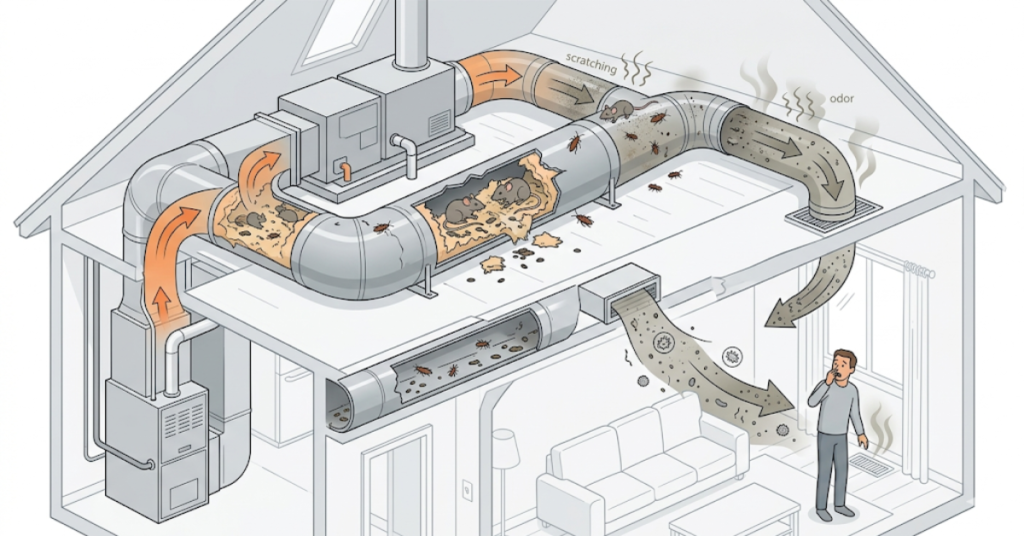
Mice, rats, insects, and other pests sometimes nest inside ductwork, especially in older homes with gaps in the duct system. You may hear scratching sounds, find droppings near vents, or notice a strong unpleasant smell that won’t go away.
Pest infestation almost always means replacement of the affected sections. Even after the pests are removed, contaminated insulation, droppings, and damaged duct walls continue to spread allergens and bacteria through your home.
Should You Repair or Replace Your Ductwork?
Whether you repair or replace your ducts depends on the age, condition, and extent of the damage. A licensed technician will inspect every accessible section, run pressure tests, and check for airflow problems before recommending one path or the other.
When Repair Is Enough
Repair makes sense when:
- The ducts are under 10 to 12 years old
- Damage is limited to a few specific sections
- You have small leaks at joints or seams
- Insulation is intact across most of the system
- No mold, pests, or major corrosion is present
Sealing with mastic, replacing short damaged sections, and adding insulation typically restores efficiency for a fraction of the cost of replacement.
When Full Replacement Makes Sense
Full replacement is usually the better choice when:
- Ducts are over 15 years old and showing widespread issues
- Mold or mildew is present inside multiple sections
- You see rust, corrosion, or collapsed sections in several places
- The duct layout is wrong for your home (undersized, kinked, or poorly routed)
- You are installing a new HVAC system that needs matching capacity
Replacing old ducts at the same time as a new furnace or AC unit also prevents your new equipment from working against a worn-out distribution system.
Get a Professional Duct Inspection in Idaho Falls
Failing ductwork costs you money every month it goes untreated and quietly hurts your indoor air quality. If you’ve noticed uneven rooms, weak airflow, higher bills, or musty smells, the next step is a professional inspection. The team at Ridgeline Heating and Cooling has served Idaho Falls homeowners for years, and we can pinpoint whether sealing, insulating, or full replacement is the right call for your home.
Call Ridgeline today to schedule your duct inspection or furnace repair and get your home back to even, efficient comfort.


