 Skip to content





Forced air refers to how heated or cooled air travels through your home using ductwork and a blower fan. Central air specifically describes a cooling system that removes heat from your entire house. These aren’t competing options. In most Idaho Falls homes, central air conditioning uses the forced air system’s ducts to deliver cool air throughout every room.
Forced Air vs Central Air
Understanding this distinction helps you communicate more effectively with HVAC professionals, make informed upgrade decisions, and maintain your system properly.
Key Takeaways
- Forced air is a delivery method that uses ductwork, a blower, and vents to distribute conditioned air throughout your home
- Central air is a cooling system that removes indoor heat using refrigerant and an outdoor condenser unit
- These systems work together in most homes, with central AC using the same ducts as your furnace
- Knowing the difference helps you ask better questions during HVAC consultations and understand maintenance needs
What Is a Forced Air System?
A forced air system is any heating or cooling setup that moves conditioned air through your home using ducts and a blower fan. The term describes the distribution method, not the heating or cooling source itself.
When your thermostat calls for heat, the furnace warms the air. A blower fan then pushes that warm air through a network of ducts, delivering it to each room through supply vents. Return vents pull cooler air back to the system to be reheated. This continuous cycle keeps your home comfortable.
How Forced Air Heating Works
Most forced air heating systems in Idaho Falls rely on gas furnaces to generate warmth. The furnace burns natural gas or propane to heat a component called a heat exchanger. Air passes over this heated metal surface, absorbs the warmth, and travels through your ductwork.
According to the U.S. Department of Energy, modern high-efficiency furnaces can convert up to 98.5% of fuel into usable heat. Older systems typically operate between 56% and 70% efficiency, which means upgrading could significantly reduce your heating costs.
Key Components of a Forced Air System
Every forced air system includes these essential parts:
- Furnace or heat pump that generates warm air
- Blower motor that pushes air through the system
- Ductwork that carries air to different rooms
- Supply vents that release conditioned air into living spaces
- Return vents that pull air back to be reconditioned
- Air filter that removes dust and particles before circulation
What Is Central Air Conditioning?
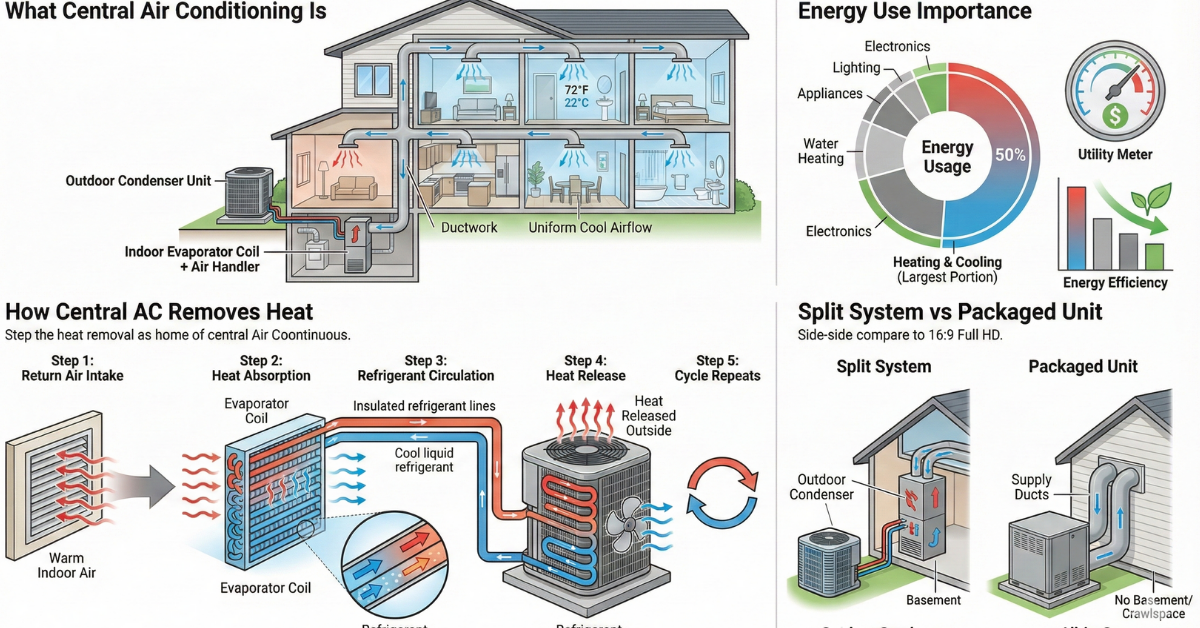
Central air conditioning is a whole-home cooling system that removes heat from indoor air and releases it outside. Unlike window units that cool single rooms, central AC maintains consistent temperatures throughout your entire house.
The system works by circulating refrigerant between indoor and outdoor components. Warm air from your home passes over cold evaporator coils, which absorb the heat. That heat then travels to the outdoor condenser unit, where it releases into the outside air.
How Central AC Removes Heat From Your Home
Central air conditioning doesn’t actually create cold air. Instead, it removes heat from the air already inside your home. The process relies on refrigerant, a chemical compound that absorbs and releases heat as it changes between liquid and gas states.
The U.S. Energy Information Administration reports that space heating and air conditioning account for 52% of household energy consumption. This makes choosing an efficient cooling system one of the most impactful decisions for your utility bills.
Split Systems vs. Packaged Units
Most Idaho Falls homes use split system central air conditioners. These have an outdoor unit containing the compressor and condenser, plus an indoor evaporator coil mounted near the furnace. Refrigerant lines connect the two components.
Packaged units combine all components in a single outdoor cabinet. These work well for homes without basement space for indoor equipment. Both types connect to your existing ductwork to distribute cooled air. If you’re considering a new system, our AC installation guide covers everything Idaho Falls homeowners need to know.
What’s the Real Difference Between Forced Air and Central Air?
The core distinction is simple: forced air describes how air moves through your home, while central air describes what cools that air. One is a delivery system, and the other is a cooling system.
Delivery Method vs. Cooling System
Think of it like mail delivery. Forced air is the postal truck and route system that brings packages to your door. Central air is one specific type of package being delivered. Your forced air system can deliver heated air from a furnace, cooled air from central AC, or even filtered air from a whole-home purifier.
Central air conditioning cannot function without some type of distribution system. In homes with ductwork, central AC uses the existing forced air infrastructure. The blower fan in your furnace circulates the cooled air, even though the furnace itself isn’t running during summer months.
Why These Terms Are Often Confused
HVAC professionals sometimes use these terms interchangeably, which adds to homeowner confusion. Real estate listings often describe homes as having “forced air heating” and “central air conditioning” as if they’re completely separate systems.
In reality, they’re interconnected. Your forced air ductwork serves double duty, carrying warm air in winter and cool air in summer. Understanding this relationship helps you recognize that maintaining your ducts benefits both heating and cooling performance.
Forced Air vs Central Air: Quick Comparison Table
| Feature | Forced Air System | Central Air System |
| Primary Function | Distributes heated or cooled air | Cools your home |
| Heating Capability | Yes (furnace or heat pump) | No (cooling only) |
| Cooling Capability | Yes (when paired with AC) | Yes |
| Key Components | Furnace/heat pump, blower, ductwork, vents | Outdoor condenser, indoor evaporator coil, refrigerant lines |
| Location of Main Unit | Indoor (basement, utility room, attic) | Outdoor unit + indoor coil |
| Efficiency Rating | AFUE (heating) | SEER/SEER2 (cooling) |
| Ductwork Required | Yes | Yes (uses same ducts as forced air) |
| Year-Round Comfort | Yes | Requires separate heating system |
Can You Have Both Systems in One Home?
Yes, and most Idaho Falls homes do. The typical setup includes a gas furnace for heating and a central air conditioner for cooling, both sharing the same ductwork. This combination provides year-round comfort through a single distribution system.
Your furnace contains the blower motor that circulates air whether you’re heating or cooling. During summer, the furnace doesn’t generate heat, but its blower still pushes cooled air from the central AC through your ducts. This integrated approach is cost-effective because it eliminates the need for separate duct systems.
Heat pumps offer another option. These units provide both heating and cooling through a single outdoor unit, making them an efficient choice for moderate climates. However, Idaho Falls winters often require backup heating for the coldest days.
Which System Is More Energy Efficient?
Energy efficiency depends on the specific equipment you choose, not whether you have forced air or central air. Both system types come in a range of efficiency ratings that significantly impact your utility bills.
Understanding AFUE Ratings for Heating
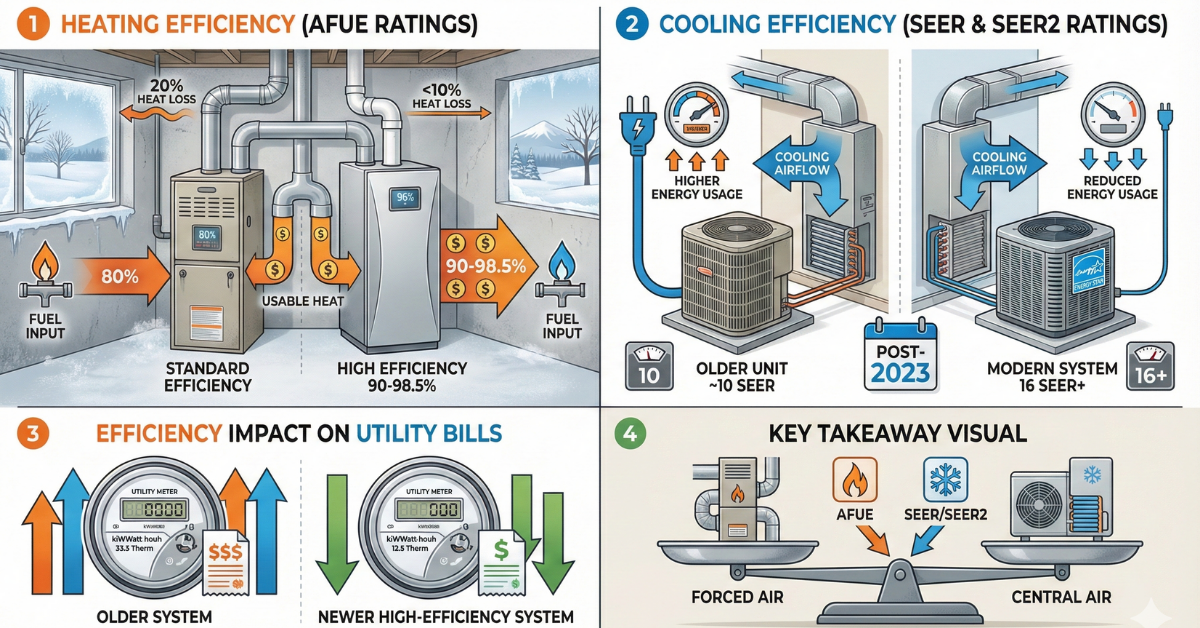
Furnace efficiency is measured by Annual Fuel Utilization Efficiency (AFUE). This percentage tells you how much fuel converts to usable heat. According to Trane, a standard efficiency furnace has an AFUE around 80%, meaning 80 cents of every energy dollar heats your home while 20 cents escapes as exhaust.
High-efficiency furnaces achieve 90% to 98.5% AFUE ratings. While they cost more upfront, the energy savings often justify the investment, especially during Idaho’s cold winters. Learning how to lower your heating costs starts with understanding these ratings.
SEER Ratings for Cooling Efficiency
Central air conditioner efficiency uses SEER (Seasonal Energy Efficiency Ratio) or the newer SEER2 ratings. Higher numbers indicate better efficiency. As of 2023, federal minimum standards require at least 14 SEER in northern regions.
ENERGY STAR notes that split system central air conditioners must meet SEER2 ratings of 17.0 or higher to qualify for federal tax credits in 2025. Upgrading from an older 10 SEER unit to a modern 16 SEER system can reduce cooling energy use by 30% or more.
How Do Maintenance Requirements Compare?
Both forced air and central air systems need regular HVAC maintenance to operate efficiently and reliably. Because they share ductwork, some maintenance tasks benefit both systems simultaneously.
Forced air maintenance includes:
- Replacing air filters every 1-3 months
- Annual furnace inspection and tune-up
- Cleaning supply and return vents
- Checking ductwork for leaks or damage
- Testing thermostat calibration
Central air maintenance includes:
- Annual AC tune-up before cooling season
- Cleaning or replacing air filters
- Clearing debris from outdoor condenser unit
- Checking refrigerant levels
- Inspecting electrical connections
Neglecting maintenance reduces efficiency and shortens equipment lifespan. A well-maintained system also provides better indoor air quality and more consistent temperatures throughout your home.
How Do You Choose the Right System for Your Idaho Falls Home?
The best choice depends on your home’s existing infrastructure, your budget, and your comfort priorities. Most homes in our area benefit from the traditional combination of a gas furnace and central air conditioner sharing forced air ductwork.
Consider these factors when evaluating your options:
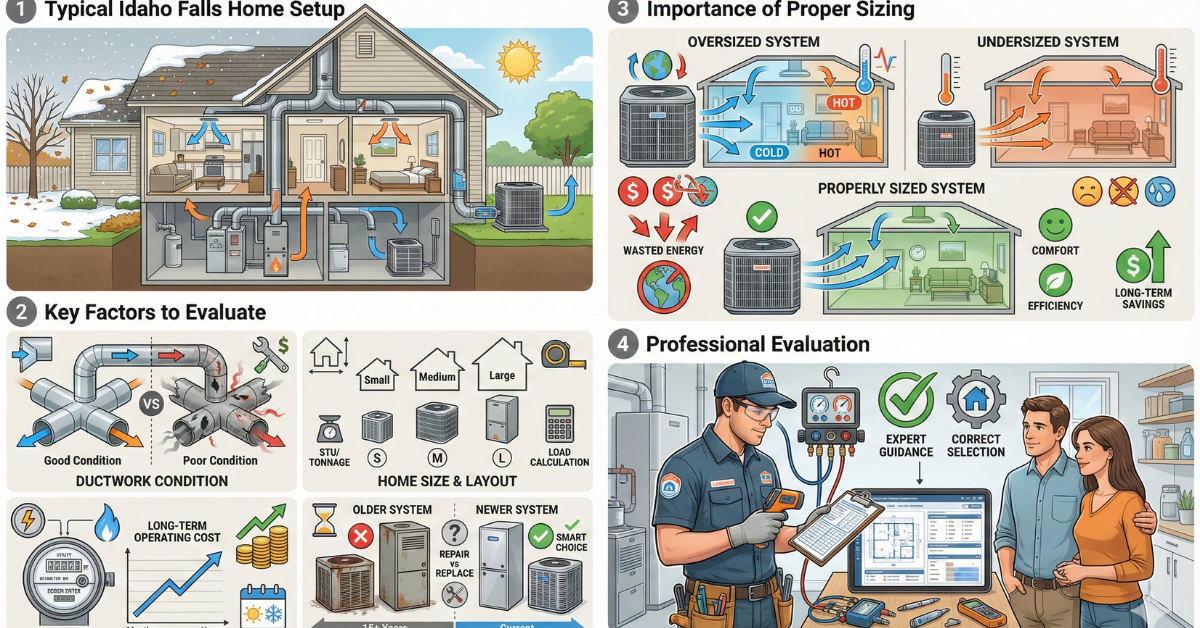
- Existing ductwork condition impacts installation costs and system performance
- Home size and layout determine equipment sizing requirements
- Energy costs in your area affect long-term operating expenses
- Equipment age helps you decide whether to repair vs. replace your furnace
A professional evaluation ensures you choose properly sized equipment. Oversized systems cycle on and off too frequently, wasting energy and creating uneven temperatures. Undersized systems run constantly without adequately heating or cooling your home.
Schedule a Professional HVAC Evaluation
Understanding the difference between forced air and central air puts you in a better position to discuss your home comfort needs with HVAC professionals. Whether you’re planning an upgrade, troubleshooting a problem, or simply want to improve efficiency, knowing how your systems work together helps you make confident decisions.
Ridgeline Heating and Cooling serves Idaho Falls and surrounding communities with honest advice and reliable service. Our technicians can evaluate your current forced air and central air systems, identify opportunities for improvement, and recommend solutions that fit your budget and comfort goals.
Ready to optimize your home’s heating and cooling? Contact Ridgeline Heating and Cooling today to schedule a professional HVAC system evaluation. We’ll help you understand your options and find the right solution for your Idaho Falls home.


