Skip to content





Gas unit heaters are one of the most reliable and cost-effective ways to heat a garage or workshop in Idaho Falls. These ceiling-mounted heating systems use natural gas or propane to produce 30,000 to 75,000+ BTUs of forced warm air, keeping your workspace comfortable even when winter temperatures drop well below freezing. They cost less to operate than electric heaters and heat large spaces faster.
If you have been working in a cold garage or putting off projects because the space is uncomfortable, a properly sized gas unit heater can change that. Below, you will find everything you need to know about how these heaters work, how to pick the right size, safety requirements, and what installation costs look like.
Key Takeaways
- Gas unit heaters deliver 30,000 to 75,000+ BTUs, warming garages and workshops faster and at a lower operating cost than electric heaters
- Proper BTU sizing depends on cubic footage, insulation quality, and local winter temperatures in the Idaho Falls area
- Vented gas unit heaters are the safest option, removing combustion byproducts like carbon monoxide from your workspace
- Professional installation ensures correct gas line connections, venting, and local code compliance
- Operating costs for gas heaters run about 20% lower than electric heaters for a typical two-car garage
What Is a Gas Unit Heater and How Does It Work?
A gas unit heater is a self-contained heating appliance that mounts near the ceiling of a garage or workshop. It connects to a natural gas or propane supply line, burns fuel in a combustion chamber, and uses a built-in blower fan to push heated air across the room. Unlike a furnace that distributes heat through ductwork, a gas unit heater delivers warmth directly into the space where it is installed.
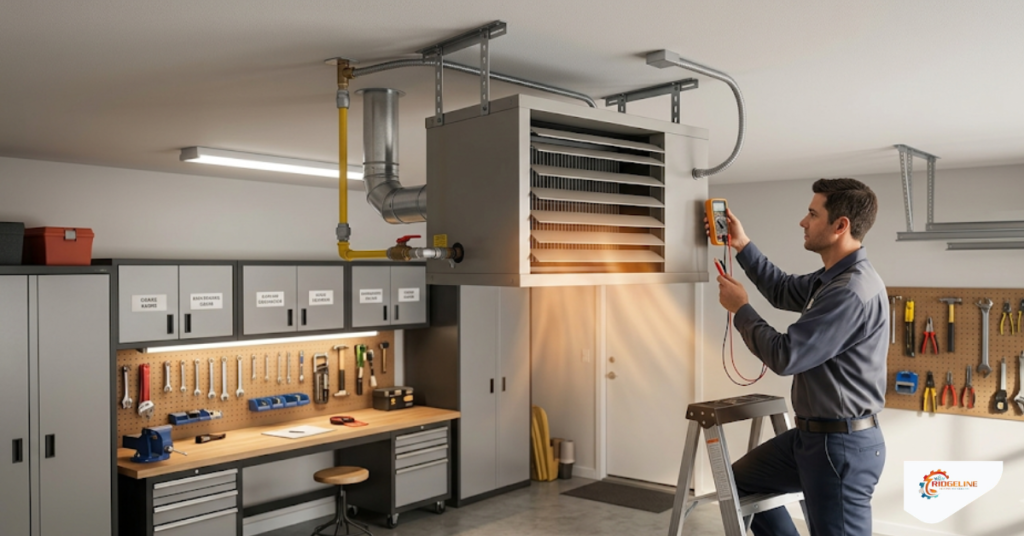
These heaters come in two main types, each suited for different garage setups and heating needs.
Forced-Air Gas Unit Heaters
Forced-air gas unit heaters are the most common choice for residential garages and workshops. They pull in cold air, pass it over a heat exchanger warmed by a gas burner, and blow the heated air out through adjustable louvers. Modern forced-air gas units mount near the ceiling in a corner and include thermostat controls so the heater cycles on and off automatically.
This type works well in standard two-car and three-car garages where you want fast, even heating across the entire space. The blower distributes warm air quickly, helping eliminate cold spots near garage doors and concrete floors.
Infrared (Radiant Tube) Gas Unit Heaters
Infrared tube heaters work differently. Instead of blowing heated air, they emit radiant energy that warms objects, floors, and people directly. Think of it like the warmth you feel from the sun on a cool day. The heater itself stays mounted overhead, and the heat radiates downward.
Infrared models are popular in larger workshops, barns, and commercial spaces where ceiling heights are tall and air circulation is limited. They are quieter than forced-air units because they do not rely on a blower fan. However, they take longer to raise the overall air temperature in the space.
How Do You Size a Gas Unit Heater for Your Garage or Workshop?
Picking the right BTU output is the most important step when shopping for a gas unit heater. A heater that is too small will run constantly without reaching a comfortable temperature. A heater that is too large will short-cycle, wasting fuel and wearing out components like the heat exchanger faster.
The BTU Sizing Formula
The basic formula is straightforward. Multiply your garage’s length x width x ceiling height to get the cubic footage. Then multiply that number by an insulation factor.
Here is how the insulation factor breaks down:
- Well-insulated garage (insulated walls, ceiling, and garage door): Multiply cubic feet by 4
- Average insulation (some wall insulation, uninsulated door): Multiply cubic feet by 6
- Poor or no insulation (exposed studs, metal building): Multiply cubic feet by 10
Example: A 24 x 30 foot garage with 10-foot ceilings is 7,200 cubic feet. With average insulation, 7,200 x 6 = 43,200 BTUs needed.
According to Angi’s 2026 data, here are common garage sizes and their general BTU requirements:
| Garage Size | Square Feet | BTU Range Needed |
| Single-car | 200-400 sq ft | 10,000-25,000 BTU |
| Two-car | 400-700 sq ft | 30,000-50,000 BTU |
| Three-car | 700-1,000 sq ft | 45,000-75,000 BTU |
| Large workshop | 1,000+ sq ft | 60,000-100,000+ BTU |
Insulation and Garage Door Adjustments
Idaho Falls winters regularly push temperatures below 10 degrees Fahrenheit. That wide gap between outdoor and indoor temps means you need to account for heat loss, especially through garage doors.
Every uninsulated garage door adds roughly 10% to your BTU requirement. If your garage has two large uninsulated doors, you may need 20% more heating capacity than the base formula suggests. Homes in northern climate zones like Southeast Idaho may need 15 to 25% more BTUs than the standard calculation.
Adding insulation to your garage walls and ceiling before installing a heater is one of the best investments you can make. It reduces the BTU load, lowers operating costs, and keeps the heat from escaping. If you want help assessing your space, the team at Ridgeline Heating and Cooling offers shop heater service in Idaho Falls and can recommend the right setup.
What Are the Benefits of Gas Unit Heaters Over Electric?
Both gas and electric heaters can warm a garage. But when it comes to larger spaces, frequent use, and cold climates like Idaho Falls, gas unit heaters have some clear advantages.
Lower Operating Costs
Natural gas is significantly cheaper per BTU than electricity in most parts of the country. Running an electric heater in a two-car garage costs about 20% more than running a forced-air gas unit heater. Over an Idaho winter where you might run the heater daily for five to six months, that difference adds up.
According to Angi, a 30,000 BTU gas heater costs roughly $0.28 to $0.80 per hour to operate. If you use your garage as a workshop and run the heater regularly, gas will save you money compared to electric every year.
If your home already has a natural gas line, connecting a unit heater to that supply is straightforward. For homes without natural gas access, propane is another option. You can learn more about the fuel differences in our propane vs natural gas comparison.
Higher BTU Output for Larger Spaces
Electric garage heaters typically max out at around 5,000 to 7,500 watts, which translates to roughly 17,000 to 25,000 BTUs. That is fine for a single-car garage with good insulation, but it falls short for larger two-car or three-car spaces.
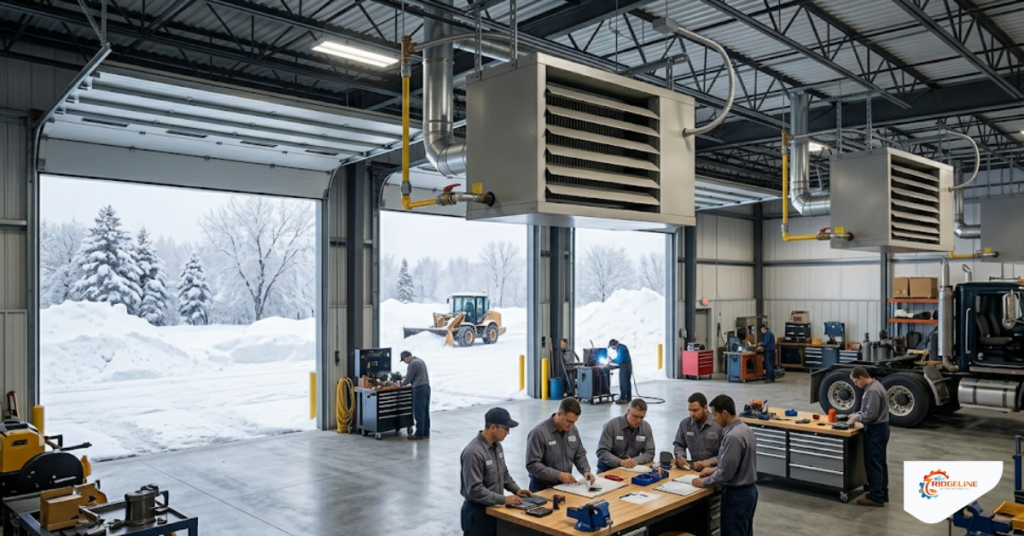
Gas unit heaters start at around 30,000 BTUs and go well above 75,000 BTUs for commercial-grade models. Gas heaters are ideal for larger garages and workshops that need serious heat output, especially in poorly insulated buildings or spaces with high ceilings. They also recover faster after a garage door opens and lets cold air rush in.
For homeowners who already rely on gas furnaces for home heating, adding a gas unit heater in the garage is a natural extension of an existing system.
Venting and Safety Requirements for Gas Garage Heaters
Any gas-burning appliance produces combustion byproducts, including carbon monoxide (CO). In an enclosed space like a garage, proper venting is not optional. It is a safety requirement.
Why Vented Models Are the Safer Choice
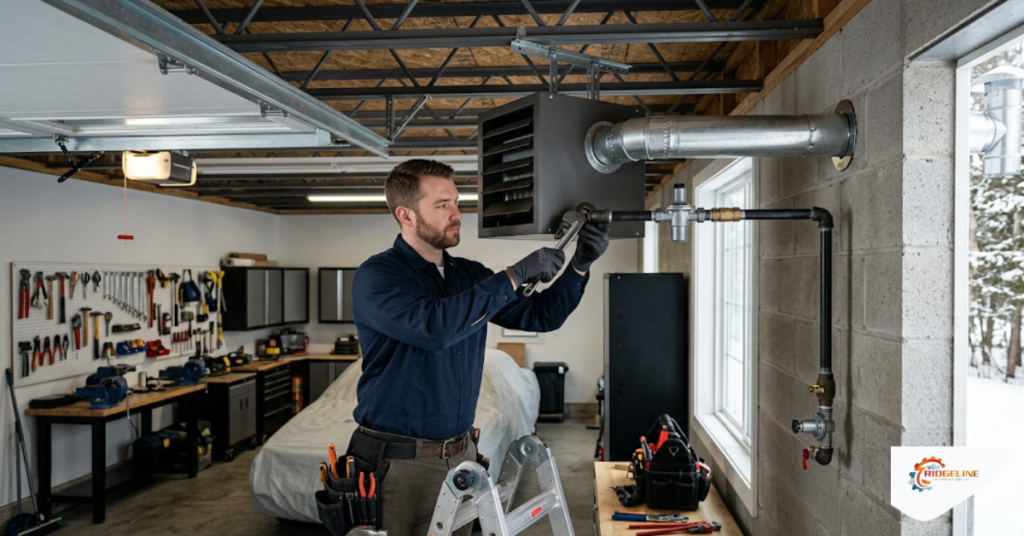
Vented gas unit heaters connect to an exhaust flue that carries combustion gases outside the building. This is the setup that most building codes require, and it is the one that professional HVAC contractors recommend for residential garages.
Benefits of vented gas unit heaters include:
- Better indoor air quality: Harmful gases like nitrogen oxides and CO are expelled outdoors
- Reduced moisture buildup: Combustion produces water vapor, and venting removes it, preventing condensation, rust on tools, and mold growth
- Longer equipment life: Removing corrosive byproducts from the space protects both the heater and everything stored in your garage
- Code compliance: Most local jurisdictions require venting for gas appliances in garages
Venting can run vertically through the roof or horizontally through an exterior wall. The right option depends on your garage layout and ceiling structure.
Carbon Monoxide Risks and Prevention
Carbon monoxide is colorless and odorless, making it impossible to detect without a CO detector. Failure to properly vent a gas heater can lead to dangerous CO accumulation that causes headaches, dizziness, nausea, and in severe cases, death.
While ventless (unvented) gas heaters exist and claim near 99.9% combustion efficiency, they are restricted or prohibited in attached garages under the International Residential Code. Even in detached garages where they may be permitted, the safety trade-offs are significant.
For any gas unit heater installation, you should:
- Choose a vented model with a proper flue system
- Install a carbon monoxide detector in the garage
- Ensure adequate combustion air supply per manufacturer specifications
- Schedule annual safety inspections with a licensed HVAC contractor
If you are unsure about the venting setup in your garage, Ridgeline Heating and Cooling provides unit heater installation services with full safety assessments.
How Much Does a Gas Unit Heater Cost to Install?
The total cost of a gas unit heater installation depends on the heater itself, labor, and any additional work needed for gas lines or venting.
Here is a general cost breakdown based on 2026 data from HomeGuide and Angi:
| Cost Component | Estimated Range |
| Gas unit heater (equipment) | $400 – $2,000 |
| Installation labor (~2 hours at $100/hr) | $200 – $500 |
| Gas line installation (if needed) | $350 – $2,000 |
| Vent installation | $250 – $500 |
| Electrical connection for blower | $50 – $130/hr |
| Total estimated range | $1,000 – $4,500+ |
Costs land on the lower end when a gas line already runs to the garage and the venting route is straightforward. They go up when new gas lines need to be run, structural modifications are required for venting, or the garage needs electrical upgrades.
If budget is a concern, Ridgeline Heating and Cooling offers flexible financing options and can help you find the most cost-effective setup for your space.
Keep Your Garage Warm With the Right Heating Setup
A gas unit heater turns a freezing garage into a usable workspace all winter long. Whether you are working on vehicles, running power tools, or just want to keep your pipes from freezing, the right heater makes a noticeable difference.
The key is getting the sizing right, choosing a vented model for safety, and having a professional handle the installation so your gas connections and exhaust flue meet local code. In a climate like Idaho Falls where winter temperatures stay below freezing for months, a gas unit heater pays for itself in comfort and usability.
If you are ready to add a gas unit heater to your garage or workshop, contact Ridgeline Heating and Cooling to schedule a consultation. Our team will assess your space, recommend the right BTU output, and handle the full installation so you can get back to work in a warm, comfortable environment.
Call us today or visit our heating services page to learn more.