 Skip to content



Idaho Falls homeowners have access to a full range of professional heating services including furnace repair, heating system installation, heat pump service, routine HVAC maintenance, and 24/7 emergency response.
Professional Heating Services Available In Idaho Falls
With winter temperatures regularly dipping below 13 degrees Fahrenheit, choosing the right heating service is one of the most important decisions you will make for your home.
Key Takeaways
- Idaho Falls winters average lows of 13 degrees F, making dependable heating essential for every home.
- Core heating services include furnace repair, system installation, heat pump service, HVAC maintenance plans, and emergency response.
- Scheduling a professional tune-up each fall can reduce energy bills and prevent mid-winter breakdowns.
- According to the U.S. Department of Energy, heating and cooling account for about 55% of the average home’s energy bill.
- Based on Ridgeline service records across Bonneville, Jefferson, and Bingham counties, more than 7 in 10 mid-winter emergency calls involve systems that last received professional service over two years prior.
- Working with a licensed, local HVAC contractor ensures your system is sized correctly for Idaho’s climate.
Why Idaho Falls Homes Demand Dependable Heating
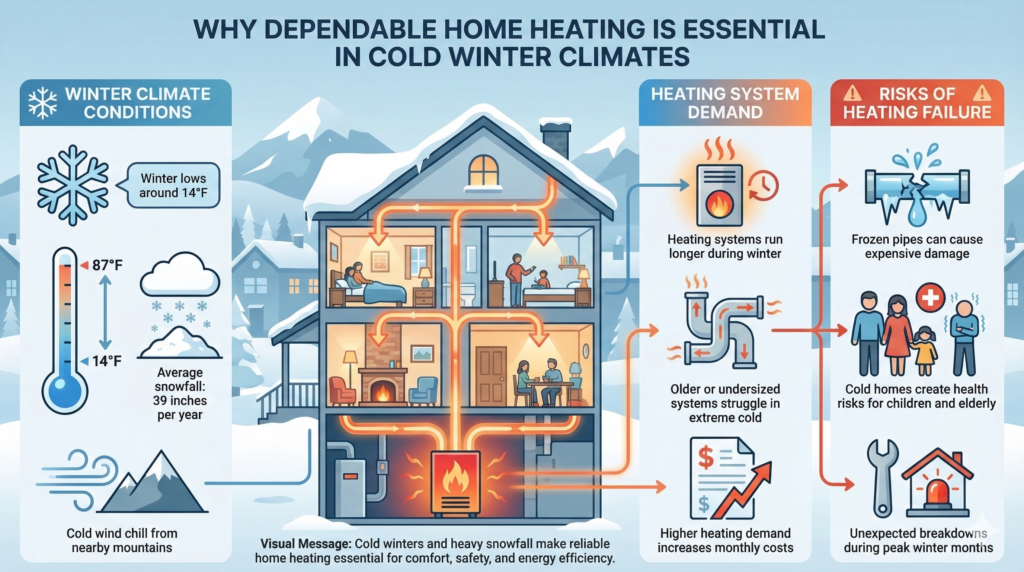
Idaho Falls sits at an elevation of roughly 4,700 feet in the Snake River Plain, giving it a climate with sharp seasonal extremes. Reliable heating is not a luxury here. It is a necessity that affects your family’s safety, comfort, and monthly budget.
How Cold Does It Actually Get in Idaho Falls?
According to Weather Spark, Idaho Falls temperatures range from a low of 14 degrees Fahrenheit in winter to a high of 87 degrees in summer. January nights regularly fall to single digits, and the city averages 39 inches of snow per year, compared to the national average of 28 inches. Wind chill from proximity to the Rocky Mountains makes the cold feel even more severe.
These conditions mean your heating system works harder and longer than in most parts of the country. A system that is undersized, aging, or overdue for maintenance can leave your home dangerously cold during peak winter months.
What Happens When Your Heating System Fails in Winter?
A heating failure in Idaho Falls during January or February is more than an inconvenience. Frozen pipes, health risks for elderly or young family members, and expensive emergency repair calls are all real consequences. Preventative service throughout the year is the most cost-effective way to keep your heating system reliable when it matters most.
“In Southeast Idaho, we see the most emergency calls in January and February. In almost every case, a simple fall tune-up would have caught the problem before it became a crisis.”
Nick McIntier, Owner, Ridgeline Heating and Cooling, Idaho Falls, ID
What Is Furnace Repair and When Do You Need It?
Furnace repair is one of the most commonly requested heating services in Idaho Falls. Gas furnaces are the dominant heating system in Southeast Idaho homes, and like any mechanical equipment, they develop problems over time. Catching issues early saves money and prevents total system failure.
Common Signs Your Furnace Needs Attention
Watch for these warning signs that your furnace may need professional service:
- Unusual noises: Banging, rattling, or squealing sounds often point to a loose part, failing motor, or cracked heat exchanger.
- Inconsistent heat: If some rooms feel warm while others stay cold, your furnace or ductwork may have a problem.
- Higher energy bills: A sudden spike in your heating bill often means the system is working harder than it should.
- Yellow pilot light: A healthy gas furnace flame should be blue. Yellow or orange flames can signal a carbon monoxide risk.
- Frequent cycling: A furnace that turns on and off repeatedly may have a dirty filter, a faulty thermostat, or an airflow restriction.
Repair vs. Replace: How to Make the Right Call
The general guideline in the HVAC industry is the Rule of 5000: multiply your system’s age by the estimated repair cost. If the number exceeds $5,000, replacement is usually the better investment. Most gas furnaces have a lifespan of 15 to 20 years. If yours is nearing that range and facing a major repair, a new high-efficiency unit will often pay for itself through lower energy bills within a few years.
For a deeper look at this decision, Ridgeline’s guide on when to repair vs. replace your furnace walks through the key factors Idaho Falls homeowners should consider.
Heating System Installation: What Are Your Options?
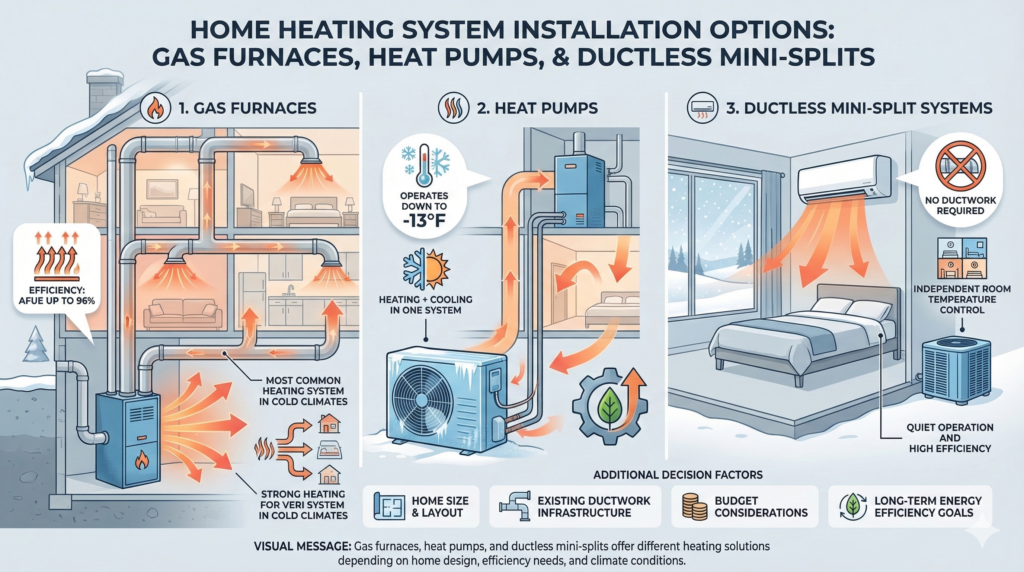
Whether you are building a new home, replacing an aging system, or upgrading to something more energy-efficient, Idaho Falls homeowners have several strong options. The right choice depends on your home size, existing infrastructure, budget, and long-term comfort goals.
Gas Furnaces for Idaho Falls Homes
Gas furnaces remain the most popular heating choice in Southeast Idaho, and for good reason. They deliver powerful, consistent warmth even when outdoor temperatures fall into the single digits. Modern high-efficiency models carry AFUE (Annual Fuel Utilization Efficiency) ratings of 96% or higher, meaning they convert nearly all the fuel they consume into usable heat.
For homeowners wondering if a gas furnace is still the right choice in 2026, Ridgeline’s resource on why gas furnaces are still a great way to heat your home covers the performance and cost advantages in detail.
“For high-performance heating in cold climates, gas furnaces with an AFUE of 90% or higher offer significant energy savings compared to standard models.”
ENERGY STAR Program, U.S. Environmental Protection Agency
Heat Pumps and Ductless Mini-Split Systems
Heat pumps are an energy-efficient alternative that can handle both heating and cooling from a single system. Modern cold-climate heat pumps perform reliably down to temperatures as low as -13 degrees Fahrenheit, making them increasingly viable for Idaho Falls winters. They are most cost-effective when used alongside a backup heat source for extreme cold snaps.
Ductless mini-split systems are a practical solution for homes without existing ductwork, room additions, or spaces that need independent temperature control. They install quickly, run quietly, and offer strong energy efficiency. Learn more about whether mini-split systems are right for your home in Ridgeline’s dedicated guide.
Choosing the Right System for Your Home
Here is a quick comparison to help guide your decision:
| System Type | Best For | Avg. Efficiency | Backup Heat Needed? |
| Gas Furnace | Whole-home heating, cold climates | 95-98% AFUE | No |
| Heat Pump | Moderate climates + dual-season use | 200-300% COP | Yes, in extreme cold |
| Mini-Split | Additions, zoned spaces, no ductwork | High SEER2 | Depends on model |
Why HVAC Maintenance Plans Are Worth It in Southeast Idaho
Routine HVAC maintenance is the single most effective way to protect your heating investment and lower your long-term costs. According to the U.S. Department of Energy, over 55% of the average home’s energy bill goes to heating and cooling. In Idaho Falls, where winters are long and heating demand is high, that number can be even greater.
ENERGY STAR recommends scheduling a professional tune-up twice per year: once in fall before heating season, and once in spring before cooling season. Homeowners who follow this schedule report fewer emergency repairs, longer equipment lifespans, and more predictable energy bills. See how regular HVAC maintenance benefits Idaho Falls homes in Ridgeline’s full breakdown.
What a Professional Tune-Up Covers
- Inspecting and cleaning the heat exchanger for cracks or corrosion
- Checking burner combustion and gas pressure
- Testing safety controls and limit switches
- Lubricating blower motor and moving parts
- Replacing or inspecting the air filter
- Calibrating thermostat and checking electrical connections
How Often Should You Schedule Service?
For most Idaho Falls homes, scheduling a furnace tune-up each October and an air conditioning or heat pump inspection each April is the ideal approach. If your home has pets, significant dust, or you run your system heavily through winter, monthly filter checks are a smart habit. For a detailed cost-saving plan, Ridgeline’s post on how to lower your heating bill this winter offers practical steps you can take right now.
“Dirt and neglect are the top causes of heating and cooling system inefficiency and failure. Regular maintenance is a homeowner’s best protection against costly breakdowns.”
ENERGY STAR, U.S. Environmental Protection Agency and U.S. Department of Energy
What Should You Expect from Emergency Heating Services?
Even a well-maintained system can fail without warning. Idaho Falls homeowners benefit from having a trusted emergency HVAC service provider on call before a crisis hits. Knowing what to expect in an emergency helps you act quickly and calmly when the heat goes out.
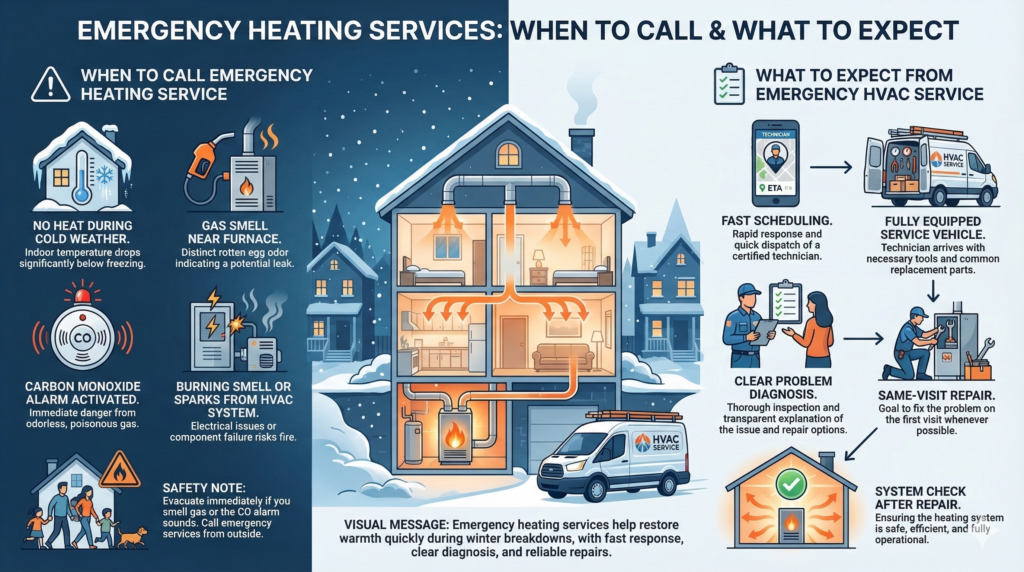
When to Call for Emergency HVAC Help
- Your furnace stops producing heat entirely during a cold snap
- You smell gas near your heating equipment
- Your carbon monoxide detector activates
- There is visible damage, unusual sparking, or burning smells from any HVAC component
For gas-related emergencies, leave the home immediately and call your gas provider before contacting an HVAC technician. For all other heating emergencies, a licensed contractor should be your first call. Learn more about whether it is normal to smell gas near a furnace and when to take action.
What a Good Emergency Response Looks Like
When you call a reputable Idaho Falls heating company for emergency service, here is what you should expect:
- Prompt scheduling: Your call is prioritized and a licensed technician is dispatched to your home as quickly as possible, with a clear ETA communicated upfront.
- Fully stocked service vehicle: A professional arrives prepared to diagnose and repair most common heating failures on the first visit, without requiring a return trip for parts.
- Transparent diagnosis: The technician explains the problem in plain language and provides written pricing before any work begins. No surprise charges.
- Same-visit repair: Most heating repairs in Idaho Falls can be completed in a single appointment. If a part needs ordering, a clear timeline and interim safety plan should be provided.
- Post-service walkthrough: The technician confirms the system is running correctly, answers your questions, and advises you on any follow-up maintenance needed.
How Do You Choose a Trusted Heating Company in Idaho Falls?
With multiple HVAC contractors serving the Idaho Falls area, selecting the right one matters. The following criteria will help you make a confident choice.
- Licensing and insurance: Confirm the contractor holds a valid Idaho HVAC license and carries liability insurance. This protects you if something goes wrong during a repair or installation.
- Local experience: A contractor who has worked in Southeast Idaho understands the specific climate demands and knows how to properly size systems for homes in the region.
- Transparent pricing: Reputable companies provide written estimates before starting work. Avoid contractors who quote verbally only or pressure you to make immediate decisions.
- Verified reviews: Check Google, Yelp, or the Better Business Bureau for recent, verified customer feedback. Look for consistent themes around honesty, punctuality, and quality of work.
- Maintenance plans: Companies that offer structured maintenance programs are invested in your long-term satisfaction, not just a one-time repair sale.
“Always verify that your HVAC contractor is properly licensed and insured. Ask for a written quote that itemizes parts and labor before any work begins.”
Air Conditioning Contractors of America (ACCA), the leading industry association for HVAC professionals
Ready to Schedule Heating Service in Idaho Falls?
Idaho Falls winters are no place for a heating system that is struggling. Whether you need a quick furnace repair, a full system installation, a seasonal tune-up, or reliable emergency service, working with a local, licensed HVAC contractor you can trust makes all the difference.
Ridgeline Heating and Cooling is a family-owned business built right here in Southeast Idaho. We offer honest pricing, same-day service, and the kind of hands-on care that large franchises simply cannot match. Our team is ready to help you keep your home warm, safe, and energy-efficient all winter long.
Call Ridgeline Heating and Cooling today at (208) 521-2041 or visit Idahofalls Heating And Cooling to book your appointment online. Your comfort is our priority.


