 Skip to content




Most HVAC systems should be serviced twice a year: once in the spring before cooling season and once in the fall before heating season. Heat pumps that run year-round also need this bi-annual schedule. Newer systems in moderate climates can sometimes get by with one annual tune-up, but Idaho Falls homeowners face harsh winters that put extra stress on heating equipment, making two visits the smarter choice. Skipping service shortens system life, raises energy bills, and can void your manufacturer warranty.
Regular HVAC service is the single most reliable way to protect your home comfort, lower your utility costs, and avoid breakdowns when temperatures hit single digits. This guide breaks down exactly when to schedule service, what gets checked, and why timing matters in Eastern Idaho.
Key Takeaways
- Schedule HVAC service twice a year: spring for AC and fall for heating
- Heat pumps need bi-annual service because they run year-round
- Idaho Falls cold winters demand a thorough fall heating tune-up
- Check air filters monthly and replace them every 1 to 3 months
- Skipping annual maintenance can void your manufacturer warranty
- Older systems (10+ years) benefit from more frequent inspections
How Often Should You Service Your HVAC System?
Most HVAC manufacturers and industry experts recommend professional service twice per year. This bi-annual schedule lines up with the two seasons when your system works hardest: summer cooling and winter heating. The goal is to catch small issues during the off-season before they turn into emergency breakdowns during a heat wave or cold snap.
The Standard Twice-a-Year Rule
A spring AC tune-up and a fall heating tune-up is the gold standard for residential HVAC care. The U.S. Department of Energy points out that a yearly tune-up of your heating and cooling system can improve efficiency and comfort, much like a regular service for your car. Spring service prepares your air conditioner for summer demand, while fall service gets your furnace or heat pump ready for Idaho’s cold months.
For homeowners with separate heating and cooling units, two visits cover both systems thoroughly. Each tune-up takes about 60 to 90 minutes and includes cleaning, inspection, and performance testing.
When Once a Year Is Enough
Newer systems (less than 5 years old) installed in moderate climates can often get by with one professional service per year. However, this rule rarely applies to Idaho Falls. The temperature swings between summer highs in the upper 80s and winter lows well below zero put your equipment under stress that mild-climate homes never experience. The safer benchmark for Eastern Idaho is two visits annually, with the fall heating tune-up being the most critical.
Why Does Idaho Falls Climate Demand Regular HVAC Service?
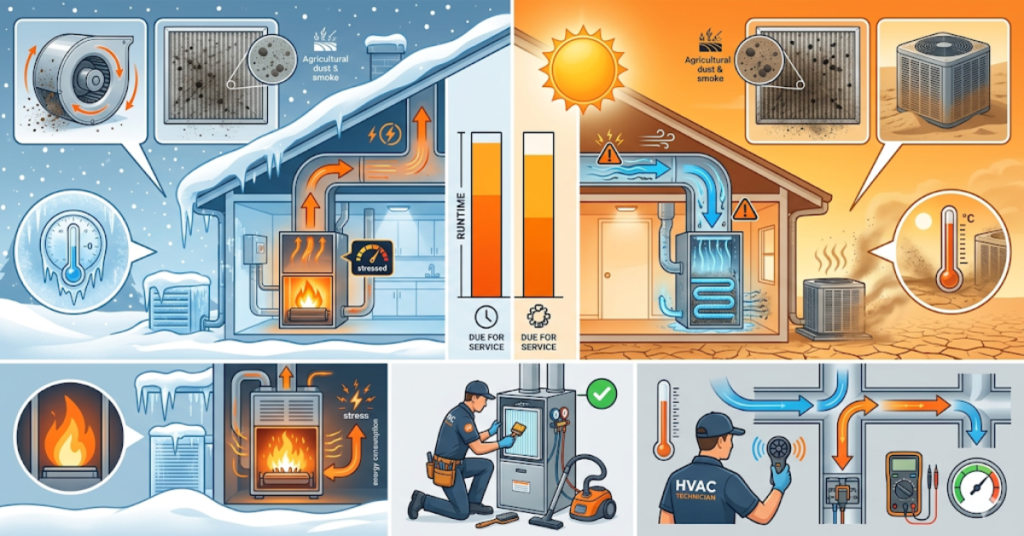
Idaho Falls homeowners deal with one of the more demanding climates in the country for HVAC equipment. Long, brutal winters combined with dry summer heat mean your system works harder and longer than systems in temperate regions. That extra runtime accelerates wear and increases the importance of preventive care.
Cold Winter Stress on Heating Systems
Idaho Falls regularly sees winter temperatures drop below 10°F, with some nights falling well below zero. Your furnace or heat pump runs nearly nonstop during these stretches, putting heavy load on igniters, blower motors, heat exchangers, and electrical components. A pre-winter fall tune-up checks combustion safety, tests the heat exchanger for cracks, and confirms safe ignition. These checks are not optional in a cold climate; they protect both your comfort and your family’s safety.
Dry Air and Dust Buildup Challenges
Eastern Idaho’s dry, dusty conditions mean air filters clog faster than in humid regions. Wind-blown dust, agricultural particles, and wildfire smoke during summer all accelerate buildup on coils, blower wheels, and filters. Regular service cleans these components before reduced airflow forces your system to work harder, which raises energy use and shortens equipment life. Reviewing the benefits of regular HVAC maintenance for Idaho Falls homes shows how preventive care directly translates to lower bills and fewer surprises.
What Does a Professional HVAC Service Include?
A professional tune-up is much more than a quick filter swap. Certified technicians follow a multi-point checklist that inspects mechanical, electrical, and safety components. ENERGY STAR provides a detailed maintenance checklist outlining what should happen during every visit.
Spring AC Tune-Up Checklist
A spring tune-up focuses on getting your cooling system ready for summer demand. The technician will:
- Clean the outdoor condenser coil and remove debris
- Check refrigerant levels and inspect for leaks
- Clean or replace the air filter
- Test thermostat calibration and operation
- Inspect and clean the evaporator coil
- Clear the condensate drain line
- Lubricate moving parts and check belts
- Tighten electrical connections and measure motor voltage
Catching a low refrigerant charge or a worn capacitor in spring is far cheaper than an emergency call in July.
Fall Heating Tune-Up Checklist
A fall heating tune-up is critical safety work in Idaho Falls. The technician will:
- Inspect the heat exchanger for cracks (carbon monoxide risk)
- Test ignition system and burner operation
- Check gas pressure and combustion efficiency
- Clean burners and flame sensor
- Inspect flue and venting for blockages
- Test safety controls and limit switches
- Lubricate blower motor and inspect belts
- Replace air filter and calibrate thermostat
A cracked heat exchanger can leak carbon monoxide into your home, so this inspection alone is worth the service cost.
Does System Type Change the Service Schedule?
The type of HVAC equipment you own affects how often it needs professional attention. Each system has different wear patterns and component lifespans.
Furnaces and Central AC
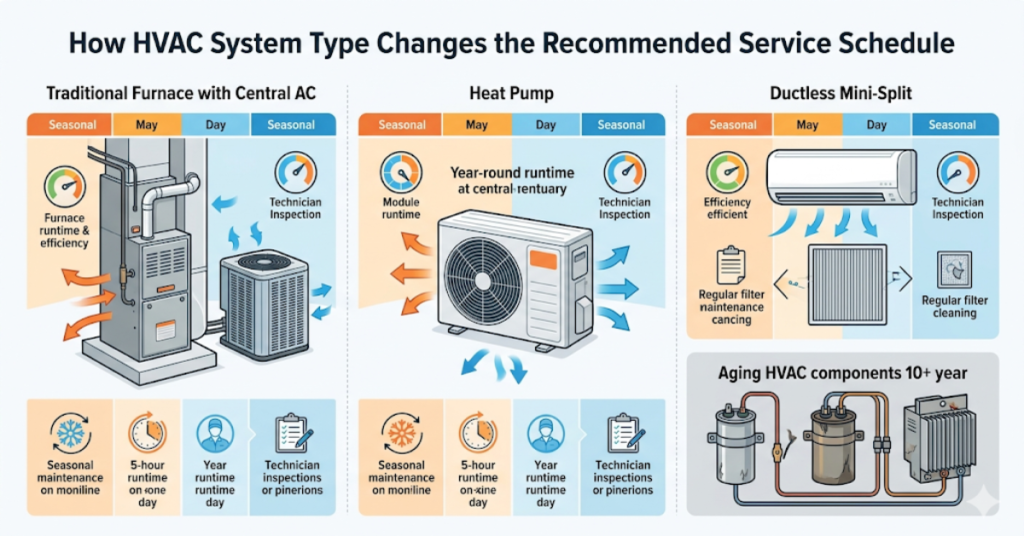
A traditional furnace and central AC setup follows the standard twice-yearly schedule: AC in spring, furnace in fall. Furnaces in Idaho Falls work harder than the national average because of the long heating season, so the fall visit is non-negotiable.
Heat Pumps and Mini-Splits
Heat pumps need bi-annual service because they run all year, providing both heating and cooling from the same unit. According to industry sources, heat pumps should be serviced twice annually since they have more continuous runtime than a furnace-and-AC combination. The Department of Energy notes that neglected heat pumps can lose 10 to 25 percent of their efficiency compared to well-maintained units.
Mini-split systems follow the same rule: two visits per year, with extra attention to filter cleaning since ductless units rely on smaller, more frequently used filters.
Older Systems (10+ Years)
If your HVAC system is more than a decade old, bump up your service frequency. Older parts wear faster, electrical connections loosen, and components like capacitors and contactors near the end of their lifespan. Twice-yearly inspections become essential, and you may want a mid-season filter and visual check between formal tune-ups. If your equipment is showing its age, it’s worth reviewing whether to repair or replace your furnace before another harsh winter hits.
What Happens If You Skip HVAC Maintenance?
Putting off HVAC service feels harmless until it isn’t. The costs of skipping maintenance show up in three predictable ways, and all of them hurt your wallet.
Higher Energy Bills
A neglected HVAC system loses efficiency every year. Dirty coils, clogged filters, low refrigerant, and worn motors all force your equipment to run longer to maintain the same indoor temperature. Even small efficiency losses add up over a long Idaho heating season. Homeowners looking to lower their heating bill this winter almost always benefit more from a tune-up than from any thermostat trick.
Voided Warranty Risk
Most major HVAC manufacturers require proof of annual professional maintenance to honor parts and compressor warranties. Skip a year, and you may be on the hook for a $1,500 compressor or $800 control board replacement that should have been covered. Keep your service records: technicians document each visit, and that paperwork protects your warranty claims.
Surprise Breakdowns
The worst HVAC failures always happen at the worst times. A furnace that wasn’t tuned up in October is far more likely to quit on a 5°F January night, leaving you waiting for emergency repair while pipes risk freezing. Routine service catches failing capacitors, weak igniters, and refrigerant leaks before they cascade into total breakdowns.
How Often Should You Change the Air Filter?
Air filter changes are the one maintenance task you handle yourself between professional visits. ENERGY STAR recommends checking your filter every month and replacing it at minimum every 3 months, with more frequent changes during heavy-use months.
In Idaho Falls, dust, pollen, and wildfire smoke can clog filters faster than the national average. A good rule for local homes:
- 1-inch standard filters: change every 30 to 60 days
- 2-inch pleated filters: change every 60 to 90 days
- 4 to 5-inch media filters: change every 6 to 12 months
- Homes with pets or allergies: check every 30 days
A clogged filter is one of the most common causes of HVAC breakdowns because restricted airflow makes the system overheat or freeze up. For a complete breakdown of timing and filter types, see our guide on how often to change your air filter.
Ready to Schedule Your HVAC Tune-Up in Idaho Falls?
Two professional service visits per year is the most cost-effective HVAC investment you can make. It protects your warranty, lowers your energy bills, extends equipment life, and keeps your family safe and comfortable through Idaho’s toughest seasons. The best time to schedule is right now, before the next peak season hits and technicians get booked up.
Ridgeline Heating and Cooling has been the trusted local HVAC experts in Idaho Falls and surrounding communities for years. Our certified technicians follow a thorough multi-point checklist on every visit, document everything for your warranty records, and give you honest recommendations with no pressure. Call us today to schedule your spring or fall tune-up and keep your home comfortable all year long.


