Skip to content





Central AC cools your entire home through ductwork and costs $5,000 to $12,000 installed, while window AC units cool single rooms for $150 to $800 each. For Idaho Falls homeowners, central air offers better long-term value and comfort for whole-home cooling, but window units work well as a temporary or budget-friendly solution for smaller spaces.
Choosing the right cooling system depends on your home’s size, your budget, and how you want to stay comfortable during those warm Idaho summers. This guide breaks down the costs, efficiency, comfort levels, and practical considerations so you can make a confident decision.
Key Takeaways
- Central AC costs more upfront ($5,000 to $12,000 installed) but lasts 15 to 20 years and provides consistent, whole-home cooling
- Window AC units are budget-friendly ($150 to $800 each) but typically last only 8 to 10 years and cool individual rooms
- Central air systems operate more quietly indoors since the compressor sits outside your home
- Idaho Falls’ moderate summer temperatures (averaging 72°F to 87°F from June through August) make both options viable depending on your needs
- Mini-split systems offer a middle-ground option for homes without existing ductwork
Window AC vs Central AC: Quick Comparison
| Feature | Window AC | Central AC |
| Upfront Cost | $150 to $800 per unit | $5,000 to $12,000 installed |
| Coverage | Single room only | Entire home |
| Lifespan | 8 to 10 years | 15 to 20 years |
| Energy Efficiency | 8 to 12 EER | 14 to 24 SEER |
| Indoor Noise Level | 50 to 55 decibels | Quiet (compressor outside) |
| Installation | Simple, no professional needed | Professional installation required |
| Ductwork Required | No | Yes |
| Temperature Consistency | Cools one room unevenly | Even cooling throughout home |
| Aesthetics | Blocks window, visible from outside | Hidden from view |
| Best For | Renters, single rooms, short-term | Homeowners, whole-home comfort |
Need this handled in Idaho Falls? See our central air conditioning page or call (208) 521-2041.
What’s the Real Difference Between Window AC and Central AC?
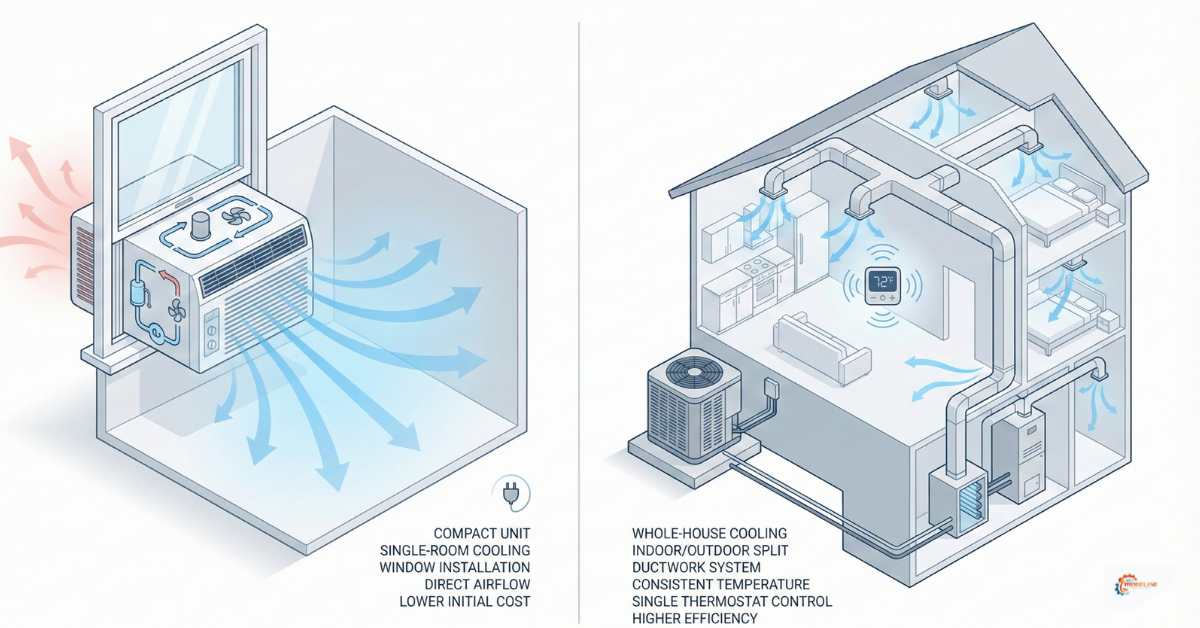
Understanding how each system works helps you see why they differ so much in cost, efficiency, and comfort. Both use refrigerant to absorb heat from indoor air and release it outside, but they do it in very different ways.
How Window Air Conditioners Work
A window AC unit is a self-contained system that fits directly into your window frame. The front panel faces inside your room and blows cool air, while the back portion hangs outside to release heat. Everything happens in one compact box, including the compressor, condenser, evaporator, and fan.
Window units are designed to cool single rooms or small spaces. You control each unit independently, which means you can cool only the rooms you’re using. However, if you want to cool multiple rooms, you’ll need multiple units.
How Central Air Conditioning Systems Work
Central AC uses a split-system design with an outdoor condenser unit and an indoor evaporator coil (usually paired with your furnace or air handler). Cooled air travels through your home’s ductwork and exits through vents in each room.
A single thermostat controls the temperature throughout your entire home. This setup works well with central air vs forced air systems that many Idaho Falls homes already have installed.
Which System Costs More to Buy and Install?
Cost is often the deciding factor for homeowners comparing window AC vs central AC. The price difference is significant, both upfront and over time.
Upfront Costs for Window Units
Window air conditioners typically range from $150 to $1,500 depending on cooling capacity (measured in BTUs) and features. A standard 8,000 BTU unit suitable for a bedroom costs around $300 to $500.
If you need to cool multiple rooms, those costs add up quickly. Cooling a three-bedroom home might require four or five units, bringing your total to $1,500 or more before considering the energy costs of running them all.
Central AC Installation Costs in Idaho Falls
Central air conditioning systems range from $3,800 to $7,700 for the equipment alone. With professional installation, most homeowners pay between $5,000 and $12,000 total.
If your home already has ductwork from a forced-air furnace, installation is straightforward. Homes without existing ducts face additional costs of $1,000 to $5,000 for duct installation. Our AC installation guide for Idaho Falls homeowners explains what to expect during the process.
Long-Term Operating Costs Comparison
Here’s where the math gets interesting. Window AC units use 500 to 1,400 watts each, while central systems use around 3,500 watts. Running a single window unit costs roughly $0.06 to $0.88 per hour at average electricity rates.
However, running multiple window units to cool your whole home often costs more than operating one properly-sized central system. Central AC distributes cooling more efficiently and loses less energy than running several independent units.
How Do Energy Efficiency and Monthly Bills Compare?
Energy efficiency directly impacts your monthly utility bills. Modern cooling systems are rated for efficiency, but the ratings work differently for each type.
Window AC Energy Use and Efficiency
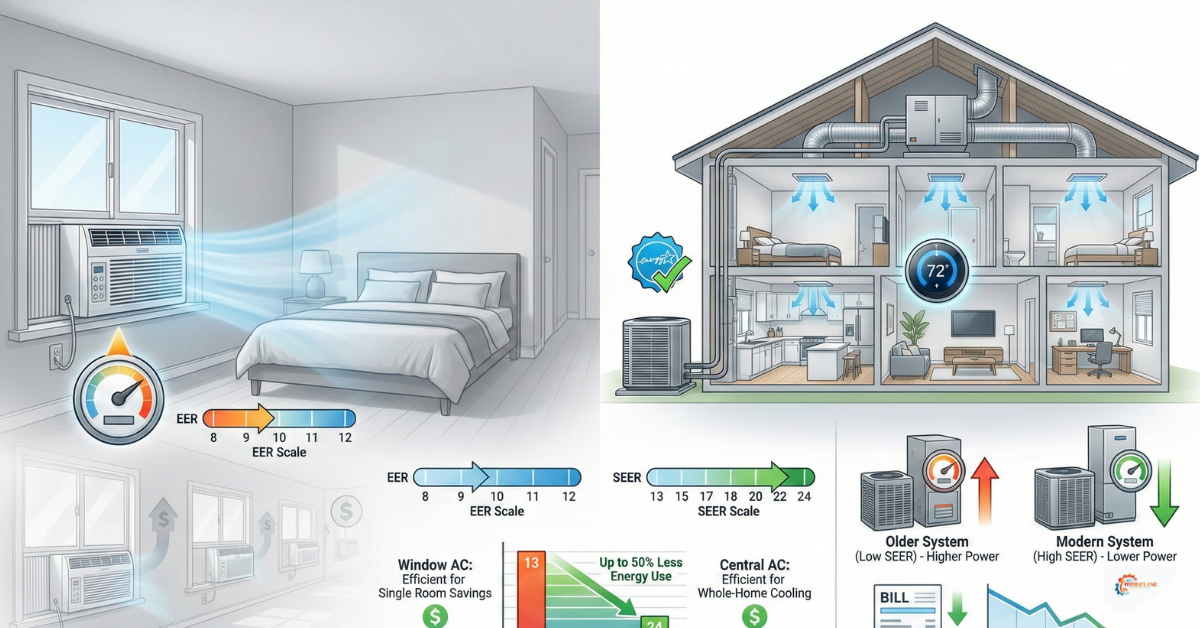
Window units use an Energy Efficiency Ratio (EER) rating. Most models range from 8 to 12 EER, with higher numbers indicating better efficiency. While individual window units use less total electricity than central systems, they’re less efficient at cooling larger spaces.
The real efficiency question is how many rooms you need to cool. A single window unit in a bedroom is very economical. But cooling your entire 1,500-square-foot home with window units becomes inefficient and expensive.
Central AC SEER Ratings Explained
Central air conditioners use Seasonal Energy Efficiency Ratio (SEER) ratings. According to the Air-Conditioning, Heating, and Refrigeration Institute, modern systems range from 13 to 24 SEER, with higher ratings delivering better efficiency.
The minimum SEER rating is 14 for northern states like Idaho. Energy Star certified units require at least 14.5 SEER. Upgrading from an older 10 SEER system to an 18 SEER unit can cut your cooling energy use nearly in half.
Finding the best thermostat setting for summer also helps maximize your central AC’s efficiency.
Which System Offers Better Comfort for Idaho Falls Summers?
Idaho Falls enjoys warm, dry summers with temperatures typically ranging from 72°F to 87°F and rarely exceeding 94°F. This moderate climate means you don’t need extreme cooling capacity, but comfort still matters.
Coverage and Temperature Consistency
Central AC excels at maintaining consistent temperatures throughout your home. Set your thermostat to 72°F, and every room stays close to that temperature. You won’t experience hot spots or cold zones.
Window units cool the room they’re in but struggle to reach adjacent spaces. Walking from a cooled bedroom into an uncooled hallway feels uncomfortable. If even cooling matters to you, central air delivers a noticeably better experience.
Noise Levels Inside Your Home
This is where central AC has a clear advantage. Window units operate at 50 to 55 decibels inside your living space, roughly equivalent to a normal conversation happening right next to you.
Central AC systems produce similar decibel levels, but the noisy components (compressor and condenser fan) sit outside your home. Indoors, you hear only the gentle airflow from your vents. If you’re a light sleeper or work from home, this difference matters.
When Does a Window AC Make Sense as a Short-Term Solution?
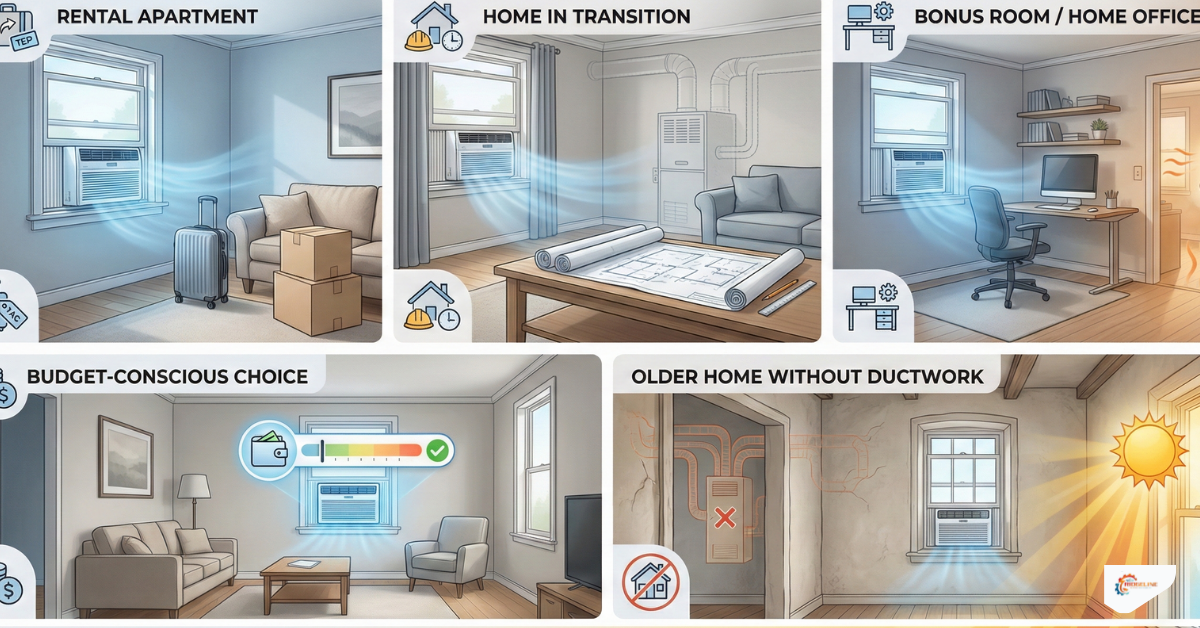
Window AC units aren’t always the wrong choice. They work well in specific situations:
- Renters who can’t modify their living space benefit from the portability
- Homeowners in transition who plan to install central AC within a year or two
- Supplemental cooling for a bonus room or home office that runs hot
- Budget constraints when central AC isn’t financially feasible right now
- Older homes without ductwork where installing central air would be extremely expensive
If you only need cooling for one or two rooms during Idaho Falls’ relatively short summer season (roughly June through August), window units can be a practical choice.
What About Mini-Split Systems as a Middle-Ground Option?
Mini-split systems offer an attractive alternative for homeowners who want better performance than window units but can’t install traditional central AC.
Mini-splits use an outdoor compressor connected to one or more indoor air handlers mounted on your walls. They don’t require ductwork, making them ideal for older Idaho Falls homes or room additions.
According to EnergySage, mini-splits cost approximately $5,000 per zone with installation but use about 40% less energy than window units. They also operate much more quietly since the compressor sits outside.
Mini-splits last 15 to 20 years, similar to central AC systems, and many models provide both heating and cooling.
How Do I Choose the Right Cooling System for My Home?
Consider these factors when deciding between window AC vs central AC:
Choose central AC if:
- You want whole-home cooling with consistent temperatures
- Your home already has ductwork
- You plan to stay in your home long-term
- Quiet indoor operation matters to you
- You value energy efficiency and lower monthly bills
Choose window AC if:
- You’re renting or in temporary housing
- You only need to cool one or two rooms
- Budget constraints prevent central AC installation right now
- Your home lacks ductwork and you’re not ready for that investment
Consider mini-splits if:
- Your home doesn’t have ductwork
- You want zone control (different temperatures in different rooms)
- You’re adding cooling to a garage, bonus room, or addition
A professional assessment helps you understand the true costs and benefits for your specific home. Factors like your home’s square footage, insulation quality, and existing HVAC infrastructure all affect which system makes the most sense.
Ready to Find the Best AC Solution for Your Home?
Choosing between window AC and central AC is a big decision that affects your comfort, energy bills, and home value for years to come. Idaho Falls homeowners deserve a cooling system that fits their home, budget, and lifestyle.
The team at Ridgeline Heating and Cooling helps local homeowners evaluate their options and find the right solution. Whether you’re considering central AC installation, exploring mini-split systems, or just need expert advice, we’re here to help.
Investing in regular HVAC maintenance also extends the life of whatever system you choose, protecting your investment for years to come.
Schedule a professional AC consultation today to get personalized recommendations for your Idaho Falls home. Our local HVAC experts will assess your needs, explain your options clearly, and provide honest guidance with no pressure. Contact Ridgeline Heating and Cooling to get started.
Ready to retire the window units?
See what a central air conditioning installation costs for an Idaho Falls home with existing ductwork.
Call (208) 521-2041 or request service online. Ridgeline Heating and Cooling, 370 College St, Idaho Falls, ID 83401.