Skip to content



An electronic air cleaner is worth it for many Idaho Falls homeowners who want whole-home air filtration without the hassle of buying replacement filters. These systems cost $500 to $2,000 installed and effectively capture dust, smoke, and fine particles. However, they may not be the best choice for everyone, especially those with severe allergies or asthma who need maximum particle removal.
This guide breaks down the real costs, benefits, and limitations so you can make an informed decision about whether an electronic air cleaner for your home makes sense.
Key Takeaways
- Electronic air cleaners cost $500 to $2,000 installed and eliminate ongoing filter replacement expenses
- They work best for capturing smoke and fine particles but may struggle with larger allergens like pollen and dust mites
- Some units produce trace amounts of ozone, so choosing a quality system matters for your health
- Regular cleaning every 2 to 3 months is required to maintain effectiveness
- HEPA filters may be better for severe allergy sufferers, while electronic air cleaners suit homeowners wanting low-maintenance whole-home filtration
What Is an Electronic Air Cleaner and How Does It Work?
An electronic air cleaner, also called an electrostatic precipitator, uses electrical charges to remove particles from your indoor air. Unlike traditional filters that physically trap particles in filter media, electronic air cleaners attract contaminants using static electricity.
The Technology Behind Electrostatic Air Cleaning
The system works in two stages. First, air passes through an ionization section where particles receive an electrical charge. Then, the charged particles are drawn to metal collector plates with the opposite charge, similar to how a magnet attracts metal filings.
According to the EPA, electronic air cleaners can effectively remove small particles from indoor air, though there is no standardized measurement for their overall effectiveness.
How Electronic Air Cleaners Integrate with Your HVAC System
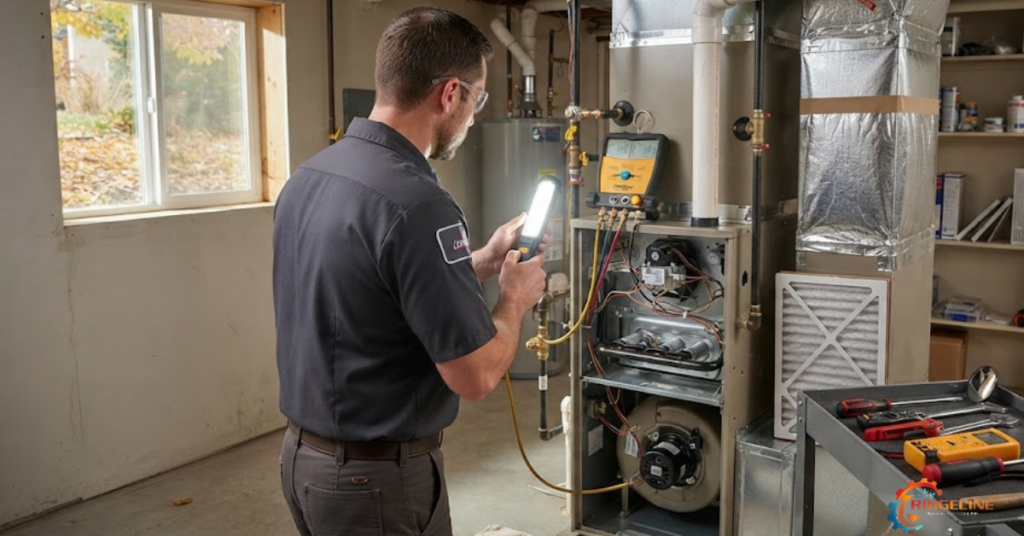
A whole-home electronic air cleaner installs directly into your existing ductwork, typically near the air handler or furnace. Every time your heating and cooling system runs, air passes through the electronic air cleaner before circulating back into your living spaces.
This integration means the system cleans air throughout your entire home rather than just one room. It requires a standard 120-volt electrical outlet near your HVAC equipment and works seamlessly with your existing air purification systems.
Need this handled in Idaho Falls? See our whole-home air purification systems page or call (208) 521-2041.
What Are the Benefits of an Electronic Air Cleaner for Your Home?
Electronic air cleaners offer several advantages that make them appealing for Idaho Falls homeowners looking to improve indoor air quality.
No Replacement Filters Needed
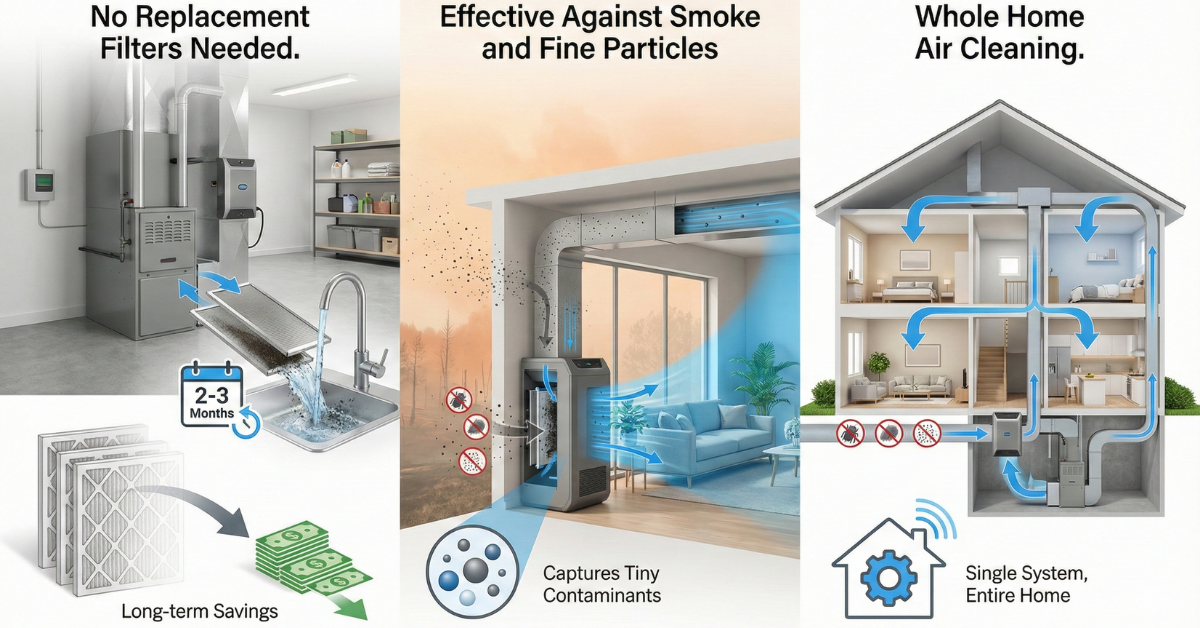
One of the biggest selling points is the elimination of ongoing filter costs. Traditional media filters need replacement every 6 to 12 months, costing $40 to $100 each time. With an electronic air cleaner, you simply wash the metal collector plates with soapy water every 2 to 3 months.
This can save hundreds of dollars over the life of the system compared to repeatedly purchasing furnace filters.
Effective Against Smoke and Fine Particles
Electronic air cleaners excel at capturing very small particles, including smoke and fine dust. Independent testing shows they can work up to 30 times better than basic fiberglass filters at removing smoke particles that slip through traditional media filters.
This makes them particularly valuable during wildfire season when smoke can infiltrate Idaho Falls homes.
Works with Your Existing HVAC System
Because electronic air cleaners integrate directly with your ductwork, they clean air in every room your HVAC system serves. You do not need separate units for different areas of your home, and the system operates automatically whenever your heating or cooling runs.
What Are the Drawbacks to Consider?
While electronic air cleaners offer real benefits, they also have limitations you should understand before investing.
Ozone Production Concerns
The EPA notes that electronic air cleaners can produce ozone, a lung irritant. The amount varies by model, and modern quality units minimize this issue. However, if anyone in your household has asthma or respiratory sensitivities, this is an important consideration.
Ozone exposure can aggravate asthma symptoms and irritate airways, so discussing this with an HVAC professional helps ensure you select an appropriate system.
Limited Effectiveness on Large Particles
While electronic air cleaners capture small particles effectively, they may struggle with larger particles like pollen, dust mite allergens, and pet dander. These larger particles often settle quickly onto surfaces before they can be captured by any air cleaning device.
The Allergy & Asthma Network emphasizes that air filtration alone cannot eliminate allergens. Effective allergen control also requires regular cleaning, washing bedding weekly, and vacuuming carpets and furniture frequently.
Regular Cleaning Required
Electronic air cleaners need consistent maintenance to work properly. The collector plates must be removed, washed, dried completely, and reinstalled every 2 to 3 months. If plates become dirty and clogged, the system loses effectiveness and can restrict airflow through your HVAC system.
This differs from changing your air filter on a set schedule since electronic systems require hands-on cleaning rather than simple replacement.
How Much Does an Electronic Air Cleaner Cost?
Understanding the full cost picture helps you budget appropriately and compare options.
Upfront Installation Costs
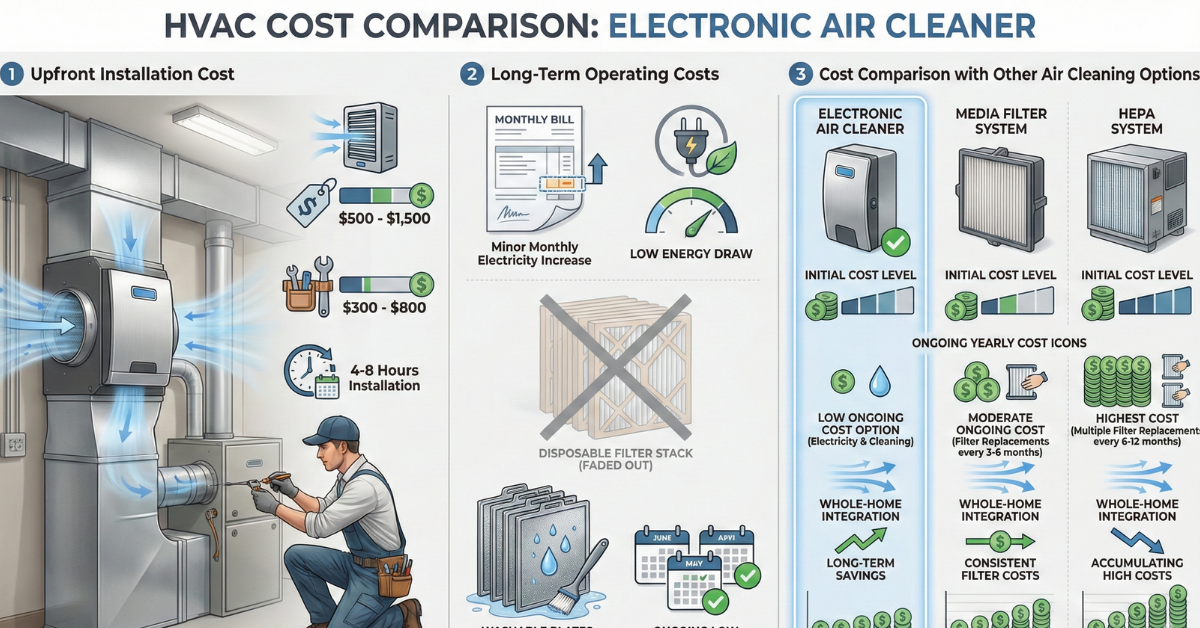
According to HomeGuide, a whole-home electronic air cleaner costs $500 to $2,000 installed, with the unit itself running $300 to $1,000. Professional installation typically takes 1 to 3 hours.
Angi reports similar pricing, with electronic air purifiers ranging from $600 to $2,400 depending on the model and installation complexity.
Long-Term Operating Costs Compared to Other Options
Electronic air cleaners have minimal operating costs since you do not purchase replacement filters. You will see a slight increase in electricity usage, typically $5 to $15 monthly depending on how often your HVAC runs.
Compare this to extended media filters that cost $400 to $800 installed plus $40 to $100 annually for replacement filters, or HEPA systems that can exceed $3,000 with ongoing filter costs of $50 to $150 per year.
Electronic Air Cleaner vs. HEPA Filters vs. Media Filters: Which Is Right for You?
| Feature | Electronic Air Cleaner | HEPA Filter | Media Filter |
| Upfront Cost | $500-$2,000 | $2,000-$5,000+ | $400-$800 |
| Ongoing Filter Cost | None | $50-$150/year | $40-$100/year |
| Particle Removal | Good for small particles | Excellent (99.97%) | Good |
| Large Allergens | Limited | Excellent | Good |
| Ozone Production | Possible | None | None |
| Maintenance | Wash plates every 2-3 months | Replace filter annually | Replace filter every 6-12 months |
| Best For | Low-maintenance whole-home filtration | Severe allergies/asthma | Budget-conscious homeowners |
When Electronic Air Cleaners Make Sense
An electronic air cleaner for your home is a solid choice if you want whole-home filtration without ongoing filter expenses, your primary concerns are dust and smoke rather than severe allergies, and you are comfortable with regular cleaning maintenance.
To compare air purification products in more detail, consider what specific air quality issues matter most in your situation.
When to Consider HEPA or Media Filters Instead
HEPA filters capture 99.97% of particles 0.3 microns or larger, making them the gold standard for allergy and asthma sufferers. Research published in the Journal of Allergy and Clinical Immunology found that whole-house filtration with high-efficiency HVAC filters provides more effective particle reduction than portable units alone.
If someone in your home has severe respiratory conditions, a HEPA system or high-MERV media filter may provide better symptom relief despite higher costs.
Who Benefits Most From an Electronic Air Cleaner?
Ideal Candidates for Electronic Air Cleaners
Electronic air cleaners work well for homeowners who want set-it-and-forget-it whole-home filtration, live in areas with wildfire smoke concerns, prefer avoiding recurring filter purchase costs, have mild dust or air quality concerns rather than severe allergies, and already maintain their HVAC system through regular HVAC maintenance.
Who Might Need a Different Solution
Consider alternatives if household members have asthma, severe allergies, or respiratory conditions, you need maximum particle removal including large allergens, you prefer completely maintenance-free operation, or you are sensitive to any ozone exposure.
The EPA reports that Americans spend approximately 90% of their time indoors, where pollutant concentrations can be 2 to 5 times higher than outdoor levels. For vulnerable populations like children, older adults, and those with respiratory conditions, choosing the right air cleaning solution matters significantly for long-term health.

Ready to Improve Your Home’s Indoor Air Quality?
An electronic air cleaner can be a worthwhile investment for many Idaho Falls homeowners seeking whole-home air filtration with minimal ongoing costs. The key is matching the right solution to your specific needs, whether that means electronic air cleaning, HEPA filtration, or a combination approach.
The best way to determine what works for your home is to talk with an HVAC professional who can assess your indoor air quality concerns, evaluate your existing system, and recommend options that fit your budget and health needs.
Schedule an indoor air quality assessment with Ridgeline Heating and Cooling to get expert advice on improving your home’s air quality. Our team can help you understand your options and find the right solution for your family’s comfort and health.
Thinking about cleaner air in your Idaho Falls home?
Winter inversions and summer wildfire smoke make indoor air quality a real issue here. We install and service whole-home air purification systems matched to your existing furnace or air handler.
Call (208) 521-2041 or request service online. Ridgeline Heating and Cooling, 370 College St, Idaho Falls, ID 83401.