



A furnace replacement typically costs between $3,500 and $7,500 for a standard-efficiency model, with most installations completed in 4 to 10 hours. Most furnaces last 15 to 20 years, and replacement makes sense when repair costs exceed 50% of a new unit. For Idaho Falls homeowners facing cold winters, understanding the furnace replacement process helps you make a confident, informed decision.
Key Takeaways
- Most furnaces last 15 to 20 years, and replacement makes sense when repair costs exceed 50% of a new system
- A standard-efficiency furnace replacement costs $3,500 to $7,500 installed, while high-efficiency models can reach $11,500 or more
- AFUE ratings measure efficiency, with 90% or higher considered high-efficiency and recommended for Idaho’s cold climate
- Most furnace replacements take 4 to 10 hours, and permits are required to ensure safety and code compliance
- Choosing a licensed HVAC contractor and properly sizing your furnace are the two most important factors for a successful replacement
Questions About Furnace Replacements
When Should You Replace Your Furnace?
Knowing the right time to replace your furnace can save you from unexpected breakdowns and costly emergency repairs. Several factors determine whether your heating system is nearing the end of its useful life.
What Is the Average Lifespan of a Furnace?
The average gas furnace lasts 15 to 20 years with proper maintenance. Some well-maintained units can last up to 30 years, while neglected systems may fail earlier. Electric furnaces tend to last longer than gas models because they have fewer moving parts and no combustion components. Once your furnace reaches the 15-year mark, it becomes more prone to breakdowns and loses efficiency. Planning for replacement before a complete failure helps you avoid emergency situations during Idaho Falls’ coldest days.
How Do You Know If Your Furnace Is Failing?
Watch for these warning signs that indicate your furnace may need replacement: rising energy bills despite stable rates, frequent repairs (more than twice per year), uneven heating throughout your home, strange noises like banging or rattling, visible rust or cracks on the unit, and a yellow pilot light instead of blue. If you notice any of these issues, schedule a professional inspection. A licensed HVAC technician can assess whether furnace repair or full replacement makes more sense for your situation.
How Much Does Furnace Replacement Cost?
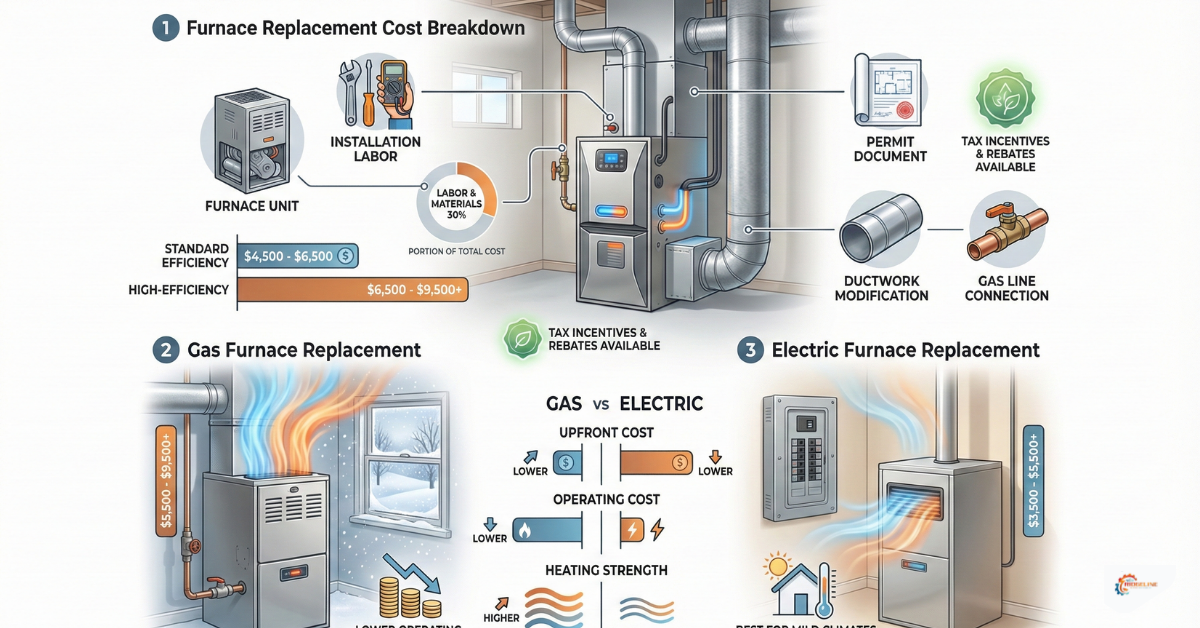
Understanding furnace replacement costs helps you budget effectively and avoid surprises. The total investment includes the unit itself, installation labor, permits, and any necessary modifications to your existing system.
What Factors Affect Furnace Replacement Cost?
According to HomeGuide, a new furnace costs $3,500 to $7,500 installed for a standard-efficiency model, or up to $11,500 for a high-efficiency unit with professional installation. Labor typically accounts for 10% to 40% of your total cost. Additional factors that influence pricing include your home’s square footage, the complexity of installation, ductwork condition, and whether you need gas line modifications. Permit fees add $75 to $500 depending on your location. If you qualify, tax incentives for buying new HVAC equipment can offset some of these costs.
Gas vs Electric Furnace Replacement: What’s the Difference?
Gas furnaces cost $3,800 to $10,000 installed and remain the most popular choice for Idaho Falls homes. They provide powerful heat output ideal for our cold winters and typically have lower operating costs than electric options. Electric furnaces cost $2,000 to $7,000 installed and work well in milder climates or as supplemental heating. For homes with existing natural gas lines, a gas furnace usually offers the best balance of upfront cost and long-term efficiency.
What Is AFUE and Why Does It Matter?
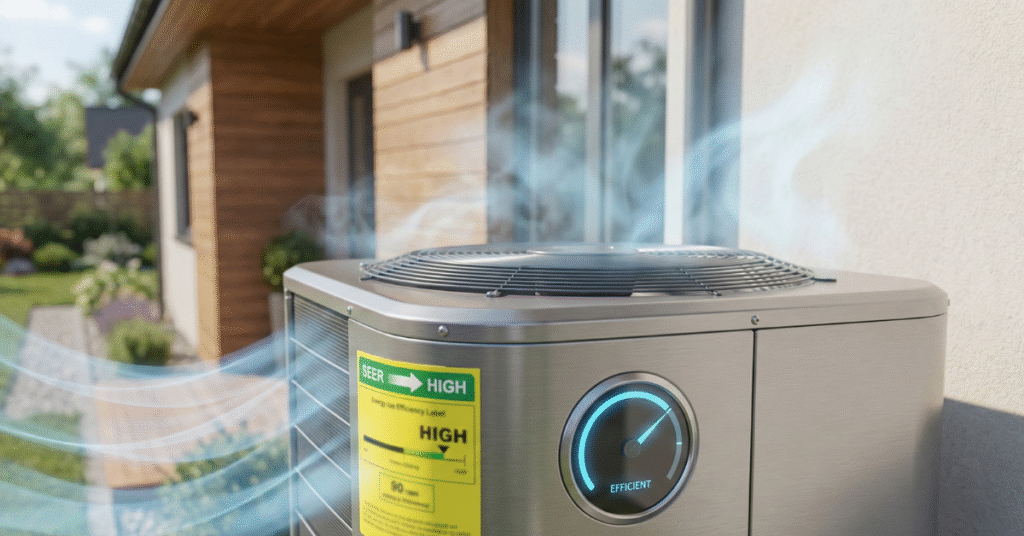
AFUE stands for Annual Fuel Utilization Efficiency. This rating measures how efficiently your furnace converts fuel into heat over a typical heating season. Think of it like miles-per-gallon for your car. A furnace with 95% AFUE converts 95 cents of every dollar you spend on fuel into actual heat for your home, with only 5 cents lost through exhaust.
How Does AFUE Affect Your Heating Bills?
According to Energy.gov via Trane, high-efficiency furnaces have AFUE ratings of 90% to 98.5%, while mid-efficiency models range from 80% to 83%. Upgrading from an 80% AFUE furnace to a 95% model means you save approximately 15 cents on every dollar spent on heating. Over a typical heating season, this adds up to $200 to $400 in annual savings for the average household. High-efficiency condensing furnaces cost more upfront but pay for themselves through reduced energy bills over time.
What AFUE Rating Is Best for Idaho Falls?
For cold climates like Idaho Falls, a furnace with 90% AFUE or higher is recommended. The federal minimum is 80%, but that level wastes more energy and costs more to operate over time. Energy Star-approved gas furnaces in northern regions must have 95% AFUE or greater. Investing in a high-efficiency model makes sense here because your furnace works harder and longer during our extended heating season.
Should You Repair or Replace Your Furnace?
This is one of the most common furnace replacement questions homeowners ask. The answer depends on your furnace’s age, repair history, and the cost of the current repair.
The 50% Rule for Repair vs Replacement
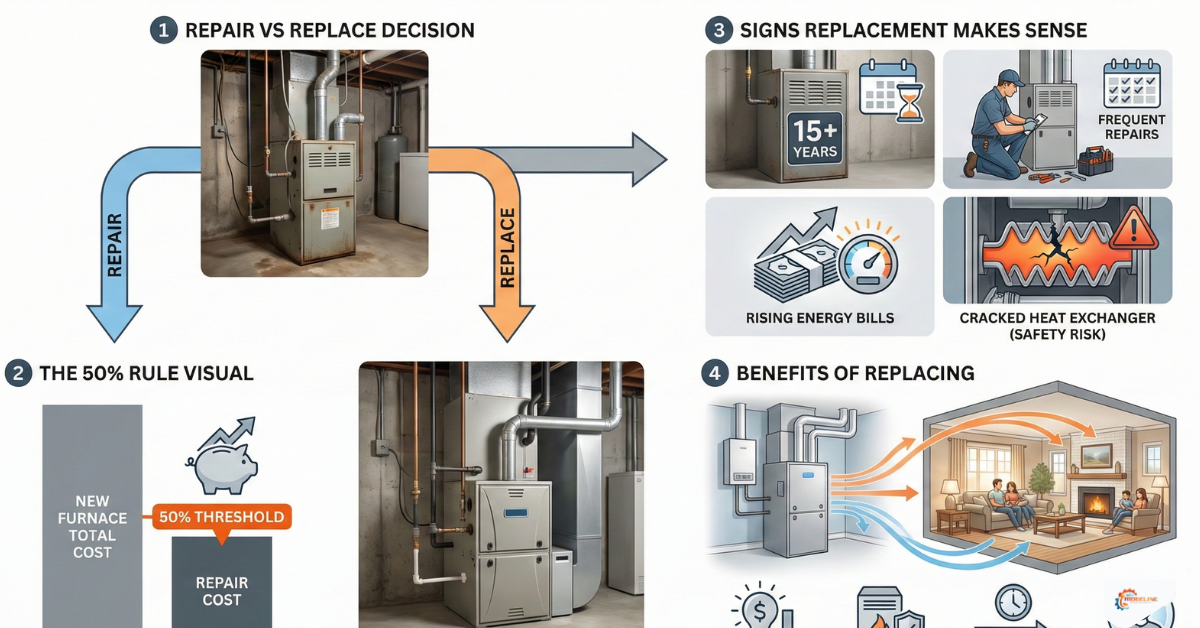
A widely accepted guideline among HVAC professionals: if repair costs exceed 50% of the price of a new furnace, replacement is usually the better investment. For example, if a new furnace costs $5,000 and your repair estimate is $2,500 or more, consider putting that money toward a new unit instead. Learn more about when to repair vs replace your furnace in our detailed guide.
When Does Replacement Make More Financial Sense?
Replacement typically makes sense when your furnace is over 15 years old and needs a major repair, you’re calling for repairs more than twice per year, energy bills keep climbing despite maintenance, or your furnace has a cracked heat exchanger (a serious safety concern). A new, high-efficiency furnace will cost more upfront but delivers reliable warmth, lower energy bills, and peace of mind for the next 15 to 20 years.
What Happens During the Furnace Replacement Process?
Understanding the furnace replacement process helps you prepare and sets realistic expectations. A typical replacement involves removing the old unit, preparing the installation area, connecting the new furnace to existing ductwork and utilities, and testing the system.
How Long Does Furnace Installation Take?
Most like-for-like furnace replacements take 4 to 10 hours and are completed in a single day. If your project involves changing fuel types, relocating the furnace, or significant ductwork modifications, expect 1 to 3 days. Complex installations requiring structural work or multiple inspections may take up to a week. Scheduling during off-peak months (spring or early fall) often means faster service and potentially better pricing.
Are Permits Required for Furnace Replacement?
Yes. Permits are required by law for furnace installations in most jurisdictions, including Idaho Falls. According to HVAC industry experts, permit fees typically range from $75 to $250 and cover a post-installation inspection by a city building inspector. This inspection verifies that your new furnace meets local building codes, manufacturer specifications, and safety standards. A licensed HVAC contractor will handle the permit process for you. Skipping permits can lead to fines, voided warranties, and safety risks including carbon monoxide leaks.
What Are Common Furnace Replacement Mistakes to Avoid?
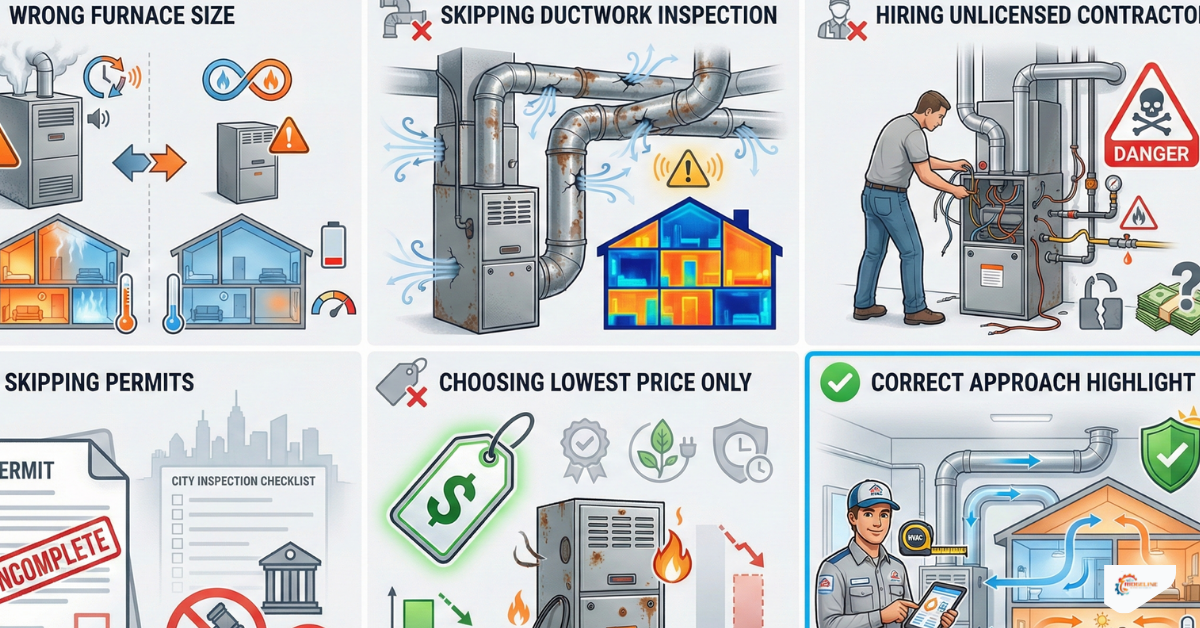
Avoiding common mistakes ensures your new furnace performs efficiently and lasts as long as possible. The most frequent errors include choosing the wrong size furnace (both oversized and undersized units cause problems), neglecting ductwork inspection before installation, hiring unlicensed contractors to save money, skipping permits, and focusing only on the lowest price rather than overall value. An oversized furnace short-cycles and wears out faster, while an undersized unit runs constantly without adequately heating your home. Always work with a licensed HVAC technician who will perform a proper load calculation to size your furnace correctly.
Ready to Discuss Your Furnace Replacement Options?
Replacing your furnace is a significant investment in your home’s comfort and safety. The right system, properly installed, will keep your family warm through Idaho Falls winters for years to come. Investing in regular HVAC maintenance after installation will extend your new furnace’s lifespan even further.
If you have more furnace replacement questions or want a professional assessment of your current system, Ridgeline Heating and Cooling is here to help. Our licensed technicians provide honest recommendations based on your home’s needs and your budget. Schedule a furnace replacement consultation today to get a clear picture of your options.