 Skip to content




When your furnace starts making strange noises or struggling to keep your Idaho Falls home warm, one question usually comes to mind: is it time for a replacement, or can you squeeze a few more years out of your current system? It’s a stressful decision, especially when you’re facing repair estimates that make you wonder if you’re throwing good money after bad. Understanding how long furnaces typically last and what factors affect their lifespan can help you make a confident, informed decision about whether to repair or replace your heating system.
How Long Does a Furnace Last Before Replacement
In this guide, we’ll break down average furnace life expectancy by type, explore the key factors that determine how long your furnace will last, and give you a simple framework for deciding when repair makes sense and when replacement is the smarter investment.
Average Furnace Lifespan by Type
Not all furnaces are built the same, and the type of fuel your system uses plays a major role in how long it will serve your home. Here’s what you can typically expect from each furnace type with proper maintenance:
- Most common furnace type in Idaho Falls and across the country
- Natural gas burns cleaner than oil, reducing internal corrosion
- Lifespan can reach the upper end with annual professional tune-ups
- Combustion components experience more wear than electric models
Electric Furnaces: 20-30 Years
- Longest lifespan of all furnace types due to simpler design
- Fewer moving parts and no combustion process means less wear and tear
- Higher operating costs may make earlier replacement appealing for efficiency gains
- Less common in colder climates due to heating capacity limitations
Oil Furnaces: 15-25 Years
- Durable construction, especially older cast iron models
- Require more frequent maintenance due to soot and combustion byproduct buildup
- Can reach 25+ years with diligent cleaning and care
- Less common today due to fluctuating oil costs and availability
According to industry research on furnace longevity, these ranges assume consistent professional maintenance and proper system care. Without regular attention, even the highest-quality furnace can fail well before reaching its expected lifespan.
What Factors Affect How Long Your Furnace Lasts?
While furnace type matters, several other factors play an equally important role in determining whether your system lasts 12 years or 25 years. Understanding these variables helps you maximize your heating investment.
Quality of Installation and Proper Sizing
Your furnace’s lifespan begins the day it’s installed, and improper installation can dramatically shorten it. Department of Energy studies show that flawed installations can reduce system efficiency by more than 30%, which puts extra stress on components and accelerates wear. Even worse, HVAC sizing experts explain that furnaces that are oversized or undersized create excessive wear through short cycling or constant operation.
An oversized furnace turns on and off too frequently, never running long enough to heat efficiently. An undersized furnace runs constantly, struggling to meet your home’s heating demands. Both scenarios reduce lifespan significantly and drive up energy costs in the process.
Regular Maintenance and Care
The single most important factor in furnace longevity is consistent professional maintenance. Annual inspections catch small issues before they become expensive failures, keep components clean and lubricated, and ensure your system operates at peak efficiency. Homeowners who skip maintenance often see their furnaces fail years earlier than expected, while those who invest in comprehensive heating maintenance frequently exceed manufacturer estimates.
Simple homeowner tasks also make a difference. Changing your air filter every one to three months keeps airflow strong and prevents dust buildup that forces your system to work harder. Keeping vents clear and maintaining moderate thermostat settings reduces unnecessary strain on your furnace.
Climate and Usage Patterns
Where you live and how you use your furnace directly impacts its working life. Heating system manufacturers note that furnaces in colder climates work harder and longer during extended heating seasons, which naturally shortens their lifespan compared to systems in milder regions. In Idaho Falls, our cold winters mean your furnace puts in serious hours each year, making regular maintenance even more critical.
Your personal comfort preferences matter too. Setting your thermostat extremely high or frequently adjusting temperatures forces your furnace to work harder to bring your home up to temperature. Using a programmable thermostat and maintaining consistent, moderate settings helps your system last longer while also reducing energy costs.
What Are the Warning Signs Your Furnace Is Failing?
Even well-maintained furnaces eventually show signs of aging. Recognizing these warning signals helps you plan for replacement before you’re stuck without heat on the coldest day of winter:
- Inconsistent heating and temperature fluctuations: Some rooms stay cold while others overheat, or your home never quite reaches the temperature set on your thermostat
- Strange noises: Banging, rattling, screeching, or squealing sounds that weren’t present when the system was newer
- Unusual odors: Burning smells, musty odors, or gas-like scents that persist after startup
- Rising energy bills: Heating costs increase significantly despite similar usage patterns and no rate increases from your utility company
- Frequent repairs: You’re calling for service multiple times per year, and repair costs keep adding up
- Short cycling: The furnace turns on and off repeatedly without completing full heating cycles
- Visible signs of age: Rust, corrosion, or cracked components visible around the furnace cabinet
If you’re experiencing several of these symptoms and your furnace is approaching the 15-year mark, it’s time to have a professional evaluate whether repair or replacement makes more sense.
Should You Repair or Replace? A Simple Decision Framework
The repair-or-replace question isn’t always straightforward, but a few guidelines can help you make the right choice for your situation.
When Repair Makes Sense
Repairing your furnace is usually the smarter financial decision when your system is less than 10 years old and the repair cost is relatively minor. If you’ve kept up with regular maintenance and the issue is a single failed component like a blower motor or thermostat, a repair can give you several more years of reliable service. Systems still under warranty should almost always be repaired, as parts are covered and you’re simply paying for labor.
Newer furnaces also benefit from readily available replacement parts and better energy efficiency than older models, making repairs a worthwhile investment. If your furnace has been well-maintained and this is the first significant issue you’ve encountered, a repair can be a cost-effective solution.
When Replacement Is the Better Investment
HVAC professionals recommend the 50% rule as a quick decision-making tool: if repair costs exceed 50% of what a new furnace would cost, replacement usually makes more financial sense. For older systems, home improvement experts suggest an even lower threshold, with repairs approaching 30% of replacement costs signaling it’s time to upgrade if your furnace is over 10 years old.
Age is another critical factor. If your furnace is 15 years or older, even a moderately expensive repair should prompt you to consider replacement. At that age, you’re likely to face additional repairs soon, and energy efficiency research demonstrates that upgrading to a modern, high-efficiency model can lead to substantial savings on heating costs that offset the investment.
Safety concerns should always trigger immediate replacement rather than repair. Any indication of carbon monoxide leaks, cracked heat exchangers, or persistent gas odors means your furnace needs to be replaced to protect your family’s health and safety.
If you decide replacement is the right choice, professional furnace installation services ensure proper sizing and setup that maximizes your new system’s lifespan and efficiency. Many homeowners also find that flexible financing options make upgrading more affordable than expected.
How Does Proper Maintenance Extend Furnace Life?
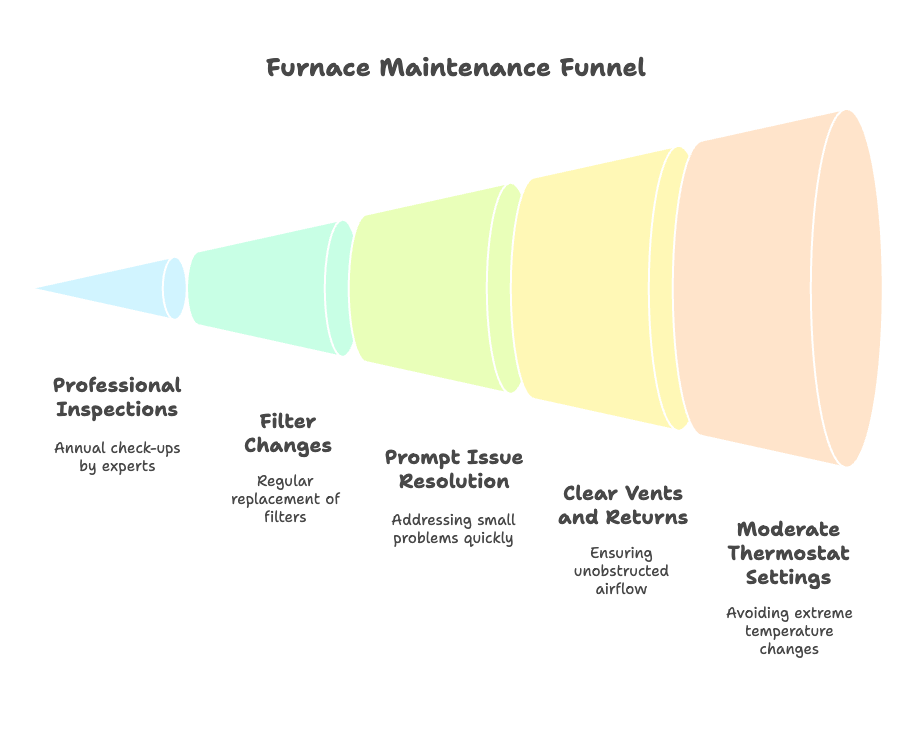
HVAC maintenance experts recommend regular professional care as the most effective way to maximize furnace lifespan. Here’s what makes the biggest difference:
- Schedule annual professional inspections: Ideally before the heating season begins, technicians clean components, check for wear, lubricate moving parts, and identify potential problems before they cause breakdowns. Consider enrolling in an annual maintenance plan for consistent care and priority service.
- Change filters every 1-3 months: This simple task improves airflow, reduces strain on the blower motor, and maintains indoor air quality. Use quality furnace filters appropriate for your system and home.
- Address small issues promptly: Strange noises, minor performance changes, or unusual cycling patterns should be checked quickly before they develop into major failures.
- Keep vents and returns clear: Remove furniture, curtains, and other obstructions that restrict airflow and force your furnace to work harder.
- Use moderate thermostat settings: Avoid extreme temperatures and frequent adjustments that push your system to overwork.
These maintenance practices can add years to your furnace’s operational life while also improving efficiency, reducing energy costs, and preventing inconvenient mid-winter breakdowns.
Making the Right Decision for Your Home
Understanding how long furnaces last and what affects their lifespan empowers you to make smart decisions about your heating system. Gas furnaces typically serve 15-20 years, electric models can reach 20-30 years, and oil furnaces fall somewhere in between with proper care. Installation quality, regular maintenance, and your local climate all play significant roles in whether your system reaches the upper or lower end of these ranges.
When repair costs approach half the price of replacement, or your furnace is showing multiple warning signs after 15 years of service, it’s usually time to consider upgrading. Modern high-efficiency systems offer better comfort, lower operating costs, and improved reliability that can offset the upfront investment.
Whether you need a professional evaluation of your current system or you’re ready to explore replacement options, our team is here to provide honest guidance and expert service. Schedule a furnace inspection today to get clear answers about your heating system’s condition and the most cost-effective path forward for your home.


